Quranic Answer
Understanding religion has always been a complex endeavor for many individuals across the globe. Several challenges hinder a deeper comprehension of religious teachings, with a plethora of contributing factors that vary depending on personal, social, and cultural contexts. In this article, we will explore the key obstacles that lead to a distorted understanding of religion, particularly emphasizing the lack of knowledge, the influence of upbringing and environment, and the historical context of religious conflicts and disputes. One of the primary barriers to grasping religious concepts is the alarming lack of awareness and engagement with religious texts and teachings. In the Holy Quran, Allah underscores the importance of knowledge with a poignant rhetorical question: 'Are those who know equal to those who do not know?' (Surah Az-Zumar, 39:9). This verse encapsulates the notion that knowledge is not only power but also a prerequisite for proper understanding, especially when it comes to matters of faith. Unfortunately, many individuals neglect the pursuit of religious knowledge in favor of superficial beliefs or reliance on secondhand interpretations from others. Such neglect can foster misconceptions and ultimately lead to a skewed perspective of religious tenets. Without a foundation built on informed understanding, it is easy for individuals to propagate misunderstandings about their faith or the faith of others. Additionally, the role of social and cultural environments in shaping one's understanding of religion cannot be overstated. Many people unknowingly adopt flawed views based on their upbringing or societal influences. As noted in Surah Al-Baqarah, verse 170, Allah refers to the deceptions perpetrated by a person's predecessors when individuals are confronted with questions about divine revelations: 'And when it is said to them, 'What has your Lord revealed?' they say, 'What our fathers were upon.' This verse delineates how traditions and familial beliefs can serve as blinders, impeding the pursuit of authentic understanding. This social conditioning can be especially detrimental, as individuals may become entrenched in inherited beliefs without ever questioning their validity or seeking greater knowledge. As a result, they may distance themselves from the core tenets of their religion while mistakenly believing they hold an accurate view of their faith. Broken away from the roots of scholarship and reflection, their understanding stagnates, making it challenging to engage critically with religious texts. Moreover, historical factors have also played a significant role in fragmenting religions and shaping perceptions about faith. Across centuries, wars, social upheavals, and religious disputes have created distinct sects and factions within major world religions. Each faction often interprets religious doctrines through its particular lens, leading to divergent beliefs and practices. This fragmentation not only generates confusion among followers but also perpetuates stereotypes and misunderstanding between different religious groups. For instance, the sectarian divisions within Christianity, Islam, and Judaism have resulted in varied interpretations of their respective holy texts, often leading to conflict and violence. These conflicts, rooted in misinterpretations and competing ideologies, result in deeply ingrained biases and misconceptions. Many individuals become casualties of these conflicts—even those who seek an authentic understanding of their own beliefs may find themselves misled by the violent legacy of theological disputes. Additionally, modern sociopolitical dynamics further complicate religious understanding. In today's interconnected world, misinformation can spread rapidly through digital platforms and social networks. As such, individuals may consume distorted narratives about religion that fail to represent the vastness of beliefs within any given faith. The ease with which misinformation circulates can transform the perception of a religion into a largely negative or distorted image, further alienating individuals from a genuine understanding of the religion in question. Given these myriad challenges faced by individuals seeking to understand religion, the solution necessitates a multifaceted approach centered on education and open dialogue. Encouraging the pursuit of knowledge—rooted in rigorous scholarship—can inspire individuals to explore religious texts with openness to diverse interpretations. For instance, creating discussion platforms that invite perspectives from various sects, denominations, or traditions can allow individuals to compare and contrast beliefs pragmatically. Educational institutions and religious organizations must prioritize critical thinking and inclusive curricula that encourage curiosity about all faiths. Such initiatives can empower individuals to analyze and reflect on religious teachings more deeply, minimizing the impact of inherited misconceptions and biases. Encouraging a dialogue that bridges generational, cultural, and sectarian divides is crucial to foster a richer, all-encompassing comprehension of each other's beliefs. Also vital is the need for a re-evaluation of the historical narratives surrounding religious conflicts. By contextualizing past rivalries and acknowledging the common threads shared between faiths, individuals can become more accommodating towards religious differences. Understanding that many historical disputes stem from political, social, and economic factors—rather than solely theological disagreements—could help ease animosities and mistrust. In conclusion, while challenges in understanding religion abound due to ignorance, cultural conditioning, and historical conflict, cultivating knowledge and fostering dialogue are essential for overcoming these obstacles. The quest for authentic comprehension of religious teachings requires persistent effort, openness, and a willingness to engage with a variety of perspectives. As we strive to bridge gaps in understanding, we not only enrich our own spiritual journeys but also contribute to a world where religious harmony becomes a greater possibility.
Related Verses
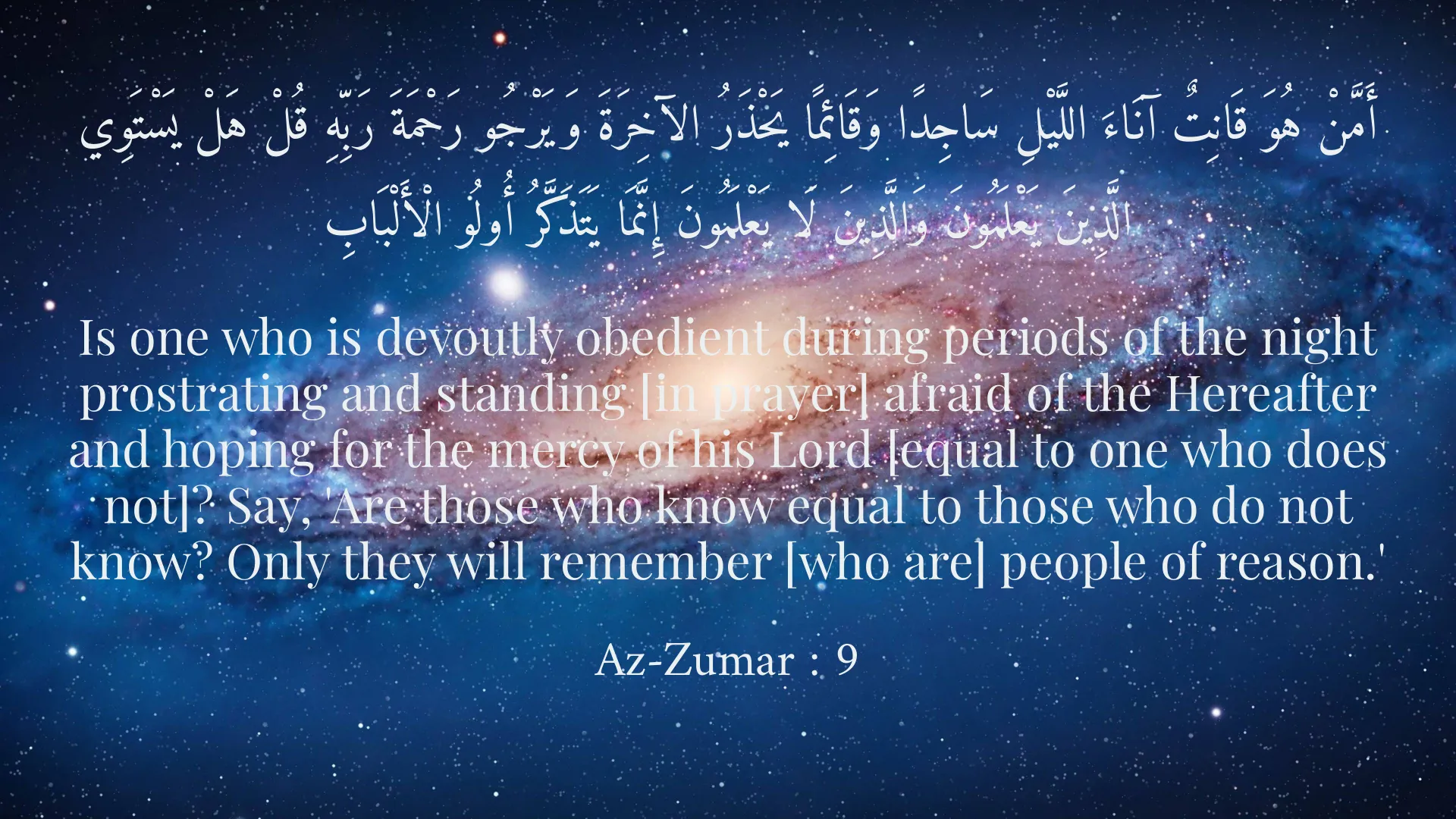
أَمَّنْ هُوَ قَانِتٌ آنَاءَ اللَّيْلِ سَاجِدًا وَقَائِمًا يَحْذَرُ الآخِرَةَ وَيَرْجُو رَحْمَةَ رَبِّهِ قُلْ هَلْ يَسْتَوِي الَّذِينَ يَعْلَمُونَ وَالَّذِينَ لَا يَعْلَمُونَ إِنَّمَا يَتَذَكَّرُ أُولُو الْأَلْبَابِ
Is one who is devoutly obedient during periods of the night prostrating and standing [in prayer] afraid of the Hereafter and hoping for the mercy of his Lord [equal to one who does not]? Say, 'Are those who know equal to those who do not know? Only they will remember [who are] people of reason.'
Az-Zumar : 9
وَإِذَا قِيلَ لَهُمُ اتَّبِعُوا مَا أَنزَلَ اللَّهُ قَالُوا بَلْ نَتَّبِعُ مَا وَجَدْنَا عَلَيْهِ آبَاءَنَا ۗ أَوَلَوْ كَانَ آبَاؤُهُمْ لَا يَعْقِلُونَ شَيْئًا وَلَا يَهْتَدُونَ
And when it is said to them, 'Follow what Allah has revealed,' you will see the hypocrites turning away.
Al-Baqarah : 170
Short Story
Long ago, there was a man living in a tribe who placed great importance on following the traditions of his forefathers. He never sought to understand the truth of his faith, relying solely on what his father had taught him. However, one day a young man from the tribe told him he needed to seek the truth for himself. He began studying religious texts and gradually realized that many of his beliefs were wrong. This revelation led him to a significant transformation in his life, allowing him to develop a better understanding of faith.