Quranic Answer
The Holy Quran, a cornerstone of Islamic teachings, presents profound insights into human history and encourages its followers to engage in reflection and introspection. It does not merely serve as a religious text but also acts as a guide for personal and communal growth by inviting believers to learn from the experiences of previous civilizations. One of the most compelling invitations to reflection occurs in Surah Al-Imran, verse 137. It states: 'Indeed, there have passed away [before you] ways of life, so travel through the earth and see how was the end of those who denied.' This verse is not only a reminder of the transient nature of human existence but also an admonition to introspect and learn from the past. Learning from History The directive to 'travel through the earth' encapsulates the essence of exploring historical contexts, civilizations, and communities that have vanished. This exploration serves multiple purposes; it broadens one’s understanding of collective human experiences and fosters a deeper appreciation for diverse cultures and societies. By examining the remnants of past civilizations, whether through archaeological remains or recorded histories, we gain valuable insights into the determinants of success and failure. In this context, the Quran encourages believers to scrutinize the lives of those who preceded them, particularly focusing on communities that disbelieved or strayed from the path of righteousness. The histories of past nations are not just tales of misfortune but are critical lessons infused with wisdom. For instance, by reflecting on the story of Pharaoh and his people, who were ultimately punished for their hubris and disbelief, a believer can understand the importance of humility, faith, and obedience to divine guidance. The downfall of Pharaoh stands as a stark warning of the potential consequences of arrogance and the consequences of denying the truth. Consequences of Actions Further emphasizing this lesson, Surah Al-Anfal, verse 53, articulates a significant principle regarding divine favor, stating: 'This is because Allah would not change a favor which He had bestowed upon a people until they change what is within themselves.' This verse encapsulates a critical aspect of personal and societal responsibility. The Quran impels its followers to acknowledge that divine blessings are contingent upon their internal state and actions. Thus, for change and improvement to occur, both at an individual and societal level, it is essential first to examine one’s own beliefs, behaviors, and intentions. The Reflection Process Engaging in this reflective process serves not only as a means to seek redemption but also as a pathway to growth and advancement. It requires a commitment to seeking knowledge, whether through scholarly pursuits, communal discussions, or personal contemplation. Importantly, this examination of the past is not solely academic; it is deeply integrative, merging one’s faith with real-world experiences. By confronting the realities of history and learning from the triumphs and tribulations of earlier generations, modern believers cultivate a more profound understanding of their faith and the challenges they face. The collective amnesia that often overshadows societies today can lead to a repetition of past mistakes. On a global scale, many societies grapple with issues such as inequality, injustice, and strife. The Quran urges a different approach: learning from the tragedies faced by those who came before. By considering the consequences faced by those who turned away from righteousness, communities can take proactive steps to pursue justice and equity in their real-life contexts. The Importance of Awareness Awareness is pivotal; as the Quran articulates, the fates of past nations and the consequences of their actions are always before our eyes. This recognition should lead to sincere introspection and a quest for improvement. For example, contemporary issues such as environmental degradation can be tied back to historical patterns of exploitation and neglect. By understanding how previous cultures approached their stewardship of the earth, today’s societies can adopt more sustainable practices that honor the lessons of history. Additionally, the Quranic call to reflection can also serve as a unifying call to action. In a world often divided along religious, cultural, and ideological lines, the shared experiences of humanity can foster empathy and understanding. Acknowledging and learning from the past can lead not only to personal growth but to communal harmony and solidarity. Learning from the Past: Practical Steps To actualize the teachings of the Quran on reflection, there are practical steps individuals and communities can undertake. First, creating spaces for dialogue about history—whether through discussion forums, workshops, or educational programs—can build a community's collective memory. Second, promoting literature, documentaries, and other educational resources that delve into the histories of different peoples can enrich understanding and foster critical thinking about past mistakes and successes. Third, integrating the lessons learned into policy frameworks and community practices can lead to tangible improvements in societal dynamics. For example, educational institutions can incorporate historical lessons into their curricula, emphasizing the importance of ethical governance, social justice, and community service. Conclusion In essence, the Holy Quran’s encouragement to reflect on history is an invitation to harness the past as a tool for present and future advancement. The narratives within it serve as profound reminders that the lessons of those who have come before us can illuminate the paths we should take today. As believers, the onus lies upon us to heed these teachings, ensuring that we not only learn from history but also apply those lessons to foster a more enlightened and harmonious existence. This emphasis on reflection is not merely a call to remember; it is a profound call to action, urging us to grow, amend our ways, and actively contribute to a world defined by understanding and compassion.
Related Verses
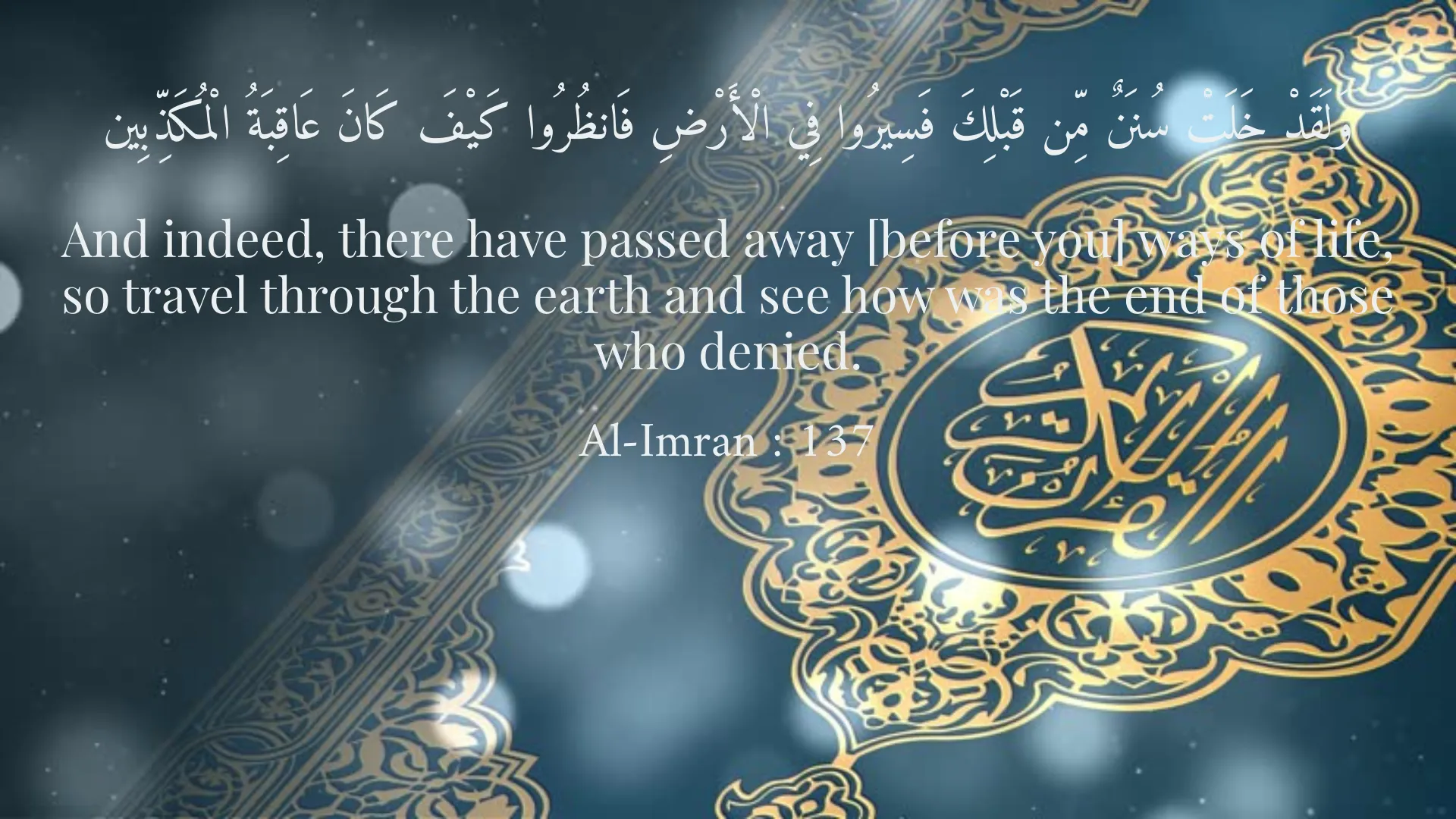
وَلَقَدْ خَلَتْ سُنَنٌ مِّن قَبْلِكَ فَسِيرُوا فِي الْأَرْضِ فَانظُرُوا كَيْفَ كَانَ عَاقِبَةُ الْمُكَذِّبِين
And indeed, there have passed away [before you] ways of life, so travel through the earth and see how was the end of those who denied.
Al-Imran : 137
ذَلِكَ بِأَنَّ اللَّهَ لَمْ يَكُ مُغَيِّرًا نِعْمَةً أَنْعَمَهَا عَلَى قَوْمٍ حَتَّى يُغَيِّرُوا مَا بِأَنفُسِهِمْ
This is because Allah would not change a favor which He had bestowed upon a people until they change what is within themselves.
Al-Anfal : 53
Short Story
One day, a young girl named Sara decided to make changes in her life. She referred to the verses of the Quran and realized that examining her past and taking lessons from it could help her in future decisions. Sara studied the stories of past nations and took lessons from them. She learned that she should steer clear of the mistakes of others and choose the right path.