Quranic Answer
The Understanding of Free Will in the Holy Quran In the Holy Quran, the concept of free will stands out as one of the most profound gifts bestowed upon humanity by God. This principle allows individuals to navigate the intricate dynamics of morality, choosing between good and evil, right and wrong. It is an essential component that shapes our understanding of life's complexities, urging us to engage with the world actively and with intention. The notion of free will is not merely a philosophical theory but a significant blessing from God, empowering humans to exercise agency in their actions and decisions. ### The Blessing of Free Will Free will is frequently celebrated in the Quran as a divine gift. It positions humans in a unique role within creation, capable of making their own choices rather than being mere puppets of fate. This ability to make decisions, as outlined in the Quran, fundamentally shapes our journey through life, influencing our moral and spiritual development. In the grand narrative of existence, free will becomes a means through which individuals can attain closeness to God and understanding of their purpose. Importantly, the exercise of free will is coupled with the responsibility of making choices. Each decision carries weight and consequences, further underscoring the significance of this divine gift. Choices can lead to personal growth or deviations from the path of righteousness, showcasing the dual nature of free will as both an opportunity and a challenge. ### The Nature of Human Imperfection An intrinsic aspect of human nature is the inevitability of error and mistakes. This acknowledgment of human fallibility is crucial within the Islamic worldview. The Quran does not present humanity as infallible beings; rather, it embraces the idea that errors and missteps are part and parcel of the human experience. This perspective serves multiple purposes, including fostering humility and encouraging personal growth through repentance. In Surah At-Tawbah, verse 51, Allah explicitly reminds humanity of their flawed nature, emphasizing that individuals should not view themselves as infallible. This recognition is pivotal in the understanding of one's journey through life. It invites believers to acknowledge their shortcomings, paving the way for self-improvement and spiritual awakening. The Quran repeatedly emphasizes that it is through acknowledging our mistakes that we can seek redemption and ultimate closeness to God. The act of making mistakes, while often viewed negatively in contemporary society, is reframed in the Quran as an essential part of personal development. Each error presents an opportunity to learn and grow, pushing individuals towards greater understanding and empathy. ### Trials and Divine Testing The concept of trials is another key element beautifully interwoven into the narrative of free will in the Quran. In Surah Al-Baqarah, verse 155, it is stated that God tests humans with challenges such as fear, hunger, and loss of wealth. These trials serve a higher purpose; they are designed to distinguish the doers of good from those who falter in their faith. Through these experiences, individuals are forced to confront their choices and evaluate the strength of their faith. These trials, while often uncomfortable, are ultimately blessings in disguise. They compel individuals to seek deeper connections with God and rely on their faith during challenging times. The struggle through adversity becomes a means of purifying one’s intentions and actions, a way of moving closer to the divine will. The Quran encourages believers to view these challenges as tests that are necessary for their spiritual and moral evolution. ### The Pathway to Spiritual Growth Errors and trials are not just hurdles to be overcome; they are critical pathways for spiritual growth and greater closeness to God. When individuals navigate through life’s challenges, they are often faced with a choice to seek divine guidance or to rely solely on their own understanding. This choice tests their faith and their commitment to living a life aligned with divine principles. Recognizing one’s mistakes and embracing the journey of rectification is essential in the Islamic faith. The Quran promotes the idea that every human has the capacity for change and growth, as reflected in their decisions and actions. It encourages believers not to despair over their misdeeds but rather to view them as stepping stones towards self-improvement. This transformative process begins with repentance, which acts as a bridge between error and redemption. ### The Divine Invitation for Repentance Central to the Islamic understanding of free will is the concept of repentance. God’s infinite mercy provides humans with a unique opportunity to seek forgiveness and rectify their actions. The possibility of repentance is a recurring theme throughout the Quran, symbolizing hope and the potential for rebirth in one’s spiritual journey. This understanding fosters a compassionate view of one’s self and of others. Repentance is not portrayed as a mere act of regret but as a transformative experience that renews the heart and spirit. Through sincere contrition, individuals are invited to embark on a new personal journey, one where they can recommit themselves to righteousness. The ability to turn back to God, to seek His forgiveness, signifies divine wisdom in allowing mistakes; it is an invitation for spiritual awakening and recommitment to the right path. ### Conclusion In conclusion, the concept of free will in the Holy Quran is a cornerstone of human existence. It serves not only as a gift but also as a profound responsibility. Through the inevitability of mistakes, the challenges of trials, and the promise of repentance, individuals are invited to grow spiritually and morally. The freedom to choose, coupled with divine encouragement towards self-improvement, showcases God’s enduring compassion for humanity. Thus, every choice made, every error acknowledged, and every trial faced becomes an integral part of the sacred journey toward righteousness and divine closeness. Through embracing these elements, humans can navigate the complexities of existence with grace, purpose, and a heart aligned with divine will.
Related Verses
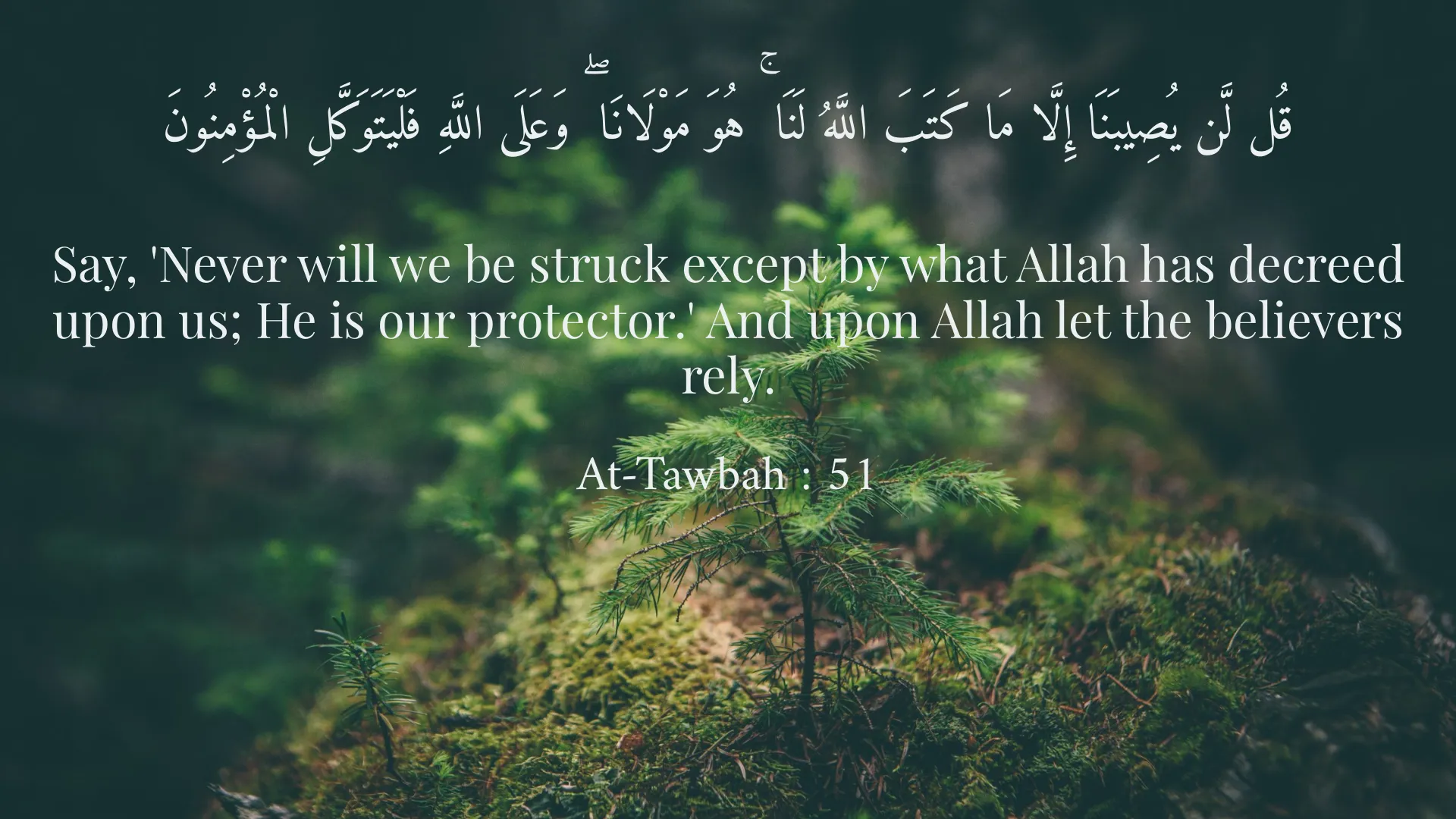
قُل لَّن يُصِيبَنَا إِلَّا مَا كَتَبَ اللَّهُ لَنَا ۚ هُوَ مَوْلَانَا ۖ وَعَلَى اللَّهِ فَلْيَتَوَكَّلِ الْمُؤْمِنُونَ
Say, 'Never will we be struck except by what Allah has decreed upon us; He is our protector.' And upon Allah let the believers rely.
At-Tawbah : 51
وَلَنَبْلُوَنَّكُم بِشَيْءٍ مِّنَ ٱلْخَوْفِ وَٱلْجُوعِ وَنَقْصٍ مِّنَ ٱلْأَمْوَالِ وَٱلْأَنفُسِ وَٱلثَّمَرَاتِ ۗ وَبَشِّرِ ٱلصَّـٰبِرِينَ
And We will surely test you with something of fear and hunger and a loss of wealth and lives and fruits, but give good tidings to the patient.
Al-Baqarah : 155
Short Story
On a warm summer day, Ali sat thinking about his life. He recalled the verses of the Quran and realized that humans make mistakes not due to their weakness but because they are tested in this world. One day, a friend told him, 'Ali, every time you err, you can strive to improve by repenting and returning to God.' This resonated with Ali, motivating him to overcome his mistakes and strive to connect deeper with God. He felt that these mistakes were not merely weaknesses but opportunities for growth and learning.