Quranic Answer
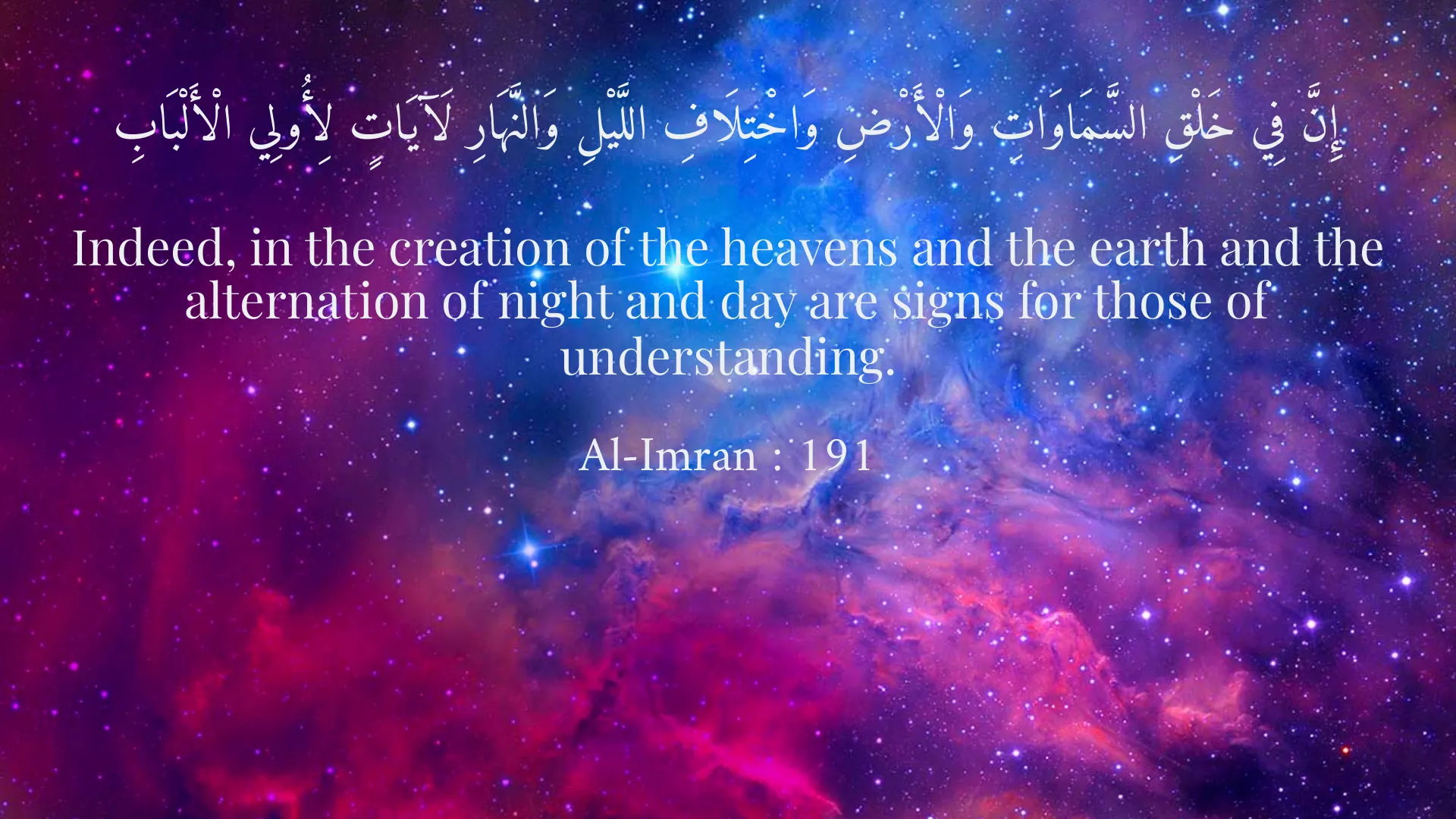
The Holy Quran, regarded as the sacred text of Islam, serves as a guiding book for Muslims, providing ethical, spiritual, and practical guidance for everyday life. One of the most profound and striking elements of the Quran is its repeated emphasis on the concepts of thinking and reflection. The Quran encourages believers not to engage in blind faith, but to use their intellect and reasoning abilities to gain a deeper understanding of its teachings. This invitation to thought extends beyond mere theological comprehension; it encompasses the necessity of applying this understanding to enhance the quality of our daily lives. In Surah Al-Imran, verse 191, the Quran states, 'Indeed, in the creation of the heavens and the earth and the alternation of night and day are signs for those of understanding.' This verse illuminates the idea that all elements of the natural world contain signs or lessons meant for those who strive to understand their deeper meanings. The alternation of night and day, for instance, can be seen as a metaphor for the cyclical nature of life, teaching us about the inevitability of change, the passage of time, and the importance of appreciating every moment. Thus, the Quran directs believers to observe the universe with a mindset of inquiry, urging them to ask questions, seek knowledge, and derive lessons that enrich their lives and beliefs. Furthermore, in Surah Al-Mujadila, verse 11, it is asserted, 'Allah will raise those who have believed among you and those who were given knowledge by degrees.' This profound message encapsulates the value that Islam places on education and continuous learning. The Quran acknowledges that knowledge is not merely an academic pursuit but a means to elevate individuals in this life and the hereafter. Thus, those who seek knowledge and apply it to their lives are promised divine elevation. This principle extends to all spheres of life, encouraging believers to pursue both religious and worldly knowledge. The acquisition of knowledge is highlighted as a privilege that brings with it responsibilities; it endows individuals with the capacity to make informed decisions, advocate for justice, and contribute positively to society. The concept of thinking is further tied to the notion of personal growth and moral development. When Muslims are encouraged to reflect, they engage in a process of self-discovery and self-improvement. This cognitive engagement allows individuals to align their daily actions with their beliefs and aspirations. Thinking critically requires individuals to question their choices, motives, and the impact of their actions on others, thereby fostering a more compassionate and responsible community. In this way, the Quran promotes a holistic approach to life, where knowledge and reflection are tools for building character and developing a moral compass. Moreover, the act of thinking and reflecting is not limited to intellectual pursuits; it also promotes spiritual growth. By nurturing our ability to contemplate the universe, ourselves, and the teachings of the Quran, we are drawn closer to God. The Quran consistently reminds us that true wisdom does not merely come from the accumulation of facts and figures; instead, profound understanding arises from contemplation and the sincere application of knowledge in our lives. This spiritual dimension of thinking serves to connect believers with divine guidance, helping them navigate the complexities of existence with greater clarity and insight. The Quran's emphasis on reflection serves as a valuable antidote to the chaos and distractions of modern life. In an age where information is abundant yet often superficial, the call to think deeply becomes even more significant. It reminds believers that the pursuit of knowledge is not merely for the sake of acquiring information but should lead to deeper insights that promote understanding, harmony, and a more meaningful existence. The Quran encourages individuals to resist the allure of ignorance and complacency, urging them to engage actively with their beliefs and the world around them. Importantly, the Quran's call to thought is inclusive, inviting everyone to participate in this intellectual and spiritual journey. It acknowledges that everyone, regardless of their background or prior knowledge, can engage in reflection and benefit from the incredible depth of wisdom contained within its verses. This inclusivity promotes a culture of inquiry within the Muslim community, allowing for diverse perspectives and interpretations while fostering unity based on shared values of respect for knowledge, reflection, and personal growth. In essence, the Quran emphasizes that cultivating our understanding of intellect and philosophical reasoning is crucial for nurturing our capacity for reflection and independent thought. As believers grapple with the complexities of faith and existence, they are encouraged to seek deeper meanings, question the status quo, and pursue knowledge in all its forms. This lifelong journey of intellectual and spiritual exploration leads ultimately to a closer relationship with God, a greater appreciation of the divine message, and a more profound understanding of one’s purpose in life. In conclusion, the Holy Quran's recurrent invitation to think and reflect is a cornerstone of its teachings. It underscores the importance of intellectual engagement and moral responsibility, emphasizing that knowledge and reflection elevate individuals and foster a more just and meaningful existence. As believers embrace this call, they not only navigate the intricacies of their personal lives with wisdom but also contribute positively to their communities and society at large. Ultimately, the Quran illuminates a path toward enlightenment, encouraging Muslims to strive for knowledge, reflect on their existence, and draw closer to their Creator through the pursuit of understanding and wisdom.
Related Verses
إِنَّ فِي خَلْقِ السَّمَاوَاتِ وَالْأَرْضِ وَاخْتِلَافِ اللَّيْلِ وَالنَّهَارِ لَآيَاتٍ لِأُولِي الْأَلْبَابِ
Indeed, in the creation of the heavens and the earth and the alternation of night and day are signs for those of understanding.
Al-Imran : 191
يَرْفَعِ اللَّهُ الَّذِينَ آمَنُوا مِنكُمْ وَالَّذِينَ أُوتُوا الْعِلْمَ دَرَجَاتٍ
Allah will raise those who have believed among you and those who were given knowledge by degrees.
Al-Mujadila : 11
Short Story
One day, a great scholar told his group of students, 'Thinking is an act of worship!' The students were initially surprised but soon realized that the most powerful tool God has given us to understand the truth is thinking. One day, one of them arrived at a clear river and saw his reflection in it. Suddenly it dawned on him how he should make changes in his life to be closer to God. From that day on, he dedicated some time every day to reflect on the verses of the Quran, and his life transformed.