Quranic Answer
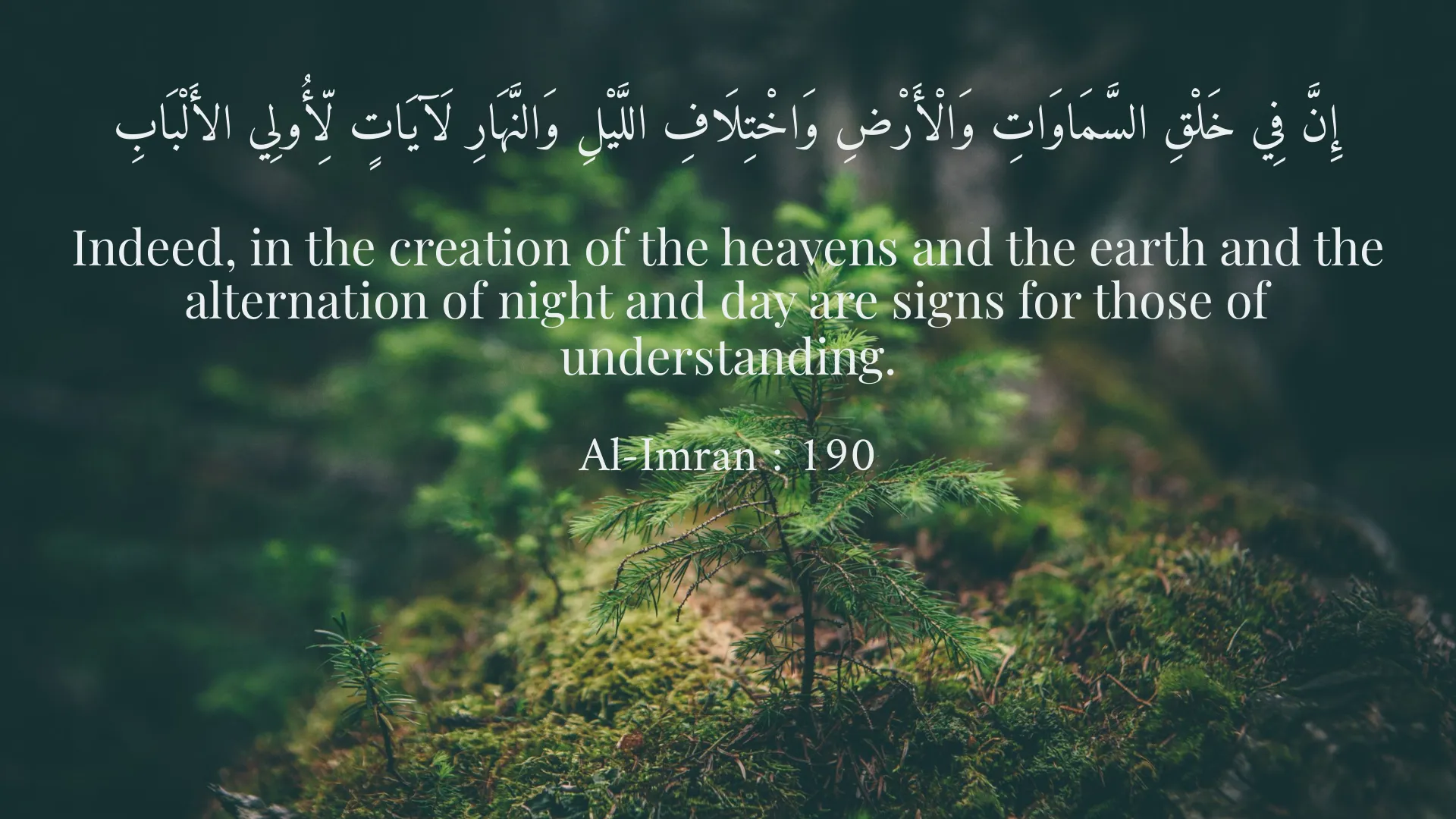
The Holy Quran, the sacred text of Islam, is revered not simply as a religious scripture but as a profound guide that emphasizes the importance of thinking and reflection in the lives of individuals. In numerous verses, the Quran cultivates a culture of inquiry and contemplation, underscoring that knowledge and learning are at the heart of the Islamic faith. However, the call for reflection goes beyond mere academic knowledge; it encompasses a deeper exploration of the human connection to the divine, the truths of existence, and the intricate interplay within the natural world. One of the most striking illustrations of this principle is found in Surah Al-Imran, verse 190: 'Indeed, in the creation of the heavens and the earth and the alternation of night and day are signs for those of understanding.' This verse serves as a powerful reminder that the universe itself is filled with signs pointing towards a greater understanding — signs that invite individuals to engage in contemplation. The act of reflecting on the cosmos, the laws of nature, and the cycles of life encourages one to connect with the Creator. It emphasizes that looking beyond the mundane and recognizing the extraordinary in the natural order of things can foster a deeper comprehension of existence. The Quran's encouragement for reflection stems from its intimate association with the creation itself. The world around us is not merely a backdrop but a dynamic tapestry woven with signs that speak of God's omnipotence and wisdom. The alternation of night and day, the changing seasons, and the intricate designs of each creature serve as cues for humanity to seek understanding. Through contemplation, individuals can navigate the complexities of life, recognizing the patterns and systems that govern their existence. In addition to natural phenomena, the Quran also invites reflection on personal and societal constructs. In Surah Muhammad, verse 19, Allah states, 'So know that there is no deity except Allah.' This decree prompts individuals to ponder their beliefs, question the nature of divinity, and ultimately understand the essence of monotheism. Such reflective practices lead to enlightenment, allowing individuals to grasp the implications of faith and the importance of surrendering to the absolute truth that is envisioned in Islamic teachings. The act of contemplation is inherently tied to the quest for knowledge. It drives individuals to explore various dimensions of life, be it scientific understanding, philosophical inquiry, or spiritual exploration. The Quranic narrative encourages a holistic vision of education — one that integrates intellectual pursuits with spiritual enlightenment. The path to knowledge is often depicted as a means to draw closer to God, with the understanding that knowledge itself is a form of worship. The Quran further elaborates on the significance of reflection in various other verses. For instance, Surah Al-Anfal, verse 22 states, 'Indeed, the worst of creatures in the sight of Allah are the deaf and dumb who do not use reason.' Here, the emphasis is laid on the consequences of ignoring the call for reflection. Individuals who fail to engage their reasoning are portrayed as being distanced from the divine. This serves to underline a crucial tenet in Islamic philosophy: the use of reason and intellect is not just encouraged; it is necessary for a fulfilling spiritual life. Moreover, the Quran presents an invitation for scholars, thinkers, and believers to pursue knowledge actively. The template for learning in Islam is not passive absorption of information, but rather an active engagement with one’s surroundings—be it through questioning, experimenting, and reflecting on experiences. The pursuit of knowledge, coupled with reflection, is perceived as a sacred duty, as it enables individuals to navigate life’s challenges with insight and clarity. Through this lens, the Quran is not merely a text but a catalyst for intellectual and spiritual awakening. The verses highlight that every phenomena, every aspect of life can be a source of wisdom, depending on the individual's willingness to reflect and understand. The connection to God is not established solely through ritual but by engaging with the world around us and seeking to uncover the layers of truth within it. The journey of contemplation leads to self-discovery, enabling individuals to understand their purpose and their relationship to God and creation. Furthermore, such reflection does not exist in isolation but stimulates a communal discourse. When individuals engage in contemplation and seek understanding, they inevitably share their insights with others, thus fostering a culture of knowledge and wisdom within society. This collective pursuit of wisdom aligns with the Islamic ideal of community, where individuals are encouraged to support one another in their quests for truth and understanding. The Quran’s emphasis on reflection thus serves as a foundation for societal progress, as it challenges communities to work together towards enlightenment and betterment. In conclusion, the Holy Quran’s emphasis on thinking and reflection provides a profound framework for individuals seeking to understand their existence and their relationship with the divine. Through verses that encourage contemplation of nature and self, believers are invited to explore deeper truths about life, faith, and the universe. The Quran highlights that such reflections lead to true knowledge, insights, and ultimately, a recognition of God as the absolute truth. It invites humanity to use their intellect and reason, reminding us that the journey of knowledge is a sacred obligation that brings us closer to understanding our Creator and the profound mysteries of life. Hence, the pursuit of knowledge, coupled with reflective thinking, serves as an essential pathway for not only individual enlightenment but also collective societal growth.
Related Verses
إِنَّ فِي خَلْقِ السَّمَاوَاتِ وَالْأَرْضِ وَاخْتِلَافِ اللَّيْلِ وَالنَّهَارِ لَآيَاتٍ لِّأُولِي الأَلْبَابِ
Indeed, in the creation of the heavens and the earth and the alternation of night and day are signs for those of understanding.
Al-Imran : 190
فَاعْلَمْ أَنَّهُ لَـا إِلَـٰهَ إِلَّا اللَّهُ
So know that there is no deity except Allah.
Muhammad : 19
Short Story
One day, a sage was sitting in the mountains, pondering his thoughts. He recalled the verses of the Quran and wondered what ways existed to draw closer to God. He said to himself, 'Doesn't reflecting upon creation and its signs bring me closer to the truths?' From that day on, he devoted time each day to think and contemplate the creation and the mercies of God, feeling greater peace and happiness.