Quranic Answer
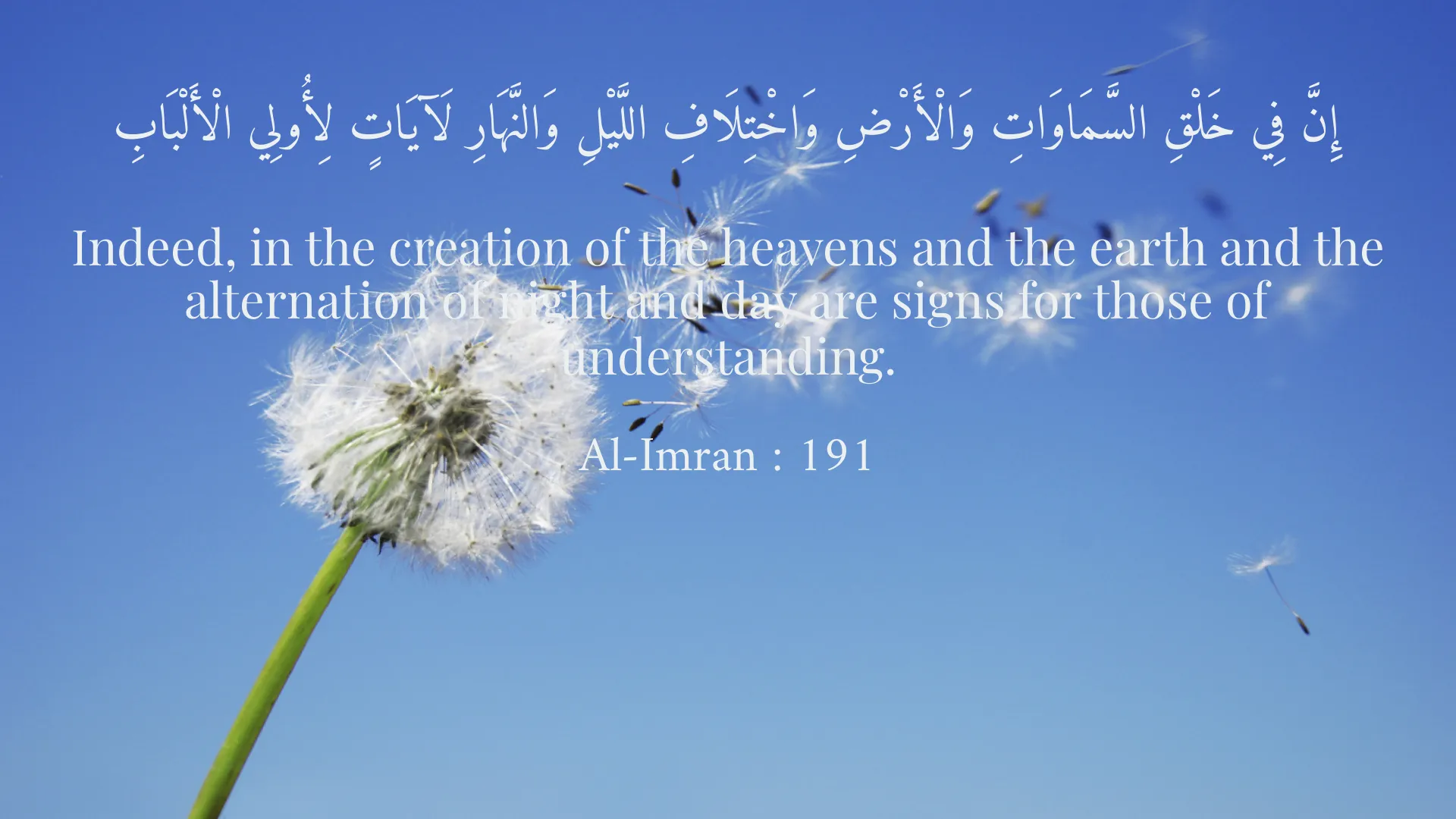
The Holy Quran remarkably utilizes natural examples to guide human beings towards truth and reality. This method of exemplification is not only an activation for the human memory but also leads to a deeper and better understanding of divine verses. The Quran’s engagement with nature acts as an invitation for individuals to reflect on their surroundings while simultaneously fostering a connection with the divine. Throughout its verses, the sacred text offers myriad illustrations derived from the natural world, establishing a relationship between the Creator's magnificence and the human experience. A fundamental verse in this context is found in Surah Al-Imran, verse 191, where it states: 'Indeed, in the creation of the heavens and the earth and the alternation of night and day are signs for those of understanding.' This passage serves as a beacon, drawing attention to the creation of the cosmos and the continuous cycle of night and day. It provokes thought and reflection among human beings, elevating their perception of the world around them. By contemplating these phenomena, believers are encouraged to delve deeper into the concept of divine signs and the inherent order governing existence. The verse illustrates that an awareness of the creation around us can lead to a significant increase in understanding and faith. The natural rhythms and cycles present in the universe signify that everything harbors a purpose; hence, individuals are prompted to seek truth through observing and contemplating nature. The profound intricacies of the universe reflect a systematic order that resonates with divine wisdom. This recognition of divine laws and traditions in the cosmos not only highlights the existence of a Creator but also poses an invitation for individuals to explore their own beliefs and understanding of life. Moreover, Surah An-Nahl encompasses additional examples that reiterate the theme of nature as a source of spiritual insight. In verses 68 and 69, the Quran alludes to the bee and the remarkable process of honey production. The meticulous organization observed in nature, especially in the life of bees, exemplifies cooperation, hard work, and the importance of community. This particular illustration not only provides an insight into the significance of social structures in nature but also emphasizes the benefits of mutual support and collaboration, serving as a model for human interactions. By using such natural examples, the Quran encourages its readers to reflect on their life and conduct, promoting values that foster harmony and cooperation in society. The power of natural exemplification deepens the Quran's discourse by introducing a more relatable context for its teachings. Nature surrounds every individual, and everyday experiences in the natural world contribute to a clearer understanding of religious concepts. The Quran injects the fabric of daily life with spirituality, leading individuals towards a holistic comprehension of their faith in tandem with the realities they encounter. Each flower blooming, the fluttering of a bird, or a whisper of the wind can serve to cultivate contemplation and a more profound relationship with the divine. Furthermore, the contemplation of nature taps into the innate temperament of humans, encouraging them to connect with their essence while fostering awareness of the divine signs woven into the fabric of creation. This contemplative method urges readers to consider their own nature, leading them toward personal growth and an understanding of their role within the universe. Such realizations not only fortify one’s inner self but also establish a profound connection between Quranic verses and individual lives, paving the way for transformation. Significantly, natural examples in the Quran also bridge the divide between spirituality and the physical world, emphasizing that religion is not detached from the realities of life, but intricately intertwined with them. The Quran offers real-life applications of its teachings through the evidences found in nature. This connection acts as a reminder that the sacred does not exist solely in spiritual realms; it manifests in the tangible reality that surrounds humanity. In conclusion, the utilization of natural examples in the Holy Quran serves as a critical medium for individuals to engage more deeply with the text. By inviting believers to reflect on the miracles of creation and their own lives, the Quran empowers individuals to pursue understanding and promotes a profound connection to the divine. The activation of memory facilitated by these vivid illustrations not only enhances one’s comprehension of divine wisdom but also ensures that lessons drawn from nature become integral to daily experiences. Each verse imbued with four natural meanings acts as a lighthouse, illuminating paths toward a more profound understanding of life, spirituality, and the Creator. Ultimately, the Quran encapsulates the essence of existence, demonstrating that truth is not solely pursued in abstract concepts, but reflected through every aspect of the natural world and within the depths of human experience.
Related Verses
إِنَّ فِي خَلْقِ السَّمَاوَاتِ وَالْأَرْضِ وَاخْتِلَافِ اللَّيْلِ وَالنَّهَارِ لَآيَاتٍ لِأُولِي الْأَلْبَابِ
Indeed, in the creation of the heavens and the earth and the alternation of night and day are signs for those of understanding.
Al-Imran : 191
وَأَوْحَى رَبُّكَ إِلَى النَّحْلِ أَنِ اتَّخِذي مِنَ الجبالِ بُيُوتًا وَمِنَ الشَّجَرِ وَمِمَّا يَعْشُرُونَ
And your Lord inspired the bee, 'Take for yourself among the mountains, houses, and among the trees and in that which they construct.'
An-Nahl : 68
ثُمَّ كُلِي مِن كُلِّ الثَّمَرَاتِ فَاسْلُكِي سُبُلَ رَبِّكِ ذُلُلًا ۖ يَخْرُجُ مِن بُطُونِهَا شَرَابٌ مُتَخَلِّفٌ لَّبَنٌ خَالِصٌ سَائِغٌ لِّشَّارِبِينَ
Then eat from all the fruits and follow the ways of your Lord laid down (for you). There emerges from their bellies a drink, varying in colors, in which is healing for people. Indeed, in that is a sign for a people who give thought.
An-Nahl : 69
Short Story
One day, Ali was walking through a beautiful forest, listening to the sounds of birds and the breeze. Suddenly, he remembered a verse from the Quran that spoke about the creation and order of the universe. He pondered how all creatures and phenomena in nature share a common purpose. This realization led Ali to decide to spend more time in nature and observe the divine signs. Over time, he found that these experiences and connectivity with nature contributed to his spiritual peace and improved his life.