Quranic Answer
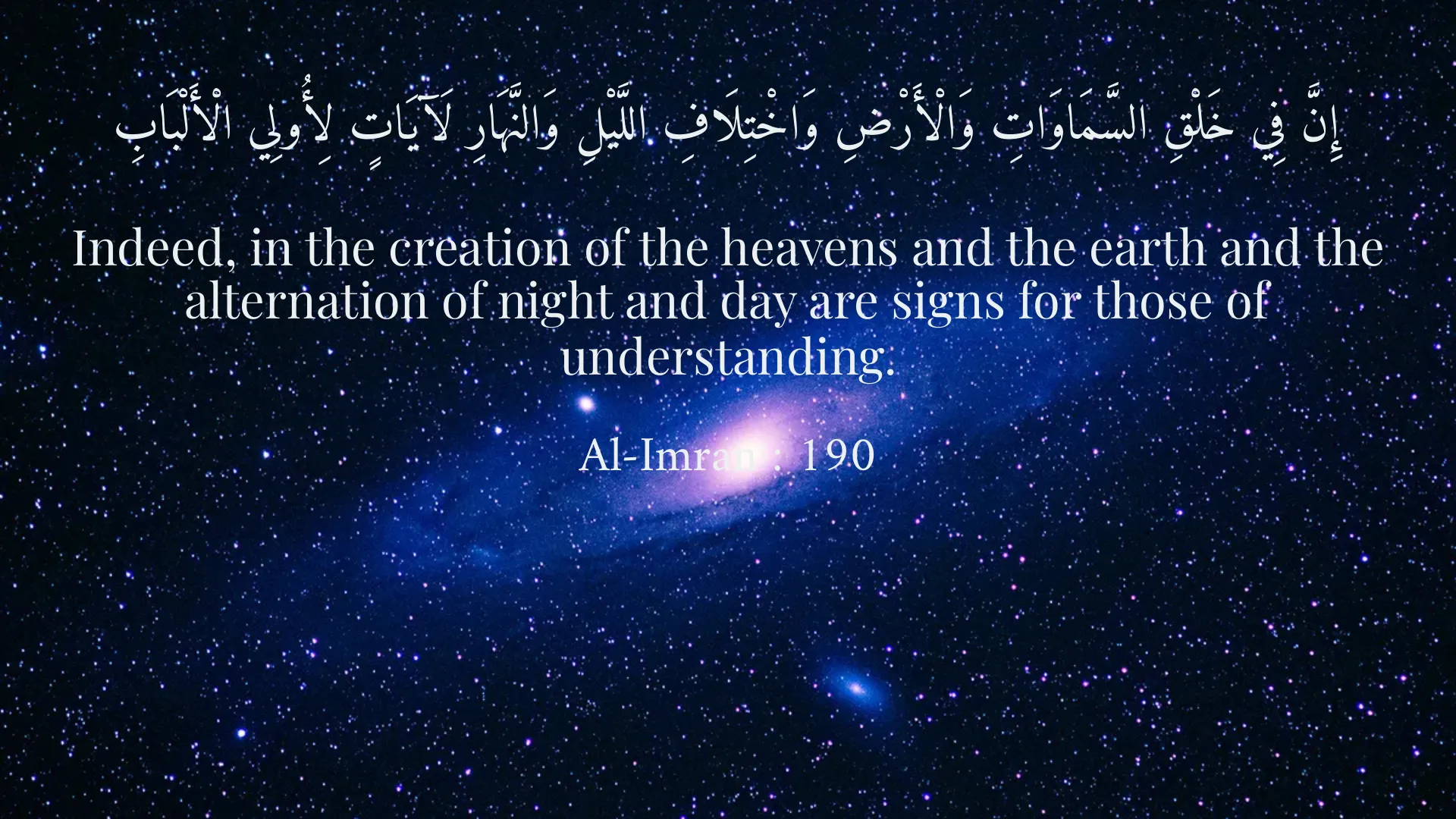
The Holy Quran explicitly invites us to reflect on the creation. In several verses, Allah instructs the believers to contemplate the signs of creation and learn from them. One of the primary reasons for this call is to help us recognize the infinite power of God and the grandeur of creation. In Surah Al-Imran, verse 190, it states, "Indeed, in the creation of the heavens and the earth and the alternation of night and day are signs for those of understanding." This verse indicates that reflection on creation can lead us to the recognition of God's existence and greatness. Creation is a magnificent tapestry woven with intricate details, meticulously crafted by the Creator. When we observe the heavens, we see the countless stars that illuminate the night sky, each one a testament to God's creative prowess. The vastness of the universe speaks volumes about God's majesty, while the precision of celestial bodies, with their predictable orbits, reflects divine order. The cycle of night and day serves as an everyday reminder of the rhythmic nature of life, hinting at the divine supervision that governs our existence. As we shift our gaze to the earth, we are equally astounded by its diversity and beauty. The myriad forms of life, from the tiniest microorganisms to the mightiest whales, showcase God's artistry and creativity. The lush green forests, the soaring mountains, the vast deserts, and the flowing rivers all tell tales of creation’s splendor. These natural wonders sustain us, feeding our bodies and soothing our souls, thus serving as profound reminders of the Creator's bountiful mercy. In addition to the physical universe, our own existence serves as an extraordinary sign of divine craftsmanship. Each one of us is created with purpose and intention, designed with unique qualities and capabilities. This unique orchestration of traits not only reflects God's power but also prompts us to seek out our purpose in life. By contemplating our own lives within the vast creation, we can identify the blessings we have received and the lessons we must learn from them. Furthermore, creation reminds us that it is not merely an object to be admired; instead, it invites us into a dynamic relationship with our Creator. It urges us to recognize His presence in every aspect of our lives and encourages us to express gratitude for His countless blessings. The Quran, in its wisdom, emphasizes this connection by urging believers to reflect on the world around them. In Surah Al-Baqarah, verse 164, Allah states, "Indeed, in the creation of the heavens and the earth, the alternation of night and day, and the great ships which sail the sea with that which benefits people, and what Allah has sent down from the heavens of rain, giving life thereby to the earth after its lifelessness and dispersing therein every [kind of] moving creature, and [His] directing of the winds and the clouds controlled between heaven and earth are signs for a people who use reason." This verse encapsulates the essence of reflection—inviting humans to acknowledge these signs with reason and insight. The ability to reason is a profound gift that allows us to engage with creation in a meaningful way. It is through reasoning and contemplation that we begin to unravel the depths of our existence and understand our place within God's grand design. The Quran's encouragement to reflect on creation is fundamentally about seeking truth and meaning. In our fast-paced, modern world, we often overlook the significance of the natural world and the lessons it holds. We become consumed by our daily routines, neglecting the very essence of what it means to live harmoniously with creation. Reflection allows us to slow down, to embrace stillness and silence, so that we can truly listen to the voice of creation. When we take the time to observe and contemplate, we awaken a sense of awe and wonder that ignites the flame of spirituality within us. Moreover, contemplating creation nurtures our relationship with God. It transforms our understanding of spirituality from theoretical beliefs to practical acknowledgment of the divine presence in our lives. This deepened relationship fosters a sense of reliance on God, encouraging us to turn towards Him in both times of joy and distress. We are reminded that as we marvel at the beauty of creation, we are also being nurtured and sustained by God's grace. In the context of modern life, where distractions abound and the importance of spirituality can fade, the Quran’s call to reflect on creation remains ever relevant. It urges us to pause and consider the profound interconnectedness of everything around us. Life is not just a collection of events; it is a complex web of interactions crafted by the hand of the Divine. By deriving meaning from nature and creation, we become more aware of the responsibilities that come with our existence. We begin to understand that our actions impact not just ourselves but the entire tapestry of life. Moreover, reflecting on creation can lead us to act as stewards of the earth. Recognizing the divine signs in our surroundings can propel us to engage in practices that protect and preserve the environment. It instills a sense of accountability for the natural world, fostering a commitment to sustainability and stewardship. Our role as caretakers of creation echoes God's directive to maintain harmony within the world, ensuring that future generations can also appreciate the wonders of creation. In conclusion, the Holy Quran's invitation to reflect on creation is a multifaceted call that beckons us towards deeper understanding and appreciation of our existence. It prompts us to recognize the extraordinary power and wisdom of God, cultivating a relationship that is both intimate and respectful. Through contemplation, we can unearth the profound truths of our lives, leading us to a life rich with meaning, purpose, and a steadfast connection to our Creator. Reflection is not merely an intellectual exercise; it is a spiritual journey that shapes our existence and aligns our hearts towards recognizing the divine signs interlaced throughout the fabric of creation. As we endeavor to engage actively in this reflection, we may find ourselves enriched, enlightened, and endlessly inspired by the beauty and wisdom that surrounds us.
Related Verses
إِنَّ فِي خَلْقِ السَّمَاوَاتِ وَالْأَرْضِ وَاخْتِلَافِ اللَّيْلِ وَالنَّهَارِ لَآيَاتٍ لِأُولِي الْأَلْبَابِ
Indeed, in the creation of the heavens and the earth and the alternation of night and day are signs for those of understanding.
Al-Imran : 190
إِنَّ فِي خَلْقِ السَّمَواتِ وَالْأَرْضِ وَاخْتِلافِ اللَّيْلِ وَالنَّهَارِ لَآيَاتٍ لِأُولِي الأَلْبَابِ
Indeed, in the creation of the heavens and the earth and the alternation of night and day are signs for those of understanding.
Al-Baqarah : 164
وَفِي الْأَرْضِ آيَاتٌ لِّلْمُوقِنِينَ
And on the earth are signs for the certain [in faith].
Dhariyat : 20
Short Story
One day, a man named Amir was sitting by the sea, gazing at the sky. He pondered the shapes and colors of the sky and sea, reflecting on God's signs within them. Suddenly, he recalled a verse from the Quran that says, 'And in the creation of the heavens and the earth are signs for those who understand.' Amir decided to look at life with a new perspective and sought to contemplate more on creation. From that day onward, he paid more attention to the beauties of the world and was grateful to God in his heart.