Quranic Answer
In the Holy Quran, every word, every reference, and every object mentioned is imbued with profound wisdom and serves a specific purpose, carrying deep messages and invaluable lessons for humanity. The mention of certain objects like olives and figs is no exception. There are multiple reasons for their inclusion, which can be explored from various dimensions, including their significance as miracles of creation, their material and spiritual benefits, and their symbolic representation of divine attributes. This approach of the Quran not only covers spiritual and ethical aspects but also encourages physical well-being and contemplation of the surrounding environment. One of the most important reasons for mentioning olives and figs is to emphasize them as "Ayat Allah," or signs of God's power and wisdom. The Quran consistently invites humanity to reflect on creation and natural phenomena, through which they can attain a deeper understanding of the Creator. The olive tree, in particular, is described in Surah An-Nur (24:35) as a "blessed tree" (shajaratin mubarakatin) whose oil almost illuminates even without being touched by fire. This verse presents an exemplary image of divine light, linking the olive tree with blessings, purity, and luminosity. This symbolic description indicates how some of God's creations, even seemingly simple ones, can carry lofty truths and guide humans towards recognizing the Lord. Olive oil is not only a source of energy and health but was also historically used as lamp fuel, providing light; thus, its connection to "light" in the verse is deeply meaningful. Furthermore, the mention of olives and figs in Surah At-Tin (95:1) comes in the form of a divine oath: "By the fig and the olive" (wat-teeni waz-zaytoon). When Allah swears by something in the Quran, it signifies its immense greatness and importance. Many commentators have interpreted this oath not only as referring to the fruits themselves but also to the sacred lands and places where these trees are abundant and where many prophets of God appeared; such as Jerusalem and its environs (referring to the fig) and Mount Sinai (referring to the olive), which was the site of Prophet Musa's (Moses') revelation and other prophets. This interpretation gives these two fruits a historical and civilizational dimension, linking them to the cradle of divine messages. This connection doubles the depth of the Quranic message, showing how Allah, through natural symbols, also alludes to historical and spiritual roots. Beyond their symbolic and spiritual dimensions, the material and nutritional benefits of olives and figs are also significant reasons for their mention. In the era of the Quran's revelation and even to this day, these two fruits and their products have been a crucial part of the region's diet and possess numerous medicinal and nutritional properties. Olive oil is rich in nutrients and antioxidants and contributes to cardiovascular health. Figs are a good source of fiber, vitamins, and minerals, aiding digestion and alleviating gastrointestinal issues. Although the Quran's references are not direct medical treatises, they implicitly emphasize the importance of healthy eating and utilizing the natural bounties that God has created for humanity. In Surah Al-Mu'minun (23:20), the olive is mentioned as a tree that produces "oil and relish for those who eat," and in Surah An-Nahl (16:11), alongside other fruits and agricultural products, it is introduced as a "sign" for people who reflect. These verses invite humanity to be grateful for divine blessings and to utilize them appropriately. Ultimately, the mention of olives, figs, and other natural entities in the Quran serves a higher purpose: an invitation to contemplation, gratitude, and recognition of the Creator's grandeur. The Quran teaches us that the universe is an open book of divine signs, where every leaf and every particle is a testament to the wisdom and power of Allah Almighty. These two fruits, with their deep roots in the region's history and culture, their unparalleled nutritional properties, and their illuminating symbols, are prominent examples of divine blessings. By contemplating them, one can achieve higher levels of knowledge and faith. These Quranic allusions invite humanity to a more comprehensive view of life; a view that values physical health as much as spiritual growth, and constantly reminds us that everything in the universe is a manifestation of God's boundless will and grace.
Related Verses
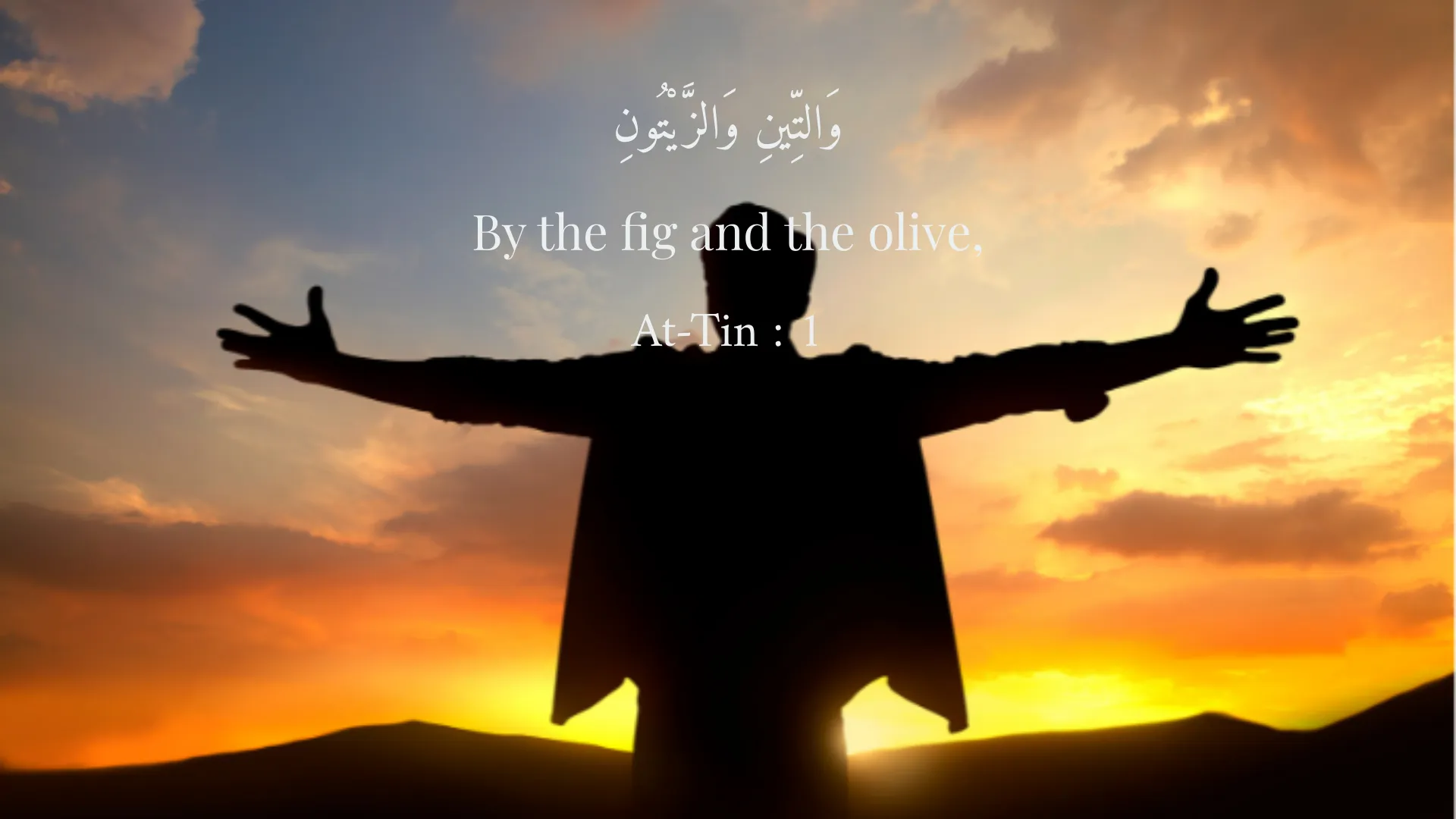
وَالتِّينِ وَالزَّيْتُونِ
By the fig and the olive,
At-Tin : 1
اللَّهُ نُورُ السَّمَاوَاتِ وَالْأَرْضِ ۚ مَثَلُ نُورِهِ كَمِشْكَاةٍ فِيهَا مِصْبَاحٌ ۖ الْمِصْبَاحُ فِي زُجَاجَةٍ ۖ الزُّجَاجَةُ كَأَنَّهَا كَوْكَبٌ دُرِّيٌّ يُوقَدُ مِن شَجَرَةٍ مُّبَارَكَةٍ زَيْتُونَةٍ لَّا شَرْقِيَّةٍ وَلَا غَرْبِيَّةٍ يَكَادُ زَيْتُهَا يُضِيءُ وَلَوْ لَمْ تَمْسَسْهُ نَارٌ ۚ نُّورٌ عَلَىٰ نُورٍ ۗ يَهْدِي اللَّهُ لِنُورِهِ مَن يَشَاءُ ۚ وَيَضْرِبُ اللَّهُ الْأَمْثَالَ لِلنَّاسِ ۗ وَاللَّهُ بِكُلِّ شَيْءٍ عَلِيمٌ
Allah is the Light of the heavens and the earth. The example of His light is like a niche within which is a lamp, the lamp is within glass, the glass as if it were a brilliant star, lit from [the oil of] a blessed olive tree, neither of the east nor of the west, whose oil would almost illuminate even if no fire touched it. Light upon light. Allah guides to His light whom He wills. And Allah presents examples for the people, and Allah is Knowing of all things.
An-Noor : 35
يُنبِتُ لَكُم بِهِ الزَّرْعَ وَالزَّيْتُونَ وَالنَّخِيلَ وَالْأَعْنَابَ وَمِن كُلِّ الثَّمَرَاتِ ۗ إِنَّ فِي ذَٰلِكَ لَآيَةً لِّقَوْمٍ يَتَفَكَّرُونَ
He causes to grow for you thereby the crops, olives, date-palms, grapes, and all types of fruits. Indeed in that is a sign for a people who give thought.
An-Nahl : 11
Short Story
It is narrated that a pious man, passing by a centuries-old olive tree daily, observed how it bore fruit and provided shade for people year after year. One day, a dervish passed by and asked about his state of mind. The pious man said: "How wondrous is this tree! No hand has touched it, nor foot watered it, yet every year it yields fruit and feeds people. Is this not a sign of the Creator's wisdom?" The dervish smiled and replied: "Indeed, every leaf is a book of knowledge, and every fruit, a sign of boundless grace. If we do not look at the trees and reflect on their fruits, how can we comprehend the greatness of the Gardener of existence?" And both engaged in thanksgiving for divine blessings, realizing that even in a small fruit, great lessons of divine wisdom are hidden.