Quranic Answer
The Holy Quran, revered as the guidebook for human existence, is a rich source of wisdom that has consistently emphasized the significance of thinking and reasoning. The Quran is not merely a book of laws or rituals; it serves as a comprehensive framework for understanding life and the universe. In its verses, a profound stress is laid on contemplation, reflection, and the practice of critical thinking, as these are essential tools for achieving self-awareness and understanding one's surroundings. The emphasis on rational thought is a recurring motif, illustrating that the act of thinking is not only encouraged but divinely ordained. One of the notable verses that highlight this principle can be found in Surah Al-Imran, verse 190, which states: "Indeed, in the creation of the heavens and the earth and the alternation of the night and day are signs for those of understanding." This verse serves as an invitation for individuals to engage in deep reflection about the signs of Allah's creation. The celestial bodies, the intricacies of nature, and the cyclical patterns in life are all manifestations of divine artistry that warrant contemplation. These signs are not merely to be observed; they beckon individuals to uncover the deeper truths of existence and their own role within it. Through contemplation, one becomes closer to achieving a deeper understanding of God, ultimately transforming one's perspective on life and existence. Moreover, Surah Al-Mu’minun, verse 68 sheds light on the importance of self-reflection: "Do they not reflect upon themselves?" This poignant question signifies the need for human beings to ponder their existence, their thoughts, actions, and ultimately, their purpose. Such self-reflection can lead to a transformation of character and ethics, fostering a sense of accountability regarding one's choices in life. In a world overflowing with distractions, the Quran urges believers to prioritize introspection as a pathway to enlightenment. The Quran underscores the notion that thinking and reasoning are not just essential for spiritual development; they are also critical instruments for navigating the complexities of daily life. The world today is rife with challenges—social issues, political upheaval, environmental degradation, and rapid technological changes. In light of these modern threats, the call for critical and analytical thinking has become increasingly significant. The foundation laid out in the Quran provides insights that encourage individuals to confront these realities with wisdom and understanding, ultimately empowering them to forge pathways toward constructive change. The ability to think critically enhances one’s faith as it involves questioning, seeking evidence, and arriving at conclusions based on rational thought. This intellectual journey can lead individuals to a more profound appreciation of their beliefs, enhancing their spirituality and reinforcing the relationship between reason and faith. The Quran thus serves as a bridge, connecting spirituality with intellectual inquiry, offering believers the tools they require for both personal growth and community improvement. Additionally, the Quranic emphasis on thinking cultivates a sense of responsibility among individuals. When one engages in thoughtful contemplation, they become more attuned to their surroundings and the impact of their actions. In an era where misinformation can easily spread and critical discernment is often overshadowed by sensationalism, the Quran acts as a beacon to illuminate the path of truth-seeking. By encouraging believers to think rationally and critically, it cultivates an informed citizenry capable of contributing positively to society. The Quran also provides numerous examples of prophetic figures who embodied the value of thoughtful contemplation. The narrative of the Prophet Muhammad (peace be upon him) illustrates how he often retreated into solitude to reflect upon life and spirituality. His thirst for knowledge and understanding led him to ponder fundamental questions about existence, morality, and the divine purpose. This model serves as an inspiration for Muslims to seek knowledge, think critically, and embody the principles of the Quran in their own lives. The age of technological advancement we now inhabit has created both opportunities and challenges. Scientific discoveries and innovations have drastically changed the fabric of society, producing complex dilemmas ranging from ethical implications of artificial intelligence to environmental sustainability. In navigating these issues, the Quran’s perspective on reasoning becomes not only relevant but essential. As humanity progresses, the teachings of the Quran serve as timeless reminders to use our faculties of reasoning judiciously, to analyze critical situations carefully, and to seek solutions that align with moral principles and ethical considerations in light of divine guidance. Therefore, the Quran is not merely an ancient text; it is a practical manual for thoughtful living. Its focus on reasoning serves as a clarion call to reflect on profound truths that can help individuals navigate their lives with wisdom and purpose. The act of thinking is woven into the Quran's fabric, encouraging believers to explore the interconnectedness of faith and intellect. In conclusion, the Holy Quran places high importance on the virtues of thinking and reasoning, prompting believers to reflect deeply on their existence, their surroundings, and the divine signs in creation. In a time when the complexities of life can lead to confusion and disillusionment, these timeless principles serve as essential tools for understanding and navigating the modern world. The Quran invites individuals to engage in a lifelong journey of contemplation, empowering them to seek knowledge, solve problems, and contribute positively to society while deepening their faith. This holistic approach to thinking emphasizes that the act of reflection is not just a personal endeavor, but a communal responsibility essential for human growth and societal advancement.
Related Verses
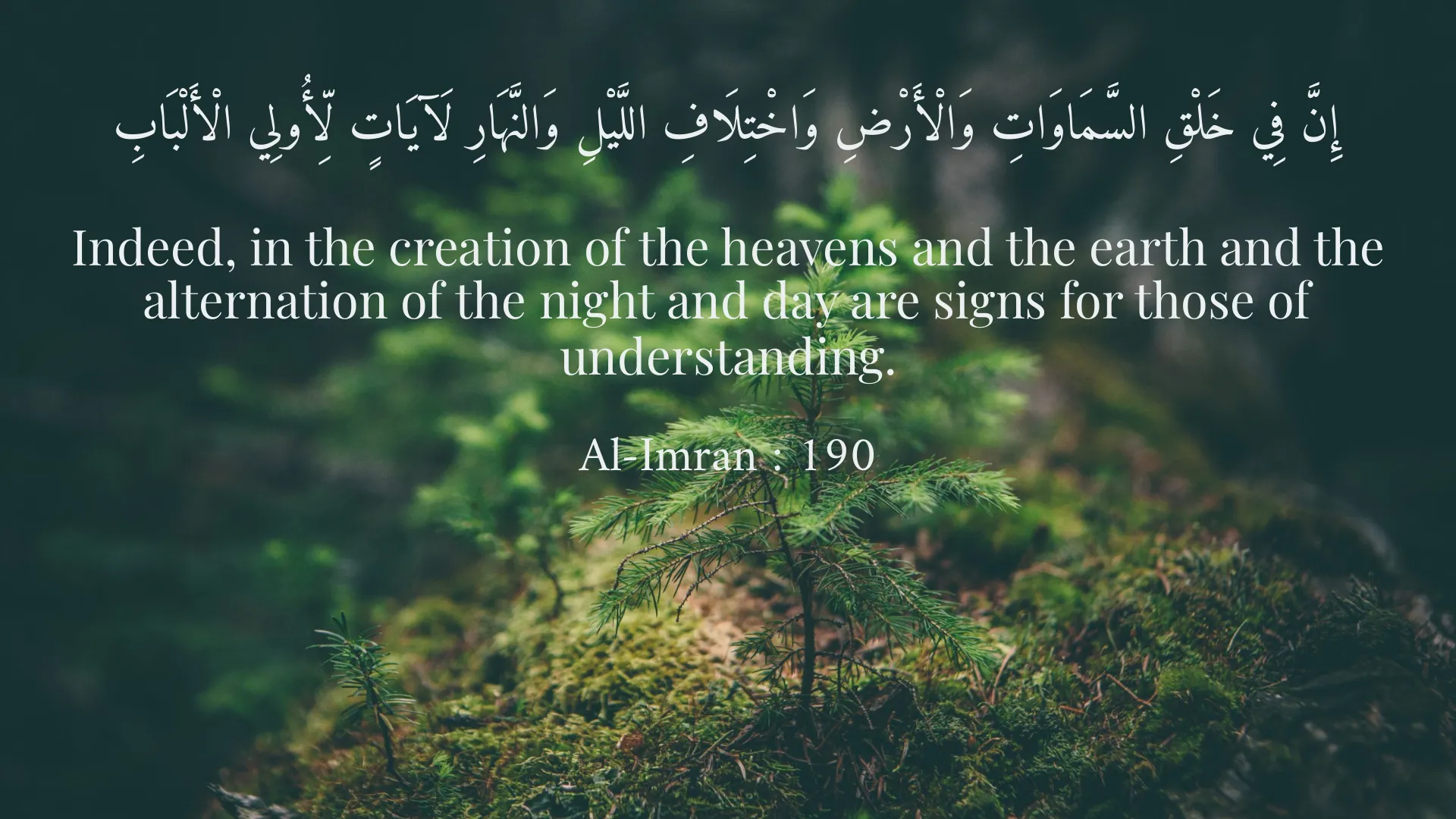
إِنَّ فِي خَلْقِ السَّمَاوَاتِ وَالْأَرْضِ وَاخْتِلَافِ اللَّيْلِ وَالنَّهَارِ لَآيَاتٍ لِّأُولِي الْأَلْبَابِ
Indeed, in the creation of the heavens and the earth and the alternation of the night and day are signs for those of understanding.
Al-Imran : 190
أَفَلَمْ يَتَفَكَّرُوا فِي أَنفُسِهِمْ
Do they not reflect upon themselves?
Al-Mu’minun : 68
Short Story
Once upon a time, a man named Adel was walking through the streets of the city, reflecting on his daily activities. He felt that he could understand the world well, but something troubled him; the lack of a clear purpose. One day, he went to his local mosque, and while reciting the Quran, he came across a verse that encouraged him to think about his life. Afterwards, he decided to spend more time contemplating the Creator and creation, and as a result, his life gained meaning. Adel strived to engage in thought and reasoning and realized that by doing so, he not only affected himself positively but also those around him.