Quranic Answer
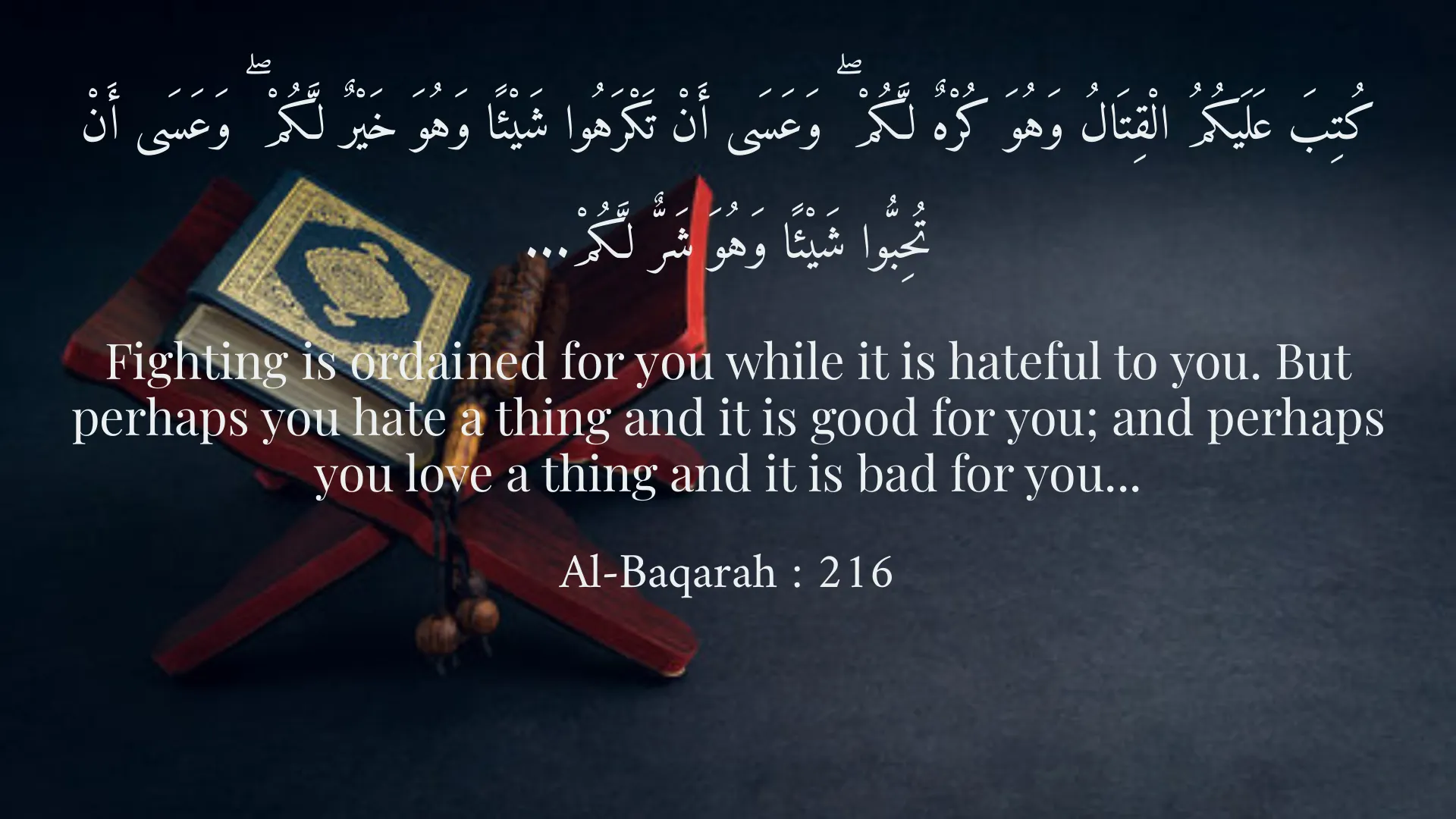
The Quran emphasizes the complexity of human perception, particularly in how we understand what is truly good for us. One key verse that illustrates this is found in Surah Al-Baqarah, verse 216, which states: 'Fighting is ordained for you while it is hateful to you. But perhaps you hate a thing and it is good for you; and perhaps you love a thing and it is bad for you...' This profound statement serves as a reminder that our understanding of circumstances can be limited, often shaped by our immediate emotions and the social norms that we are accustomed to. Following the teachings of the Quran, we can delve deeper into this topic, exploring how our misinterpretations can blind us to the greater wisdom behind certain events in our lives. In many instances, humans find themselves in situations that trigger feelings of dread, discomfort, or even resentment. These feelings can arise from fear of the unknown or a reluctance to face challenges. The Quran, however, encourages us to reconsider our initial reactions and to seek a broader understanding of our circumstances through faith and reflection. When faced with adversity, we often fail to recognize the potential for personal growth and the development of resilience. Rather than viewing hardship as an inherently negative experience, the Quran invites us to adopt a perspective that acknowledges the possibility of divine wisdom within our struggles. For example, consider the concept of conflict or fighting as mentioned in Surah Al-Baqarah. Many people might automatically perceive conflict as destructive, especially if it leads to loss or pain. Yet the Quran asserts that these situations can be catalysts for growth, unity, and strength. Through trials, we learn valuable lessons about courage, solidarity, and the importance of justice. As such, what might seem hateful or dreadful at first glance may actually serve a greater purpose in God's plan. This principle transcends the realm of religious interpretation and speaks volumes about the universal human experience. Throughout history, individuals and societies have encountered various forms of hardship—be it in the form of war, personal loss, or social upheaval. In contemporary life, many experience stress and anxiety regarding major transitions, such as job changes, relocation, or shifts in personal relationships. The discomfort associated with these changes can lead to a mental block, preventing individuals from recognizing the positive outcomes that may ultimately arise. Those who embrace these transitions with an open heart often find themselves more equipped to adapt, grow, and flourish in new environments. The Quran highlights this transformative potential through the practice of patience and the exercise of moral fortitude during trying times. When one relies on faith and engages in righteous actions amidst hardship, one can uncover layers of meaning and growth that would otherwise remain hidden. Moreover, the Quran emphasizes the importance of community and support, encouraging individuals to seek guidance and solace from those around them. In times of struggle, the act of reaching out for assistance and sharing burdens can foster resilience. This communal approach echoes the essence of spiritual teachings—brotherhood, empathy, and shared responsibility—reminding us that we are not alone, and that collective effort can lead to overcoming even the most daunting challenges. Furthermore, the emotional resilience that develops through hardship is often invaluable. The struggles we face can sharpen our understanding, deepen our empathy, and forge a greater sense of purpose. By trusting in God's wisdom and maintaining a focus on our spiritual growth, we can adapt to the trials presented to us, inciting an inner strength that transforms our perspective on suffering and adversity. As we navigate the complexities of life, the teachings of the Quran provide solace and guidance. They encourage us to reflect on our experiences, helping us to discern the distinctions between immediate displeasure and long-term benefits. By engaging in prayer, meditation, and righteous actions, we foster a deeper connection with God. This relationship allows us to tap into divine wisdom, empowering us to see goodness even amidst suffering. The journey to understanding what is truly beneficial for us involves patience and faithfulness. As we cultivate these qualities, we can learn to trust that even in our trials, God has a plan that may lead us to profound and transformative experiences. Embracing this wisdom enables us to approach life with resilience and grace, fostering a mindset that sees trials not just as obstacles but as opportunities for growth, insight, and divine connection. In conclusion, the verse from Surah Al-Baqarah serves as a reminder of the complex interplay between our perceptions and God's intentions in our lives. While humans may often misinterpret adversity as purely negative, the Quran teaches us to trust the divine process and to engage meaningfully with our hardships. By maintaining faith, practicing patience, and acting with integrity, we can uncover the blessings that lie beneath the surface of our experiences. The closer we draw to God, the clearer our understanding of goodness becomes, allowing us to navigate even the darkest of days with hope and resilience. Thus, lessons of faith, patience, and communal strength are essential for recognizing and appreciating the goodness that can emerge from adversity.
Related Verses
كُتِبَ عَلَیکُمُ الْقِتَالُ وَهُوَ كُرْهٌ لَّكُمْ ۖ وَعَسَى أَنْ تَكْرَهُوا شَيْئًا وَهُوَ خَيْرٌ لَّكُمْ ۖ وَعَسَى أَنْ تُحِبُّوا شَيْئًا وَهُوَ شَرٌّ لَّكُمْ...
Fighting is ordained for you while it is hateful to you. But perhaps you hate a thing and it is good for you; and perhaps you love a thing and it is bad for you...
Al-Baqarah : 216
Short Story
Once upon a time, there was a man named Hasan who faced difficulties in his life. He complained to God about why such troubles befell him. One day, he stumbled upon a verse in the Quran stating, 'Some things we dislike may hold goodness.' Hasan reflected on this verse and decided to be patient instead of complaining and learn from these moments. Over time, he realized that all these challenges had imparted valuable lessons to him.