Quranic Answer
Contemplating the Holy Quran is undeniably one of the most important duties of every Muslim. The Quran is not merely a book of laws or religious dictates; rather, it serves as a comprehensive guide for human existence, providing profound insights into the nature of life, the universe, and the purpose of our existence. The verses of the Quran can be regarded as divine instructions crafted by Allah that illuminate the path for believers, facilitating a deeper understanding of existence and its inherent meaning. In Surah Al-Imran, verse 190, Allah articulates: 'Indeed, in the creation of the heavens and the earth and the alternation of the night and day are signs for those of understanding.' This verse profoundly emphasizes that there are divine signs embedded within the very fabric of creation—signs that beckon humanity to observe, reflect, and derive wisdom from the world around them. The intricacies of nature, the remarkable harmony within the cosmos, and the cycles of day and night serve as a constant reminder of Allah’s omnipotence and the intricate design that underpins our reality. Through contemplation, we can penetrate the superficial layers of existence and engage with the underlying truths that shape our understanding of life. Furthermore, in Surah Muhammad, verse 24, it states: 'Then do they not reflect upon the Qur'an, or are there locks upon [their] hearts?' This verse poses a critical question that encourages believers to ponder over the teachings of the Quran. The phrase 'locks upon their hearts' serves as a metaphor for the barriers that prevent individuals from comprehending the depths of the Quranic message. Such a reflection is not merely an intellectual exercise; it is a spiritual journey that requires openness and humility. By engaging with the Quran with sincerity and a desire for understanding, we can unlock the profound wisdom contained within its verses. The act of contemplation has multiple dimensions. Firstly, it allows us to strengthen our faith. Regular engagement with the Quran fosters a stronger connection to the Divine, affirming our beliefs and encouraging us to adhere closely to the principled teachings presented in the holy text. This process of nurturing our faith is not an isolated endeavor; it is deeply intertwined with our everyday experiences and challenges. As we navigate life’s complexities, the Quran serves as a guiding beacon, directing our thoughts and actions in accordance with divine wisdom. Secondly, Quranic contemplation equips us with the tools needed to face life's challenges and difficulties. Life is fraught with trials—both personal and communal—that can often lead to confusion and despair. The Quran addresses these struggles, offering narratives, moral lessons, and reflections on resilience that can inform our responses to adversity. For instance, stories of past prophets illustrate perseverance, patience, and faith in the face of overwhelming odds. By internalizing these lessons through contemplation, we empower ourselves to confront hardships with courage and hope. Moreover, a life shaped by Quranic verses is conducive to greater inner peace and spirituality. In a world that often promotes materialism and distraction, the Quran reminds us of the significance of spiritual fulfillment over material wealth. Contemplating the Quran leads us toward a more balanced view of existence, where spiritual nourishment takes precedence over worldly pursuits. This shift in perspective is vital for achieving true happiness, as it cultivates a sense of contentment and fulfillment that transcends fleeting worldly pleasures. In achieving inner serenity and mental tranquility, the Quran provides us with principles that can be applied to our daily lives. From the emphasis on gratitude—expressed in numerous verses that remind us to reflect on Allah’s blessings—to the guidance on maintaining just and ethical relations with others, the Quran addresses the multifaceted nature of human existence. Contemplating these teachings and applying them in real-life situations empowers us to cultivate a thoughtful and compassionate demeanor toward others, thus fostering a sense of community and belonging. Furthermore, reflection upon the Quran encourages social responsibility and ethical behavior. It pushes us to think critically about our roles within our communities and to act in ways that reflect justice, mercy, and compassion. The Quran outlines the significance of helping those in need, advocating for justice, and standing against oppression. In times of uncertainty and division, these teachings serve as a clarion call for unity and empathy, urging believers to rise above personal grievances and to work toward the greater good. In conclusion, reflecting on the Quran is not merely a religious obligation; it is a profoundly transformative practice that brings us closer to understanding the truth of existence and the purpose of life. It opens the doors to inner peace and tranquility, urging us to engage with the verses of the Quran as living elements in our pursuits of righteousness and fulfillment. By committing to this act of contemplation, we allow ourselves to be shaped by divine wisdom, guiding us through the complexities of life with grace and purpose. Embracing the Quran in our daily lives ultimately cultivates a richer, more meaningful existence, aligning our actions with the higher ideals laid forth by Allah. This devotion to contemplation is a pathway to not only achieving personal serenity but also contributing positively to the world around us.
Related Verses
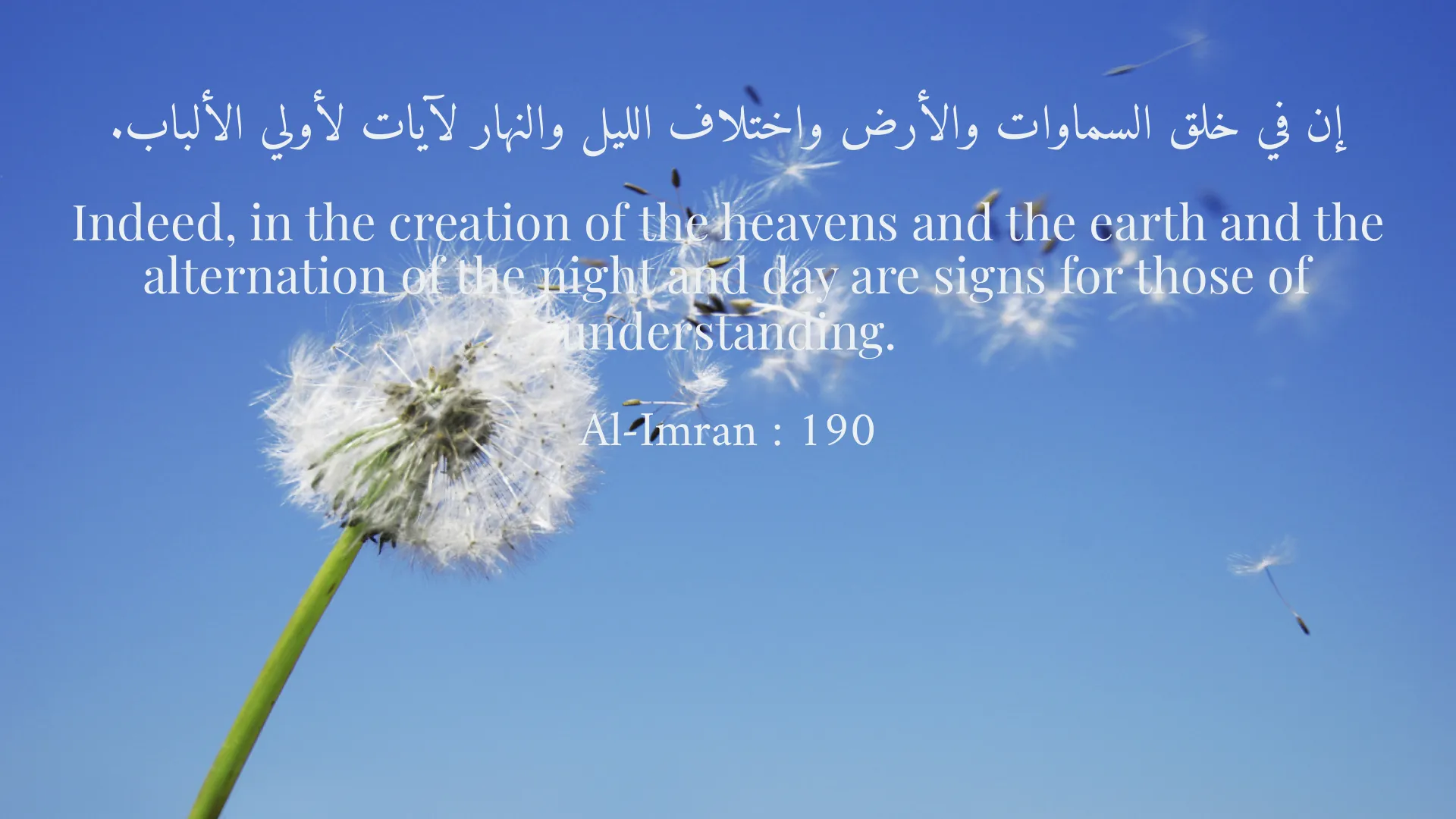
إن في خلق السماوات والأرض واختلاف الليل والنهار لآيات لأولي الألباب.
Indeed, in the creation of the heavens and the earth and the alternation of the night and day are signs for those of understanding.
Al-Imran : 190
أفلا يتدبرون القرآن أم على قلوب أقفالها.
Then do they not reflect upon the Qur'an, or are there locks upon [their] hearts?
Muhammad : 24
Short Story
One day, a young man named Aref felt that he needed answers in his life. He decided to dedicate time to recite the Quran and reflect on its meanings. Soon, he realized how much this contemplation had helped him and brought peace to his life. He recommended to his friends to engage in the interpretation and contemplation of the Quran to benefit from its blessings.