Quranic Answer
Helping the poor is not merely a charitable act; it is a deeply ingrained principle in Islamic teachings that underlines the fabric of social justice and compassion among humanity. This commitment to helping the less fortunate is echoed throughout the Quran and is a guiding philosophy for millions of Muslims around the globe. The Quran, regarded as the literal word of God in Islam, serves as a foundational text that compels believers to engage in acts of charity and to uplift those who are struggling. One of the most pronounced declarations about assisting the needy can be found in Surah Al-Ma'idah, verse 55, where Allah commands his followers: "Indeed, your ally is Allah and His Messenger and those who have believed, those who establish prayer and give zakah, and those who bow [in worship]." This verse establishes a direct connection between faith and action, illustrating that genuine belief in Allah must be manifested through tangible acts of kindness, particularly in the form of zakah—a mandatory act of charity. Zakah is not simply a financial obligation; it is an ethical duty that purifies wealth and reflects the spirit of generosity. The act of giving zakah not only aids the impoverished but has the reciprocal effect of blessing the giver. Islam teaches that wealth is not an unqualified blessing; rather, it is a responsibility that requires sharing with those less fortunate to ensure societal balance and harmony. Further emphasizing this principle, Surah Al-Baqarah, verse 177 states: "Righteousness is not that you turn your faces toward the east or the west, but [true] righteousness is in one who believes in Allah, the Last Day, the Angels, the Book, and the Prophets and gives his wealth, in spite of love for it, to relatives, orphans, the needy, the traveler, those who ask [for help], and for freeing slaves." This verse paints a broader picture of what it means to lead a righteous life, integrating not just religious observance but also social responsibility. It calls on individuals to be conscious of the needs of various vulnerable groups, thereby promoting a sense of solidarity and mutual support within society. Moreover, as we examine the teachings of Prophet Muhammad (peace be upon him), we see that he continually encouraged acts of philanthropy and compassion. A well-known saying emphasizes this: "He who helps others in this world, Allah will help him on the Day of Judgment." This statement not only reinforces the notion that helping others is a form of worship but also highlights a fundamental belief in accountability on the Day of Judgment. It places significant weight on the moral responsibility that believers have toward one another, asserting that our treatment of the less fortunate can have long-lasting implications for our moral standing in the eyes of God. Voluntary giving, or Sadaqah, is another important aspect of Islamic philanthropy that goes beyond the obligatory zakah. Those who engage in Sadaqah are recognized for their generosity, as they give out of love and compassion rather than obligation. Such acts cultivate a spirit of altruism and create a more empathetic and cohesive community. In many Islamic communities around the world, charitable giving is not restricted to monetary assistance; it also encompasses donating time, resources, and skills to help uplift those in need. This prevailing spirit of community service reflects the essential Islamic teaching that emphasizes collective upliftment rather than individual gain. Furthermore, Islam recognizes the dignity of every individual, regardless of their socio-economic status, which lends itself to the framework of social justice. The Quran promotes a society where poverty is addressed, and wealth is distributed fairly. This critical aspect of Islamic teachings implores societies to develop systems and policies that eradicate poverty, rather than merely treating its symptoms. Charity, according to Islamic principles, should not be viewed as a temporary fix but as a sustainable approach to uplifting people out of hardship. This vision demands a dual approach—personal responsibility and systemic change. In modern times, the teachings surrounding helping the poor in Islam have significant relevance. Globalization and economic challenges have exacerbated poverty levels in various parts of the world, highlighting the need for a robust, ethical response. Muslim communities are increasingly called to adopt these teachings on a larger scale, integrating them into their business practices, community programs, and as part of their corporate social responsibility. Initiatives such as microfinance platforms, social enterprises, and welfare organizations aimed at alleviating poverty can be seen as manifestations of these Islamic principles put into practice. Each act of kindness, no matter how small, contributes to weaving a safety net for the marginalized and vulnerable members of our communities. In conclusion, the teachings of Islam regarding helping the poor resonate deeply within the cores of ethical and moral conduct. Recognizing that our wealth can be a means of connecting with humanity, believers are compelled to act altruistically, reflecting the virtues of compassion, empathy, and responsibility. Helping the poor, therefore, is not just an isolated act; it is an integral part of being a conscientious member of society. Ultimately, as we extend assistance to those in need, we not only elevate others but cultivate our own spiritual growth, paving the way for a more harmonious and equitable world. As such, the act of aiding the poor should be embedded as a continuous practice in the lives of all believing individuals, resulting in a collective upliftment of society, rooted in faith, love, and justice.
Related Verses
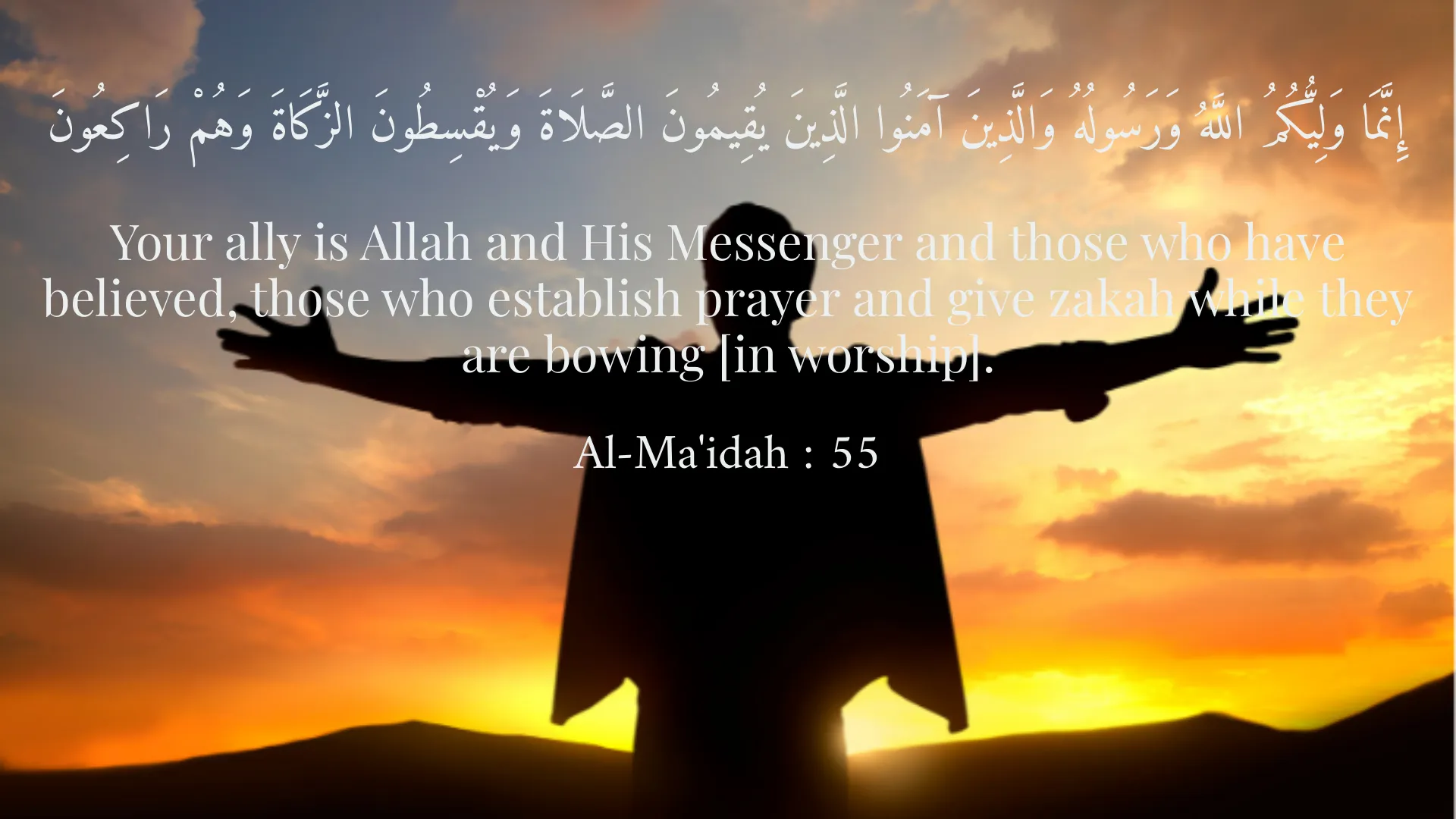
إِنَّمَا وَلِيُّكُمُ اللَّهُ وَرَسُولُهُ وَالَّذِينَ آمَنُوا الَّذِينَ يُقِيمُونَ الصَّلَاةَ وَيُقْسِطُونَ الزَّكَاةَ وَهُمْ رَاكِعُونَ
Your ally is Allah and His Messenger and those who have believed, those who establish prayer and give zakah while they are bowing [in worship].
Al-Ma'idah : 55
لَيْسَ الْبِرَّ أَنْ تُولُّوا وجوهَكُمْ قِبَلَ المَشْرِقِ وَالمَغْرِبِ وَلَكِنَّ الْبِرَّ مَنْ آمَنَ بِاللَّهِ وَالْيَوْمِ الآخِرِ وَالْمَلَائِكَةِ وَالْكِتَابِ وَالنَّبِيِّينَ وَآتَى الْمَالَ عَلَى حُبِّهِ ذَوِي القُرْبَى وَالْيَتَامَى وَالْمَسَاكِينِ وَابْنَ السَّبِيلِ وَالسَّائِلِينَ وَفِي الرِّقَابِ
Righteousness is not that you turn your faces toward the east or the west, but [true] righteousness is in one who believes in Allah, the Last Day, the Angels, the Book, and the Prophets and gives his wealth, in spite of love for it, to relatives, orphans, the needy, the traveler, those who ask [for help], and for freeing slaves.
Al-Baqarah : 177
Short Story
Once upon a time, a poor man was sitting in the streets looking up at the sky. Suddenly, a wealthy man passed by and saw him. The wealthy man recalled the verses of the Quran and decided to help this poor man. He kindly gave him some money and said, 'You are one of Allah's blessings, and I have a duty to help you.' The poor man, with tears in his eyes, thanked him and replied, 'May God bless you in this world and the Hereafter.' After that day, the wealthy man realized that helping the poor was not only a virtuous act but also increased his own blessings and happiness.