Quranic Answer
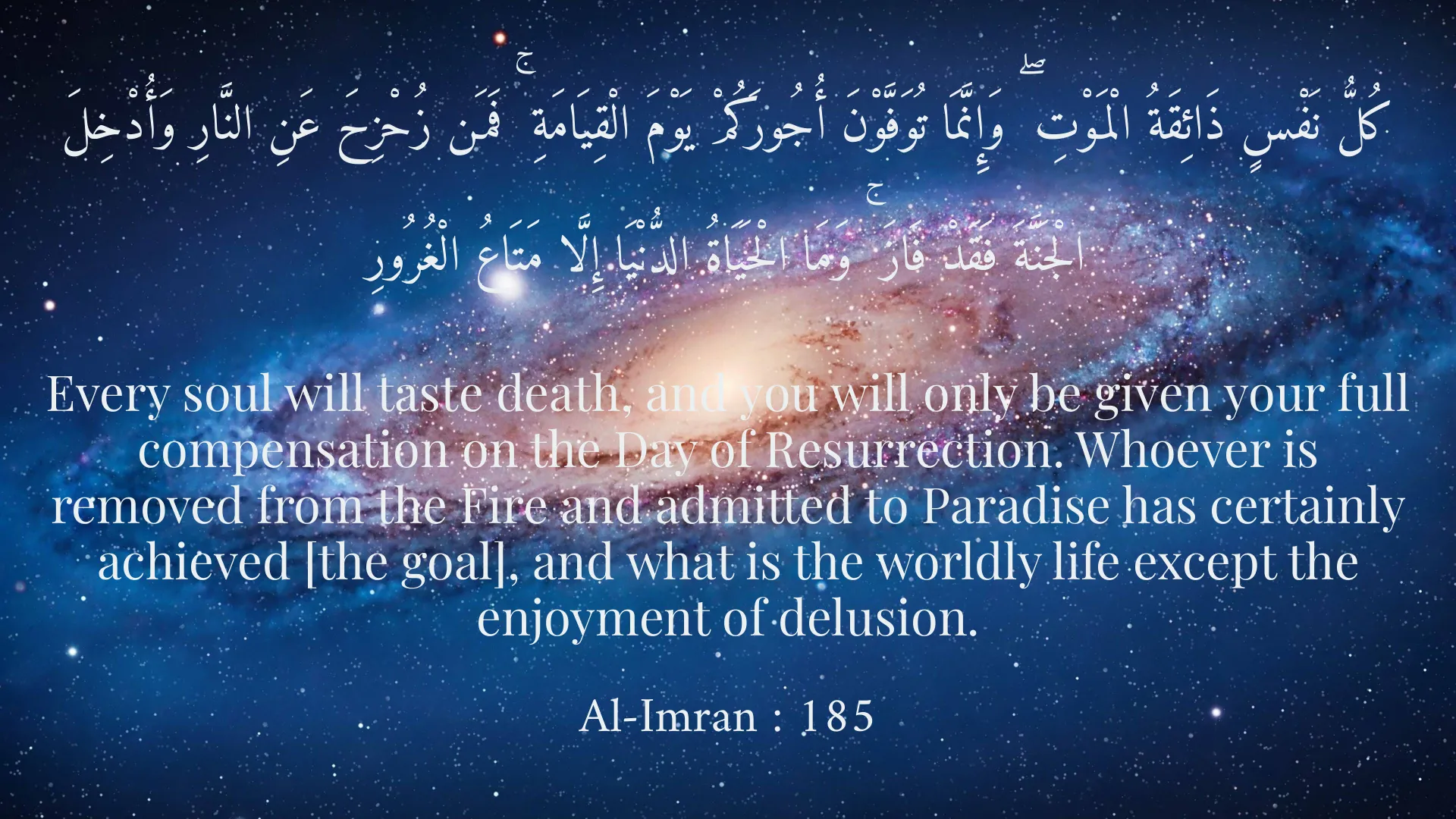
The Holy Quran emphasizes the importance of remembering the Hereafter and reflecting on life after death. This profound theme resonates throughout the sacred text, acting as a guide for believers in navigating their temporal existence with the awareness of their ultimate fate. The concept of the Hereafter is not just an abstract idea; it holds significant implications for how individuals lead their lives in the present. Surah Al-Imran, verse 185, captures this essence by stating, 'Every soul will taste death, and you will only be given your full compensation on the Day of Resurrection.' This verse serves as a poignant reminder that life is transient, and death is an inevitable reality that awaits every individual, regardless of their status or achievements in this world. Emphasizing the inevitability of death forces us to contemplate the Hereafter seriously. The day of resurrection marks a pivotal point in Islamic belief, where every soul will stand before Allah, accountable for its deeds. This accountability fosters a sense of responsibility, urging individuals to engage in good deeds while refraining from sinful actions. Understanding that our lives will be tested on that day motivates believers to live righteously and uphold moral values in their everyday interactions. Without this perspective, one might be tempted to indulge in worldly pleasures without regard for the consequences of their actions, potentially leading away from the righteous path. In continuation, Surah Al-Mu’minun, verse 115, deepens the reflection on the purpose of life and the significance of our actions in this world. Allah questions, 'Did you think that we created you in vain and that you would not be returned to Us?' This critical inquiry compels believers to consider why they were created and what ultimate purpose their existence holds. The verse suggests that life is not purposeless; rather, it is an opportunity for growth, reflection, and preparation for the afterlife. Moreover, ignoring the teachings concerning the Hereafter can lead an individual to feel that life is aimless and devoid of meaning. A life without acknowledgment of the Hereafter may become fraught with despair and disillusionment, steering individuals towards misguided paths. In contrast, an awakened consciousness regarding the afterlife invigorates the believer’s sense of purpose and fulfillment. It encapsulates the belief that our actions in this life have substantial weight in determining our place in the Hereafter. The Quran, in its beautiful narration, continuously reinforces that this world is merely a phase in our journey, serving as a testing ground where our character and deeds are shaped. Surah Az-Zumar, verse 7 states, 'If you disbelieve, indeed, Allah is free from need of you, and He does not approve of disbelief for His servants. And if you are grateful, He will approve it for you.' Here, Allah establishes the connection between faith, gratitude, and the Hereafter. Every believer is encouraged to remain steadfast in faith and to cultivate a sense of thankfulness towards the blessings bestowed upon them. This verse also highlights the notion of divine independence; regardless of human disbelief or ingratitude, Allah remains sovereign and unaffected. Thus, it becomes imperative for believers to align themselves with the truthfulness of faith, which is ultimately for their benefit—not to appease a deity, but to secure their own welfare in this transient life and the eternal Hereafter. Engaging in the remembrance of the Hereafter prompts believers to make conscious choices. It influences how they treat others, how they conduct business, and how they fulfill their roles within their families and communities. Every aspect of daily life can be infused with the awareness of accountability in the Hereafter. Acts of kindness, honesty, and compassion become more profound and meaningful when viewed through the lens of eternal consequences. Furthermore, reflecting on the Hereafter cultivates a transformative mindset, encouraging individuals to prioritize their spiritual growth over fleeting worldly gains. The influence of such contemplation can lead to a more fulfilling life, characterized by sincerity and a genuine desire to improve oneself and contribute positively to society. Yet, the challenge lies in navigating daily distractions that may divert focus from the Hereafter. In today’s fast-paced world, it is easy to forget about the consequences of our actions, but the Quran calls us to a higher state of consciousness—where regular reflection on our mortality and afterlife becomes a part of our routine. This engagement can take various forms, such as prayer, reading the Quran, or participating in discussions about faith and spirituality. Therefore, contemplating the Hereafter is not merely a religious obligation; it is a profound human necessity that directly influences our approach to life. The more we reflect on our ultimate destination, the clearer our path becomes. It aids us in aligning our daily actions with higher ideals, enabling us to avoid the pitfalls of a superficial existence. In conclusion, the teachings of the Holy Quran regarding the Hereafter serve as constant reminders of the transient nature of life. The verses cited emphasize that every individual will be held accountable for their actions. This awareness encourages an active engagement with life that prioritizes guidance from Almighty Allah, propelling believers towards righteousness and a deeper understanding of their purpose. Embracing this consciousness can lead to a more meaningful, purposeful life—one that prepares the soul for the eternal journey ahead. The sacred text, in its divine wisdom, profoundly shapes our understanding of both this world and the Hereafter, encouraging a balance that honors both spiritual growth and earthly responsibilities.
Related Verses
كُلُّ نَفْسٍ ذَائِقَةُ الْمَوْتِ ۖ وَإِنَّمَا تُوَفَّوْنَ أُجُورَكُمْ يَوْمَ الْقِيَامَةِ ۚ فَمَن زُحْزِحَ عَنِ النَّارِ وَأُدْخِلَ الْجَنَّةَ فَقَدْ فَازَ ۚ وَمَا الْحَيَاةُ الدُّنْيَا إِلَّا مَتَاعُ الْغُرُورِ
Every soul will taste death, and you will only be given your full compensation on the Day of Resurrection. Whoever is removed from the Fire and admitted to Paradise has certainly achieved [the goal], and what is the worldly life except the enjoyment of delusion.
Al-Imran : 185
أَمَ حَسِبْتُمْ أَنَّمَا خَلَقْنَاكُمْ عَبَثًا وَأَنَّكُمْ إِلَيْنَا لَا تُرْجَعُونَ
Did you think that we created you in vain and that you would not be returned to Us?
Al-Mu’minun : 115
إن كَفَرْتُمْ فَإِنَّ اللَّهَ غَنيٌّ عَنكُمْ وَلَا يَرضى لِعِبادِهِ الْكُفْرَ ۖ وَإِن شَكَرْتُمْ يَرضَهُ لَكُمْ
If you disbelieve, indeed, Allah is free from need of you, and He does not approve of disbelief for His servants. And if you are grateful, He will approve it for you.
Az-Zumar : 7
Short Story
Once upon a time, a young man named Hossein was walking through the streets, pondering over his life. He was busy working every day and had never thought about his future and the Hereafter. One day, his friends talked about the Day of Judgment and Hossein suddenly realized that he needed to think about life after death. He decided to live with kindness and honesty and to show love to his parents. After a while, Hossein felt more happiness and peace in his life, understanding that contemplating the Hereafter had transformed his life.