Quranic Answer
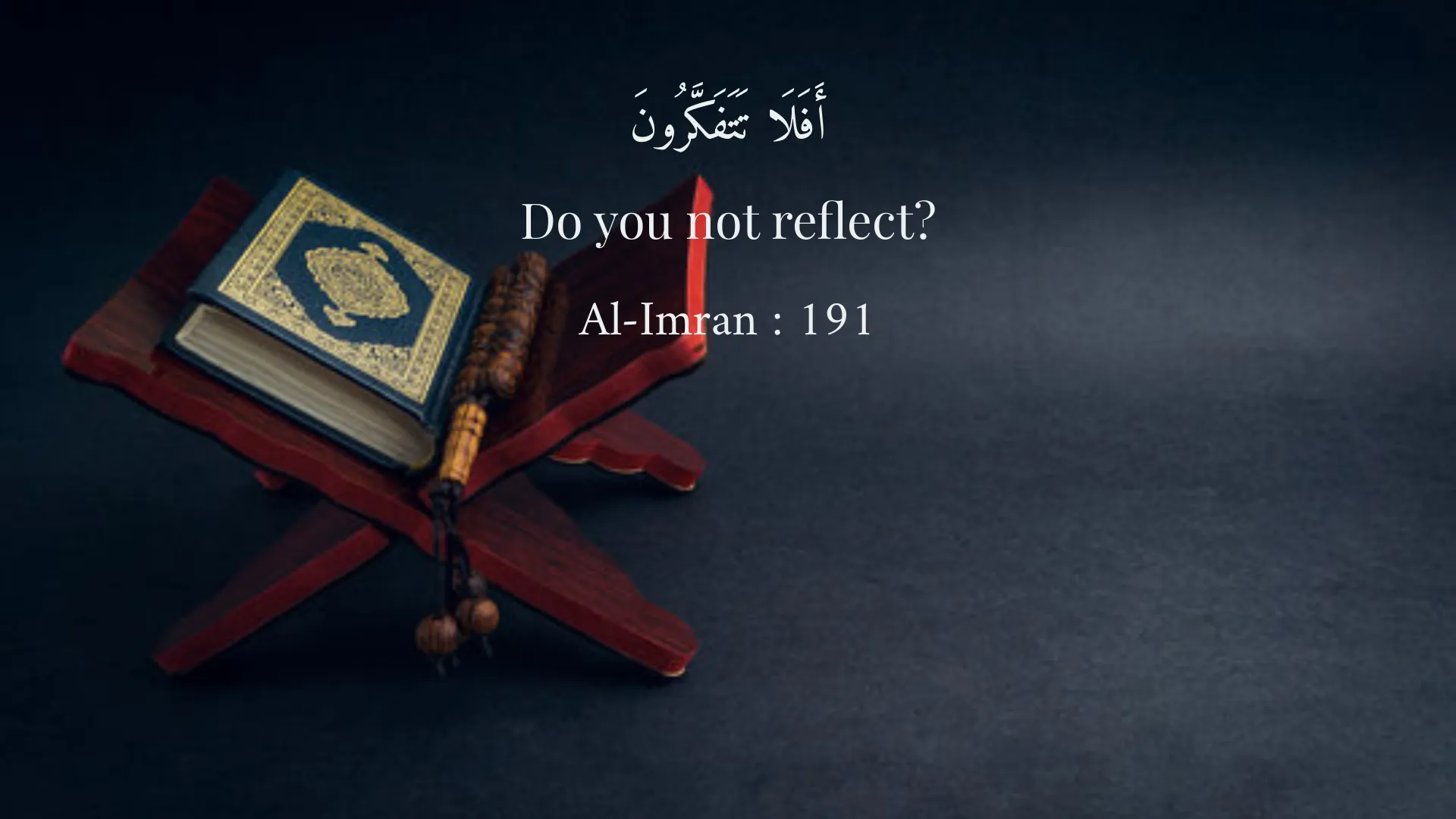
The Holy Quran, revered as the divine revelation in Islam, places a significant emphasis on the concepts of thinking and reflection. Among various verses, the call to contemplation is made explicitly in Surah Al-Imran, verse 191, where Allah poses the question, "Do you not reflect?" This verse serves as a reminder to humanity to engage in deep thought about the divine signs manifest in the world and the intricacies of creation surrounding us. The importance of thoughtfulness emphasizes the notion that to truly know and appreciate the presence of the Creator, one must explore the myriad complexities of life, nature, and existence. Through such contemplation, individuals can foster a closer connection to the divine and develop a deeper understanding of their own existence in the cosmos. Understanding the significance of reflection goes beyond merely acknowledging the importance of thinking; it bears substantial implications for how individuals interact with the world around them. Thoughtfulness encourages individuals to engage with their surroundings actively, promoting not only knowledge but also wisdom. Each moment spent reflecting allows one to grasp not only the world but also oneself, leading to a more profound comprehension of personal purpose and identity. This pursuit of knowledge, spurred by reflection, can lead to spiritual growth and a stronger foundation of faith. In this light, the Quranic emphasis on reflection aligns with the broader Islamic teachings regarding the importance of acquiring knowledge and understanding. It indicates that the quest for knowledge is a pathway to a deeper connection to Almighty Allah and to a more meaningful life. Moreover, in Surah An-Nahl, verse 125, Allah instructs the Prophet Muhammad (peace be upon him) to invite people to the faith with wisdom and beautiful preaching. This verse underscores that reflection is not only vital for individual understanding but also a crucial element when it comes to guiding others towards the truth. The commandment to preach with wisdom implies that a person must have a refined understanding of their beliefs and the world before they can effectively convey these truths to others. Reflection becomes a preparatory step for those who aspire to be effective communicators of faith, enabling them to reach out with sincerity and compassion. The power of thoughtful communication is an essential tool for fostering understanding and resolving conflicts, which speaks to the Quranic view of cultivating an educated, spiritual society. Furthermore, Surah Yunus, verse 100 states, "And it is not for a soul to believe except by permission of Allah." This particular verse eloquently conveys the connection between faith and thought. It exemplifies that while human beings can ponder, reflect, and seek the truth, the ultimate granting of faith is a divine prerogative. This intricately ties the concept of thinking to the process of belief. Thought should not be underestimated in its capacity to lead one toward faith; indeed, reflective thought can serve as a vector leading souls to the embrace of belief, for it allows for a genuine exploration of existence, purpose, and divinity. In essence, being a person of thought is fundamental to achieving a deeper recognition of God and oneself. Engaging in regular contemplation fosters self-awareness and spiritual growth. In the fast-paced environment of daily life, where distractions abound, it is essential that individuals carve out time for reflection. This practice entails not only pondering one’s actions and intentions but also considering the consequences of one's decisions. Reflection aids us in making better choices, allowing us to navigate the complexities of life with clarity and purpose. Amidst life’s challenges, a thoughtful person is better equipped to confront obstacles and dilemmas. By evaluating their options and considering the various outcomes of their decisions, they can proceed with confidence along the right path. Truly, reflective thought empowers individuals to weigh their choices carefully, discern what is beneficial, and align their actions with their values and beliefs. Such discernment leads to the capacity for achieving inner peace as individuals find themselves aligned with their purpose and understanding. The capacity to think deeply encourages personal accountability, as one becomes aware of their role in shaping their life and impact on others. This awareness fosters a sense of responsibility not just to oneself, but also to the surrounding community and the world. As such, thoughtful individuals can contribute to a more peaceful and understanding society, embodying the essence of wisdom that transcends mere knowledge. Therefore, the Quran’s call to reflection serves as a profound invitation to every individual seeking to understand their purpose within the tapestry of life. It reinforces the belief that the act of thinking and the pursuit of knowledge are not only acts of intellectual engagement but also spiritual endeavors that can lead one to a higher state of being. Through reflection, individuals engage with and cultivate their understanding of God, themselves, and their surroundings, fostering a harmonious existence built on the principles of wisdom and understanding, as encouraged by the verses of the Holy Quran. In conclusion, the onus is on each individual to heed the Quranic call to reflect, thereby enriching their journey towards faith, wisdom, and peace.
Related Verses
أَفَلَا تَتَفَكَّرُونَ
Do you not reflect?
Al-Imran : 191
ادْعُ إِلَى سَبِيلِ رَبِّكَ بِالْحِكْمَةِ وَالْمَوْعِظَةِ الْحَسَنَةِ
Invite to the way of your Lord with wisdom and good instruction.
An-Nahl : 125
وَمَا كَانَ لِنَفْسٍ أَنْ يُؤْمِنَ إِلَّا بِإِذْنِ اللَّهِ
And it is not for a soul to believe except by permission of Allah.
Yunus : 100
Short Story
Once upon a time, a young man named Hossein was sitting in a garden, contemplating his life. He always wanted to make the best decisions but didn't know how. One day, he encountered a wise scholar and asked for his help. The scholar said, 'O son, whenever your heart is troubled, think of the verses of the Quran and draw inspiration from them.' Hossein listened carefully to this advice, and from that day on, whenever he faced a problem, he reflected on the divine verses first before acting; thus, he was able to create a fruitful and happy life.