Quranic Answer
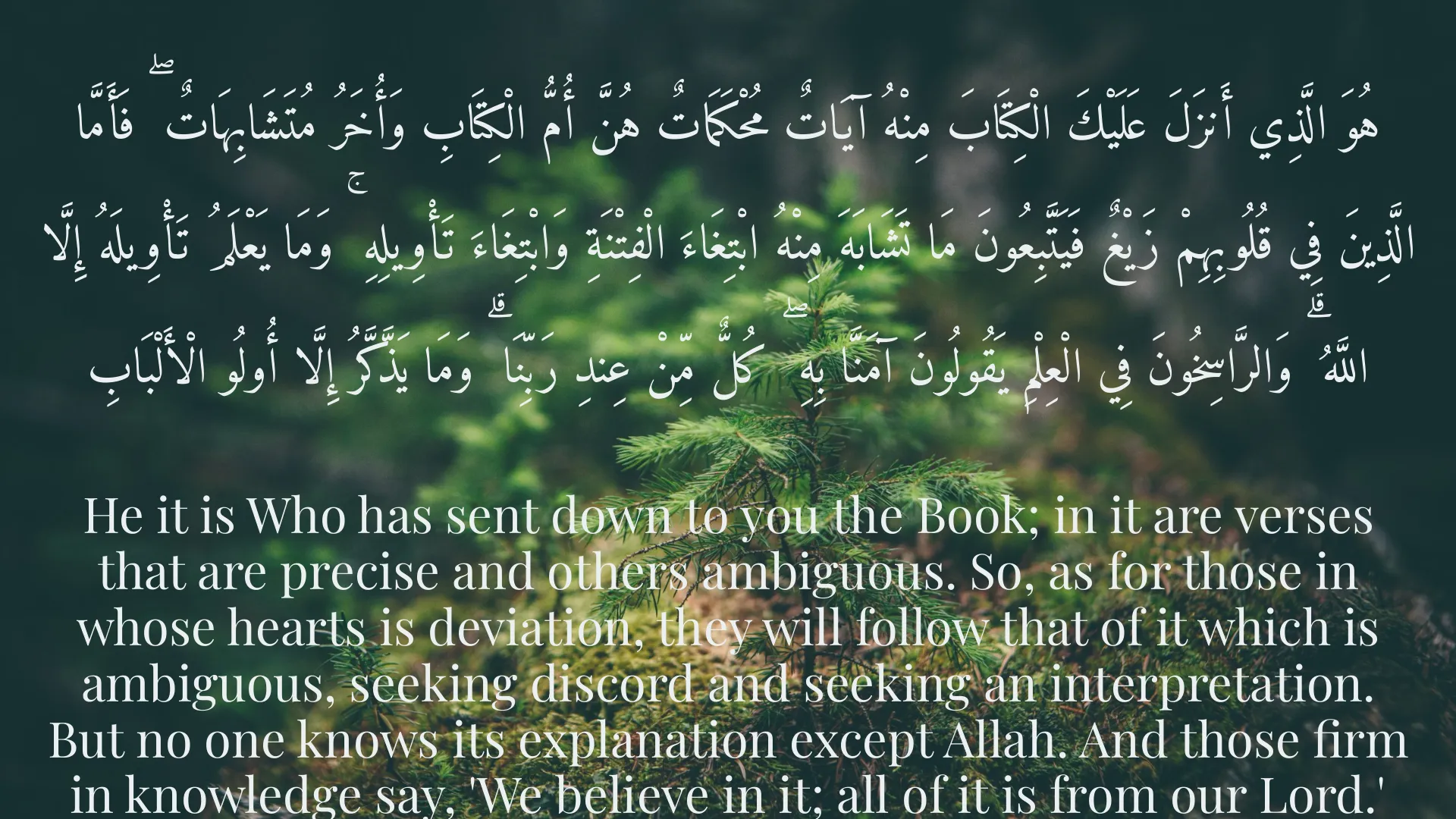
In the Holy Quran, the importance of understanding and reflecting on religious matters is emphasized repeatedly. One of the significant verses in this regard is found in Surah Aal-Imran, verse 7: 'He it is Who has sent down to you the Book; in it are verses that are precise and others ambiguous. So, as for those in whose hearts is deviation, they will follow that of it which is ambiguous, seeking discord and seeking an interpretation. But no one knows its explanation except Allah. And those firm in knowledge say, 'We believe in it; all of it is from our Lord.' And no one will be reminded except those of understanding.' This verse highlights that only individuals who have a deep understanding of religious matters can truly benefit from the content of the Quran. The intricate nature of the Quran suggests that its verses are not merely to be read but are intended to be contemplated, analyzed, and internalized. The distinction between precise and ambiguous verses raises fundamental questions about interpretation and understanding, suggesting that some messages are clear while others require careful thought and insight to truly grasp their meaning. The significance of religious analysis is that believers can achieve a more profound understanding of divine teachings and laws, which allows them to organize their lives in a manner aligned with those principles. The Quran serves as a comprehensive guide, providing believers with a framework within which to navigate the complexities of life. By engaging with the text critically, individuals develop a relationship with their faith that is both personal and intellectually rigorous. Moreover, the verse from Surah Muhammad, verse 19, emphasizes the necessity of a correct and profound understanding of the principle of monotheism, stating: 'So know that there is no deity except Allah and ask forgiveness for your sin and for the believing men and women.' This reinforces the idea that knowledge is pivotal in religious practice. Understanding the essence of monotheism not only shapes an individual's beliefs but also influences their actions and interactions with the community at large. In the context of Islam, acknowledging the oneness of God is the foundation upon which all other beliefs rest. Without this fundamental understanding, one risks falling into error, misguidance, or extremism – all of which can stem from misconceptions about the divine. Self-reflection in religious matters is immensely important for personal growth and spiritual development. The Quran encourages its followers to not only recite its verses but also to meditate upon them, fostering a sense of awareness and responsibility. This act of reflection helps in identifying one's shortcomings, seeking forgiveness, and striving for continual self-improvement. The journey of understanding is not merely an intellectual endeavor but an experiential one that fosters humility, compassion, and empathy towards others. Furthermore, the collective benefit of understanding and analysis in religious contexts cannot be overstated. As individuals grow in their comprehension of religious teachings, they are better equipped to contribute positively to their communities. When a group of believers possesses a solid understanding of their faith, they are more likely to act in ways that promote goodness and righteousness. A community grounded in sound knowledge of Islamic principles will be more resilient against divisive ideologies and actions that run counter to the core tenets of Islam, fostering harmony and cohesion among its members. This is particularly relevant in contemporary contexts where religious misinformation and radical ideologies seek to exploit ambiguities for their gain. By fortifying their understanding of religious texts, individuals can reinforce their beliefs against manipulation and misinterpretation. Knowledge empowers Muslims to engage with the world critically, approach challenges thoughtfully, and cultivate a sense of agency in their spiritual journeys. The Quran repeatedly calls for believers to engage with their faith actively and thoughtfully. Verses that highlight the value of knowledge and understanding serve as reminders that faith is not a passive state but an active pursuit. Each verse offers a myriad of lessons and insights when approached with an open heart and a receptive mind. The role of scholars and knowledgeable individuals becomes crucial in guiding the community through complex interpretations that might arise from the ambiguous verses, ensuring that misunderstandings are rectified and the essence of the teachings are preserved. Ultimately, the endeavor to understand Islamic teachings on both an individual and community level empowers Muslims to lead lives that reflect their values. Cultivating an understanding of scripture aids in self-purification, encouraging adherents to align their actions with their beliefs. This process inspires believers to strive toward betterment not just for themselves but for society as a whole, creating a ripple effect of goodness stemming from informed and compassionate individuals. In the face of misguidance, a well-informed believer can serve as a beacon of light, guiding others towards the truth and the path of righteousness. In conclusion, understanding and reflecting on religious matters as emphasized in the Holy Quran are fundamental to the growth of the believer and the community. Through analysis, self-reflection, and the pursuit of knowledge, Muslims can navigate their spiritual path effectively, remain protected from misguidance, and radiate goodness within their societies. This intricate relationship between understanding and action ultimately illuminates the profound impact that knowledge can have on the individual and communal levels, fostering an environment that nurtures righteousness and piety.
Related Verses
هُوَ الَّذِي أَنزَلَ عَلَيْكَ الْكِتَابَ مِنْهُ آيَاتٌ مُحْكَمَاتٌ هُنَّ أُمُّ الْكِتَابِ وَأُخَرُ مُتَشَابِهَاتٌ ۖ فَأَمَّا الَّذِينَ فِي قُلُوبِهِمْ زَيْغٌ فَيَتَّبِعُونَ مَا تَشَابَهَ مِنْهُ ابْتِغَاءَ الْفِتْنَةِ وَابْتِغَاءَ تَأْوِيلِهِ ۚ وَمَا يَعْلَمُ تَأْوِيلَهُ إِلَّا اللَّهُ ۗ وَالرَّاسِخُونَ فِي الْعِلْمِ يَقُولُونَ آمَنَّا بِهِ ۖ كُلٌّ مِّنْ عِندِ رَبِّنَا ۗ وَمَا يَذَّكَّرُ إِلَّا أُولُو الْأَلْبَابِ
He it is Who has sent down to you the Book; in it are verses that are precise and others ambiguous. So, as for those in whose hearts is deviation, they will follow that of it which is ambiguous, seeking discord and seeking an interpretation. But no one knows its explanation except Allah. And those firm in knowledge say, 'We believe in it; all of it is from our Lord.' And no one will be reminded except those of understanding.
Aal-Imran : 7
فَاعْلَمْ أَنَّهُ لَا إِلَٰهَ إِلَّا اللَّـهُ وَاسْتَغْفِرْ لِذَنبِكَ وَلِلْمُؤْمِنِينَ وَالْمُؤْمِنَاتِ
So know that there is no deity except Allah and ask forgiveness for your sin and for the believing men and women.
Muhammad : 19
Short Story
One day, a man named Hasan was sitting in the market, pondering over religious matters. He felt that the depth of his understanding of the religion had decreased compared to before. At that moment, a religious scholar was sitting beside him. The scholar said to Hasan, 'Brother, to gain a deeper understanding of the religion, you must always reflect on the Quran and seriously pay attention to its verses. Allah says in the Quran to delve into the understanding of its verses and with deep thought, to reach the truth of it.' Hasan decided to read and reflect on the Quran every day. Over time, he felt that he had gained more light of belief and understanding, leading him to a peaceful state of mind.