Quranic Answer
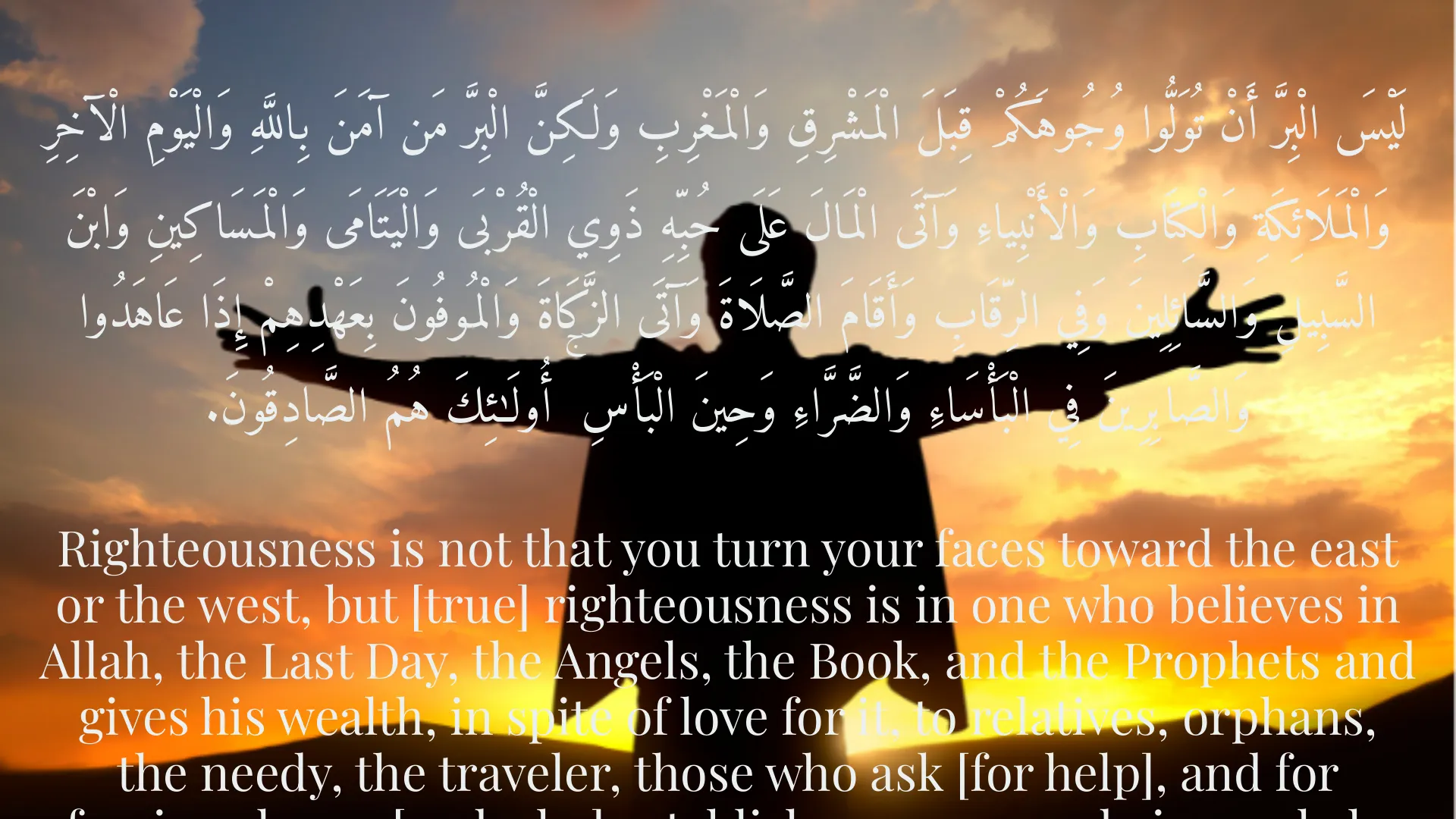
In the Holy Quran, the importance of doing good deeds and benevolence is clearly emphasized. One of the most profound verses highlighting this concept is found in Surah Al-Baqarah, verse 177, where Allah states: 'Righteousness is not that you turn your faces toward the east or the west, but [true] righteousness is in one who believes in Allah, the Last Day, the Angels, the Book, and the Prophets and gives his wealth, in spite of love for it, to relatives, orphans, the needy, the traveler, those who ask [for help], and for freeing slaves; [and who] establishes prayer and gives zakah; those who fulfill their promise when they promised; and [those who] are patient in poverty and hardship and during battle. Those are the ones who have been true, and it is those who are the righteous.' This verse illustrates that righteousness is deeply rooted in our intentions and actions, not just in receiving immediate responses or rewards. The Quran emphasizes that righteousness cannot simply be defined by outward rituals or actions. It is a comprehensive term that encompasses belief, charity, prayer, patience, and fulfilling one’s promises. Each part plays a significant role in the life of a believer and in the society they inhabit. The essence of righteousness extends far beyond merely adhering to physical acts; it lies in the depth of one’s faith and their genuine intent behind each action. Moreover, in Surah Al-Baqarah, verse 261, Allah draws a beautiful analogy: 'The example of those who spend their wealth in the way of Allah is like a seed of grain that sprouts seven ears; in every ear there are a hundred grains. And Allah multiplies [His reward] for whom He wills.' This metaphor serves as a powerful reminder of the exponential impact of charitable acts. When we give selflessly to others, we do not just enhance our moral character, but we also unlock divine rewards that greatly surpass our understanding. This serves to encourage believers to engage in acts of charity generously. The Quran’s perspective on good deeds is multifaceted. It's not merely about the material benefits one might gain, but about the spirituality and peace that something as simple as generosity can cultivate within oneself. This notion is critical in understanding the holistic nature of good deeds. Deeds are a form of worship, interlaced with compassion, kindness, and empathy. They create bonds and strengthen communities, ultimately contributing to a more just society. Perhaps one of the essential aspects of performing good deeds articulated in Islamic teachings is the focus on sincerity and seeking Allah’s pleasure. Many might find satisfaction in receiving recognition or material rewards, but the true believer understands that the essence of their actions is tied to their intention. According to a famous hadith, 'Actions are judged by intentions, and every person will have what they intended.' This means that even if the world does not acknowledge our efforts, Allah sees our intentions and will reward us accordingly. This Islamic principle leads to a crucial aspect of morality: maintaining perseverance in virtue. The Quran encourages believers to continue doing good, even in the face of adversity or when immediate rewards are not apparent. Our acts of kindness contribute to our spiritual growth, and they reverberate throughout the world. Sometimes the impact of our good actions can influence lives in ways we may not immediately perceive. The idea that every bit of good we put into this world has a way of resonating back is particularly beautiful, suggesting an interconnectedness of humanity. Take, for example, the simple act of helping a neighbor in need. This act of kindness might not come with accolades or a grand reward, but it fosters community and enhances the very fabric of society. The blessings one receives through such actions might not always be material; they could manifest in inner peace, stronger community ties, or even good health over time. The teachings within these verses also call upon individuals to recognize their privileges and use them to support those less fortunate. It emphasizes the act of giving as not just a duty, but as a vital practice that fuels society's growth and uplifts the collective well-being. Therefore, we must recognize our responsibility toward those in need and contribute to charity, help orphans, support the needy, and assist those traveling. Simply put, engaging in good deeds is a demonstration of gratitude for our blessings. Furthermore, acts of kindness and goodness are not just part of individual conduct; they reflect on a societal scale. Cultivating an environment where benevolence is prevalent creates a nurturing atmosphere for all, where justice, truth, and compassion thrive. Consequently, we are called not just to be good individuals but to influence those around us positively. A community immersed in love and generosity defines a society that flourishes, where everyone is uplifted voluntarily. Moreover, the concept of kindness and justice is deeply interwoven with the principle of patience. The Quran acknowledges that patience is a virtue that enhances our ability to engage in good endeavors. Surah Al-Baqarah teaches that true righteousness entails maintaining one's moral compass even in hardship. This notion underscores the idea that virtue isn’t only shown in moments of ease but is most profoundly tested during trials and tribulations. Thus, enduring through tough times with a steadfast heart enables personal growth and strengthens faith. It is worth noting that the Quran repeatedly assures its readers that although the fruits of good deeds may not always be apparent in this life, they surely manifest in the Hereafter. This belief fosters hope, reinforces perseverance, and encourages moral living, which leads to success in the life to come. Therefore, we should continue promoting kindness, truth, and justice, acting out our faith continuously, even when recognition eludes us. In conclusion, the essence of doing good in accordance with the teachings of the Holy Quran is about more than merely following external practices; it calls upon believers to invest in their spiritual growth through intentional, righteous acts. Good deeds are comprehensive of belief, charity, and patience, which create not just individual growth, but societal harmony. Thus, we must act with sincerity, persist in righteousness despite challenges, and trust that our deeds will ultimately resonate with goodness both in this life and beyond.
Related Verses
لَيْسَ الْبِرَّ أَنْ تُوَلُّوا وُجُوهَكُمْ قِبَلَ الْمَشْرِقِ وَالْمَغْرِبِ وَلَكِنَّ الْبِرَّ مَن آمَنَ بِاللَّهِ وَالْيَوْمِ الْآخِرِ وَالْمَلَائِكَةِ وَالْكِتَابِ وَالْأَنْبِياءِ وَآتَى الْمَالَ عَلَى حُبِّهِ ذَوِي الْقُرْبَى وَالْيَتَامَى وَالْمَسَاكِينِ وَابْنَ السَّبِيلِ وَالسَّائِلِينَ وَفِي الرِّقَابِ وَأَقَامَ الصَّلَاةَ وَآتَى الزَّكَاةَ وَالْمُوفُونَ بِعَهْدِهِمْ إِذَا عَاهَدُوا وَالصَّابِرِينَ فِي الْبَأْسَاءِ وَالضَّرَّاءِ وَحِينَ الْبَأْسِ ۚ أُولَـٰئِكَ هُمُ الصَّادِقُونَ.
Righteousness is not that you turn your faces toward the east or the west, but [true] righteousness is in one who believes in Allah, the Last Day, the Angels, the Book, and the Prophets and gives his wealth, in spite of love for it, to relatives, orphans, the needy, the traveler, those who ask [for help], and for freeing slaves; [and who] establishes prayer and gives zakah; those who fulfill their promise when they promised; and [those who] are patient in poverty and hardship and during battle. Those are the ones who have been true, and it is those who are the righteous.
Al-Baqarah : 177
لَنْ تَنَالُوا الْبِرَّ حَتَّى تُنفِقُوا مِمَّا تُحِبُّونَ ۗ وَمَا تُنفِقُوا مِن شَيْءٍ فَإِنَّ اللَّهَ بِهِ عَلِيمٌ.
Never will you attain the good reward until you spend [in the cause of Allah] from that which you love. And whatever you spend - indeed, Allah is Knowing of it.
Al-Imran : 92
Short Story
One day, a man went to the market and while shopping, he noticed a homeless child. He immediately gave him some money to buy food. The people around praised him for this good deed, but he responded with a smile, saying that he did it for God, not for attention. Over time, his neighbors saw how his goodness impacted their lives and decided to continue this kind act.