Quranic Answer
The Holy Quran, revered as the word of Allah, serves as a guiding light for billions of individuals seeking purpose and direction in their lives. As a divine revelation, this book encompasses profound wisdom, ethical teachings, and comprehensive principles that shape personal, social, and spiritual conduct. It is not merely a collection of verses but rather a holistic way of life that directs humanity towards righteousness, fulfillment, and harmony. The significance of the Quran is evident from the very first message it communicates. In Surah Al-Baqarah, verse 2, it states: 'This is the Book about which there is no doubt, a guidance for those conscious of Allah.' This verse underscores the Quran's role as an unwavering source of guidance for individuals who are mindful of their relationship with Allah. It calls upon us to approach the text with open hearts and minds, allowing its teachings to illuminate our paths. At its core, the Quran presents ethical and moral foundations that govern human interactions. In a world rife with challenges and dilemmas, the Quran lays down comprehensive guidelines aimed at nurturing respect, compassion, and integrity among individuals. One of the noteworthy teachings is found in Surah Al-Ma'idah, verse 32, which proclaims, 'If anyone saves a life, it is as if he has saved all mankind.' This profound statement speaks to the sanctity of human life and emphasizes that every effort to preserve health and well-being is a noble deed. In an era where violence and strife often overshadow the joy of existence, the Quran reminds us of our shared humanity, urging us to foster understanding and care for one another. Furthermore, Surah Luqman, verse 17 asserts the importance of respecting parents, stating: 'O my son, establish prayer, and enjoin what is right and forbid what is wrong.' Here, the Quran emphasizes two fundamental aspects: the establishment of prayer and the moral obligation to promote righteousness while discouraging wrongdoing. The emphasis on prayer highlights the need for a strong spiritual foundation, as it connects individuals to Allah and serves as a reminder of their responsibilities towards others. The message of respecting parents also resonates deeply within cultural contexts, wherein honoring one's parents is often considered a vital virtue. The Quran encourages us to appreciate the sacrifices made by our parents and to engage in actions that foster love, respect, and understanding within familial structures. These teachings, when embraced, can ultimately lead to enriched family dynamics, where love and compassion flourish. Moreover, the Quran serves as a comprehensive manual for social conduct. It admonishes against backbiting, dishonesty, and injustice while encouraging charity, mutual support, and honesty. These guidelines are not only applicable to inter-personal relationships but extend to societal structures, advocating for justice and equity. For instance, the Quran's advocacy for charity is paraphrased in numerous verses — the spirit of giving illuminates the essence of community, weaving together the fabric of society through acts of kindness and generosity. On a personal level, the Quran fosters individual growth and development. Its teachings inspire believers to pursue knowledge and self-improvement. For instance, the pursuit of education, both religious and secular, is emphasized throughout the text, reflecting the importance of intellectual engagement and lifelong learning. This empowerment through knowledge allows individuals to carve their paths and contribute positively to society. In contrast to the often chaotic reality of modern life, the Quran advocates for peace and tranquility. By adhering to its teachings, individuals can cultivate inner peace, which transcends material successes and social accolades. Finding solace in the divine words of the Quran affords individuals a sense of purpose and resolution amid turmoil. It invites believers to seek forgiveness, practice gratitude, and engage in acts of worship that elevate their spirits and connect them to the divine. An essential aspect of understanding the Quran’s teachings is that they call for a balance between one’s responsibilities towards oneself and others. The Quran does not encourage selfishness or neglect of one’s needs. Instead, it advocates for a balanced approach, where personal well-being complements and enhances social responsibilities. For instance, through acts of worship, individuals cultivate a relationship with Allah that nurtures hope, faith, and resilience. These elements contribute significantly to one’s mental health and overall well-being. Furthermore, the Quran is filled with narratives of past prophets and peoples, serving as lessons for humanity. Through these stories, it teaches important moral and ethical lessons that resonate across ages. For example, the tales of patience exhibited by Prophet Job or the unwavering faith of Prophet Ibrahim remind individuals of the power of faith and resilience in overcoming adversity. Additionally, the Quran addresses the pressing issues of moral decay, inequality, and social justice. With verses that admonish against exploitation, deceit, and oppression, it calls upon individuals to stand against injustices and advocate for the rights of the marginalized. This proactive approach underscores the Quran’s relevance in contemporary society, where issues such as poverty, discrimination, and inequality persist. As believers strive to implement Quranic principles in their lives, they inevitably cultivate tranquility and happiness. The foundations laid out in this divine revelation offer a roadmap to create a life filled with purpose. When each person commits to reflecting on their actions, fulfilling their responsibilities, and extending compassion to others, the collective impact on society is transformative. In conclusion, the Holy Quran stands as an unparalleled manual for guidance, encompassing ethical, social, and personal principles essential for a worthy life. The verses resound with lessons that apply to our daily lives, encouraging us to live with integrity and kindness. As we delve into this sacred text, we should remain committed to embodying its teachings, which promise tranquility and harmony within ourselves and the broader community. Embracing the Quran not only leads to personal fulfillment but fosters a society where compassion and understanding thrive.
Related Verses
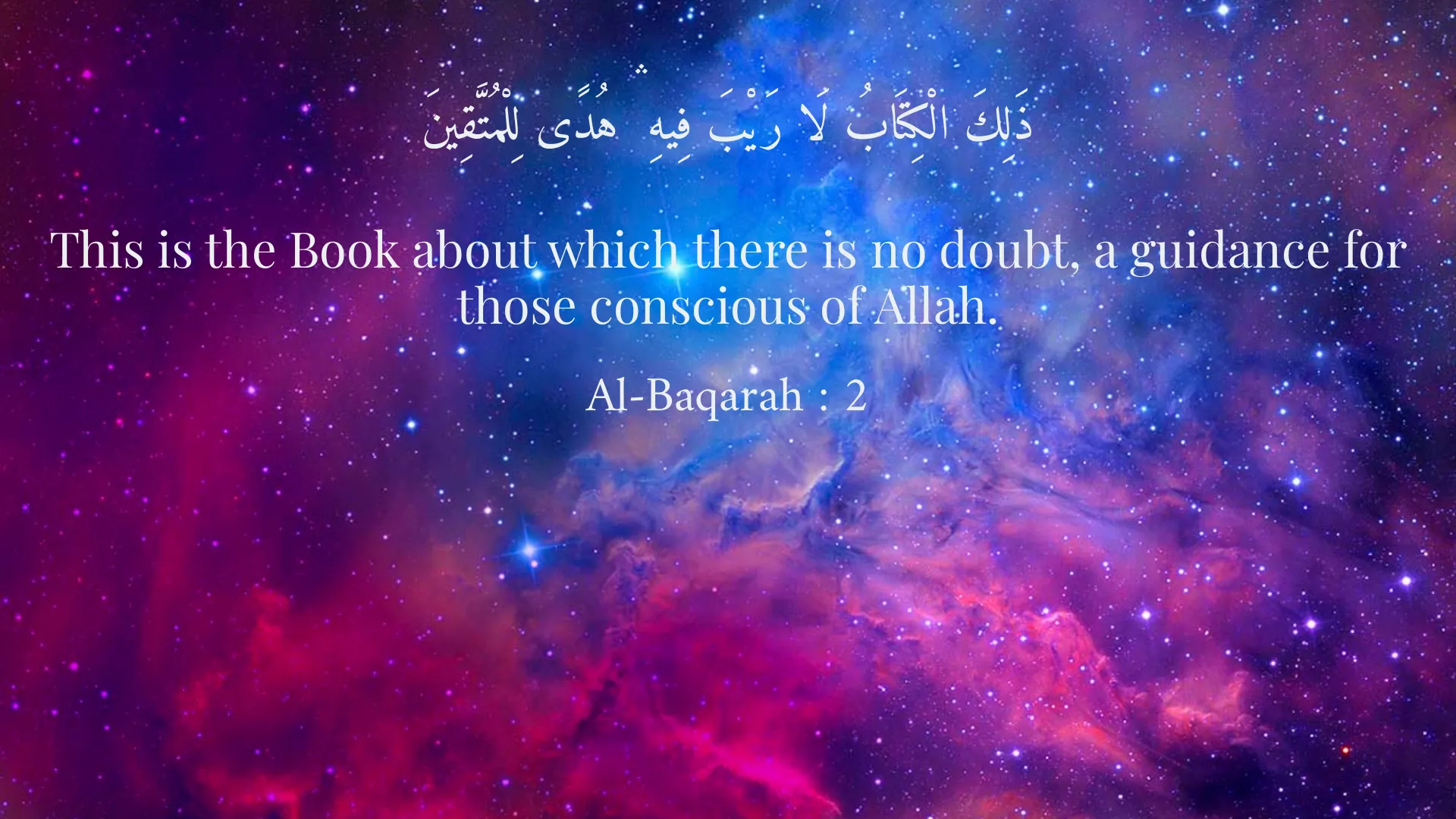
ذَلِكَ الْكِتَابُ لَا رَيْبَ فِيهِ ۛ هُدًى لِلْمُتَّقِينَ
This is the Book about which there is no doubt, a guidance for those conscious of Allah.
Al-Baqarah : 2
مَن أَحياها فَكَأَنَّما أَحيا النّاسَ جَميعًا
If anyone saves a life, it is as if he has saved all mankind.
Al-Ma'idah : 32
يَا بُنَيَّ أَقِمِ الصَّلاةَ وَأْمُرْ بِالْمَعْرُوفِ وَانْهَ عَنِ الْمُنْكَرِ
O my son, establish prayer, and enjoin what is right and forbid what is wrong.
Luqman : 17
Short Story
Once upon a time, there was a young man named Hossein who was always searching for answers in his life. He wanted to know what the path of his life was and how he could achieve happiness. One day, he went to the mosque and spoke with a scholar about the Quran. The scholar told him, 'The Quran is the word of Allah, and in it, all aspects of life are outlined. If you pay attention to its verses and incorporate them into your daily life, you can achieve tranquility and happiness.' Hence, Hossein decided to align his life with the Quran and utilize it as a guide.