Quranic Answer
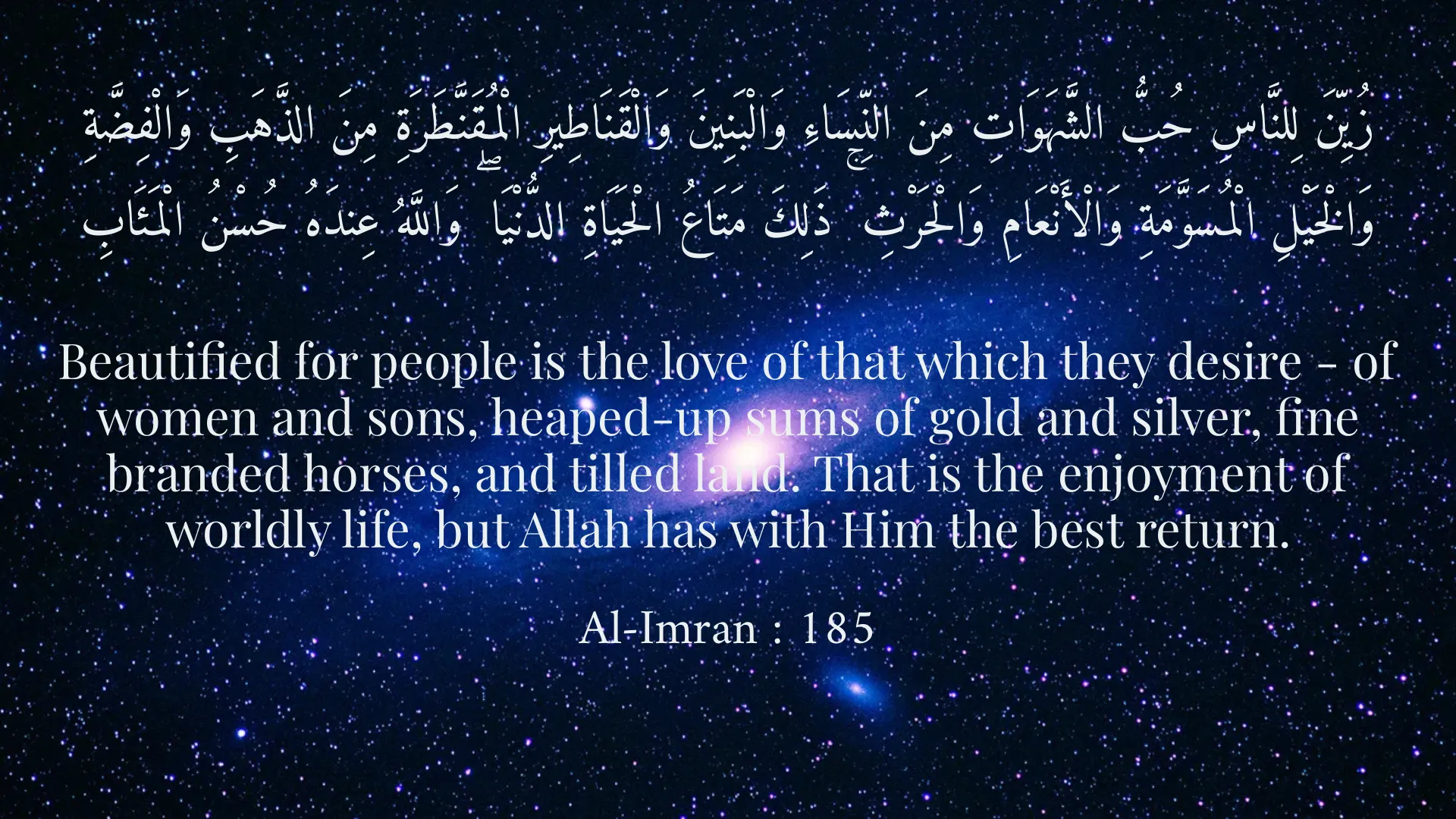
The exploration of the Holy Quran provides profound insights into the nature of the world and human existence. One of the primary themes within the Quran is the distinction between the transient nature of worldly life and the everlasting significance of the hereafter. This dichotomy serves as a crucial reminder for believers about the impermanence of material possessions and earthly desires, as well as the eternal rewards promised in the afterlife. In Surah Al-Imran (3:14), Allah states: 'Beautified for people is the love of that which they desire - of women and sons, heaped-up sums of gold and silver, fine branded horses, and tilled land. That is the enjoyment of worldly life, but Allah has with Him the best return.' This verse encapsulates the allure of worldly attractions that can potentially distract individuals from their spiritual journey. It highlights the powerful human tendencies towards acquiring wealth, relationships, and status, which can often lead to an overemphasis on the material aspects of existence. The phrase 'that is the enjoyment of worldly life' acknowledges the fleeting pleasures that may be found in materialism, yet immediately contrasts this with the notion of 'the best return' that awaits believers in the hereafter. By juxtaposing worldly desires with the eternal rewards that Allah offers, this verse serves as a critical caution against succumbing to the ephemeral nature of life on earth. Throughout history, Prophets and revered religious figures have consistently urged their followers to redirect their focus from temporary worldly gains to their ultimate destiny in the hereafter. This teaching is affirmed in Surah An-Nahl (16:71), where Allah instructs: 'So fear Allah as much as you are able and listen and obey.' The directive to fear Allah signifies the importance of maintaining a consciousness of the divine in our daily lives. By fostering a sense of awareness of Allah's presence, believers can cultivate a lifestyle that prioritizes spiritual growth over temporal desires. Indeed, the pursuit of worldly attachments often contradicts higher human and spiritual aspirations. The Quran continuously emphasizes that one's loyalty and devotion should be directed toward Allah rather than the fleeting attractions of this world, which can easily lead individuals astray. This message is further reinforced by various Quranic narratives that illustrate the consequences of excessive attachment to worldly life. Consider the story of a wealthy individual in the Quran who was overwhelmed by his material possessions. Instead of using his wealth to serve others and invest in his spiritual journey, he became engrossed in maintaining his status and lifestyle. His attachment ultimately led to his spiritual downfall, illustrating the broader principle that an excessive focus on worldly gains can create a barrier to spiritual elevation. In contrast, the Quran encourages believers to engage with the world meaningfully while remaining mindful of their ultimate goal: the hereafter. This balance requires an ongoing effort to recognize and acknowledge the transient nature of worldly life while simultaneously utilizing its resources to fulfill divine purpose. The Quran advocates for a life of moderation, where believers value both this world and the hereafter without allowing one to overshadow the other. The understanding that worldly possessions are simply a means to serve higher spiritual objectives calls for a conscious reevaluation of individual priorities. Being attuned to the impermanent nature of life can also act as a motivator for self-reflection and growth. Acknowledging that our time is limited encourages believers to strive for righteousness, engage in acts of charity, and cultivate a sense of community. Engaging with the world constructively can enhance one's spiritual journey if done with the intention of serving Allah and seeking His pleasure. Moreover, the consequences of neglecting the hereafter are poignantly illustrated in the teachings of the Quran. Believers are urged to remember that they will ultimately be held accountable for their actions, and that life on earth is merely a test to prepare them for their eternal existence. Therefore, a conscious and deliberate practice of self-examination serves as a mechanism for aligning oneself with divine expectations. The Quran also offers hope and reassurance for those who strive to balance their worldly lives with their spiritual obligations. The idea that there exists a significant reward for those who prioritize their spiritual journeys over materialistic pursuits encourages individuals to shift their perspectives. In summary, the teachings of the Quran affirm that being tied to the world while neglecting the hereafter can be detrimental to one’s spiritual health. The allure of worldly desires is strong and often leads individuals to stray from their path, but the guidance provided in these sacred texts offers a pathway to achieve a fulfilling and purposeful life. The reminder that worldly possessions are fleeting, while the rewards of the hereafter are eternal, invites us to reflect on how we allocate our time, energy, and aspirations. By fostering a profound awareness of Allah and adhering to His guidance, believers can navigate the temporary nature of this world with integrity, ensuring that their destination remains the hereafter.
Related Verses
زُيِّنَ لِلنَّاسِ حُبُّ الشَّهَوَاتِ مِنَ النِّسَاءِ وَالْبَنِينَ وَالْقَنَاطِيرِ الْمُقَنَّطَرَةِ مِنَ الذَّهَبِ وَالْفِضَّةِ وَالْخَيْلِ الْمُسَوَّمَةِ وَالْأَنْعَامِ وَالْحَرْثِ ۚ ذَلِكَ مَتَاعُ الْحَيَاةِ الدُّنْيَا ۖ وَاللَّهُ عِندَهُ حُسْنُ الْمَئَابِ
Beautified for people is the love of that which they desire - of women and sons, heaped-up sums of gold and silver, fine branded horses, and tilled land. That is the enjoyment of worldly life, but Allah has with Him the best return.
Al-Imran : 185
وَاللَّهُ قَدْ أَمَرَكُمْ أَلَّا تَعْبُدُوا إِلَّا إِيَّاهُ وَبِالْوَالِدَيْنِ إِحْسَانًا ۚ إِمَّا يَبْلُغَنَّ عِندَكَ الْكِبَرَ أَحَدُهُمَا أَوْ كِلَاهُمَا فَلَا تَقُل لَّهُمَا أُفٍّ وَلَا تَنْهَرْهُمَا وَقُل لَّهُمَا قَوْلًا كَرِيمًا
And your Lord has decreed that you not worship except Him, and to parents, good treatment. Whether one or both of them reach old age [while] with you, say not to them [so much as], 'uff,' and do not repel them but speak to them a noble word.
An-Nahl : 71
Short Story
One day, a young man named Ali was sitting down, pondering about his life. He had become attached to the pleasures of the world and had forgotten about God. One day, he went to the mosque with a friend, and the imam spoke about the impact of the world on the human soul. Ali was moved by the imam's words and decided to view the world as a stage in his journey to earn God's pleasure and not to attach his heart to the transient world.