Quranic Answer
The Holy Quran: A Guiding Light for Humanity The Holy Quran stands as an eternal beacon of guidance for humanity, providing profound insights and teachings that navigate the complexities of life. Reading the Quran, however, requires more than just the act of reading; it demands reflection—a deep consideration of its verses to extract meaningful lessons and applications in our lives. This practice of reflection is essential, for without it, the true impact of the Quran on our emotions and soul remains unfulfilled. In Surah Muhammad, verse 24, Allah poses a critical question: "Do they not reflect upon the Quran, or are there locks upon their hearts?" This verse serves as a reminder for believers to engage with the Quran actively. It invites introspection regarding our approach to the divine text. Are we, as individuals and communities, neglecting to ponder its meanings, or are we facing barriers—"locks"—that prevent us from unlocking its wisdom? Such inquiries are fundamental because they challenge us to assess our spiritual maturity and willingness to engage with God's words. The Quran's verses are intricately woven with layers of meaning, and reflecting upon them allows us to grasp their depth. One might wonder how this reflection can influence our responses to life's multifaceted challenges. The Quran contains guidance on myriad issues that humanity faces, from ethical dilemmas to personal struggles. Through careful contemplation of its verses, we can learn to navigate these hurdles with wisdom and grace. It equips us to choose the right path when confronted with decisions, encouraging a thoughtful and righteous approach to life. This reflective journey is not limited to Surah Muhammad; it echoes across many passages in the Quran. Another significant verse is found in Surah Al-Imran, verse 138: "This (Quran) is a statement for mankind and a guidance and a lesson for the righteous." This assertion firmly establishes the Quran's role as a universal guide, transcending the boundaries of belief. It is not solely for Muslims or the righteous; rather, it serves as instruction for all of humanity, illustrating the inclusivity of its teachings. Everyone can derive lessons from its verses, which speaks to the fundamental aspirations and moral imperatives common to humankind. Reading the Quran with reflection enriches our understanding of both religion and the intricate tapestry of life. It enables us to extract moral and social lessons that we can incorporate into our daily behavior. For instance, consider the themes of compassion, justice, patience, and gratitude prevalent throughout the Quran. By contemplating these concepts deeply, we can cultivate these virtues within ourselves and manifest them within our communities. It is essential to emphasize that reflection on the Quran is fundamental for every Muslim. This spiritual exercise is not merely a suggestion but a necessity to fully benefit from the profound meanings and life experiences embedded in its verses. Engaging with the Quran leads to a more meaningful life, filled with purpose and direction. It transforms our understanding of our roles as individuals and as members of society, fostering a sense of responsibility towards others. However, it is important to recognize the diverse methods of reflection that can be employed when engaging with the Quran. Some individuals may find writing in a journal about their thoughts and feelings regarding specific verses to be beneficial, while others may prefer discussing their reflections with family members or friends. Additionally, guided study groups can facilitate deeper understanding through shared insights and interpretations. Utilizing external resources, such as reputable commentaries and scholarly discussions, can further enhance our comprehension and appreciation of the Quran. Moreover, technological advancements have provided new avenues for reflection. Online platforms, applications, and digital resources allow broader access to the Quran and its interpretations. This accessibility can serve as a catalyst for increased engagement, providing opportunities for individuals, regardless of their geographical location, to connect with the Quran's wisdom. Challenges may arise while reflecting on the Quran, including misconceptions or distractions caused by the fast-paced nature of modern life. It is vital to approach the Quran with an open heart and mind, free from preconceptions. Such conditions foster a conducive environment for genuine reflection. Allocating dedicated time for reading and contemplation can create a spiritual routine that nourishes our souls. In conclusion, reflecting on the Quran is an indispensable practice for Muslims and indeed for all humanity. It fosters a greater understanding of ourselves, our faith, and our responsibilities toward one another. Through reflection, we can transform our comprehension of the Quran from mere words on a page into actionable wisdom that guides our daily lives. The journey into the Quran's depths is not just a personal endeavor, but a transformative experience that can positively influence families, communities, and the world at large. Thus, let us strive to unlock the potential of our hearts and minds by reflecting upon the profound teachings of the Holy Quran and implementing its lessons in our lives.
Related Verses
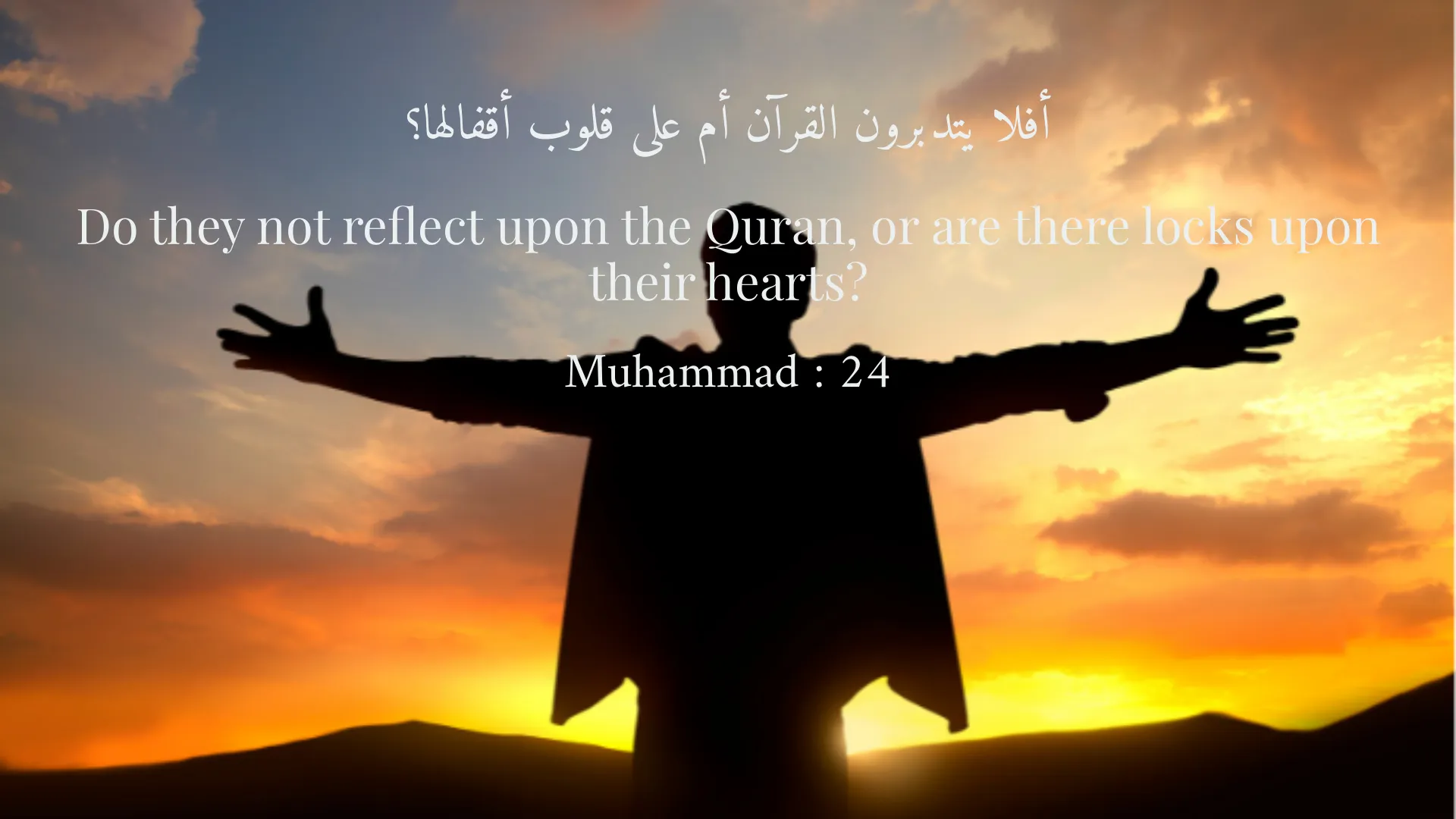
أفلا يتدبرون القرآن أم على قلوب أقفالها؟
Do they not reflect upon the Quran, or are there locks upon their hearts?
Muhammad : 24
ذَٰلِكَ بَيَانٌ لِّلنَّاسِ وَهُدًى وَمَوْعِظَةٌ لِّلْمُتَّقِينَ
This (Quran) is a statement for mankind and a guidance and a lesson for the righteous.
Al-Imran : 138
Short Story
One day, a man named Hasan decided to read the Quran with more attention. Every morning he spent a few minutes reflecting on the verses and thinking about their meanings. After some time, Hasan noticed that he had found more peace in his life and was able to manage daily challenges better. This reflection not only helped him understand the religion, but it reminded him of how impactful this noble book could be in his life.