Quranic Answer
The Holy Quran, regarded as the divine word of Allah, serves as a profound source of guidance for Muslims around the globe. It is not merely a text to be read; rather, it is a divine revelation that invites us to delve deeper into its meanings and teachings. Reading the verses of the Quran with contemplation and thought signifies both respect and devotion to this holy book. More than just a religious obligation, engaging with the Quran on a profound level is a means for personal and spiritual growth. The importance of contemplation in understanding the Quran is highlighted repeatedly throughout its verses. Allah, the Almighty, calls upon humanity to reflect on both the signs of creation and the notable verses contained within. In Surah Muhammad (verse 24), the Quran states, "Do they not reflect upon the Quran?" This rhetorical question serves to underscore the necessity of deep engagement. It meets us with the undeniable truth that a superficial reading of the Quran does not unveil its depths and intricacies. Instead, it encourages individuals to encompass the emotional and cognitive aspects of their soul to achieve a true understanding of the divine words. When one contemplates the verses of the Quran, they are provided with an opportunity to grasp the deeper meanings and teachings of Allah. This reflective practice is essential in recognizing and internalizing the values and commandments outlined in the text. It invites individuals to ponder not only the historical significance of the verses but also their applicability to modern life and the challenges that one may face. This approach cultivates a space for personal growth; as individuals engage in profound reflection, they can extract wisdom that resonates with their unique life experiences and challenges. Moreover, contemplation allows readers to experience the ethical and spiritual influences of the Quran more acutely within their lives. The Quran is not simply an ancient scripture; it is a living document that addresses timeless issues, offering insights into moral dilemmas, personal conduct, and relationships. When individuals engage with its verses thoughtfully, they become more attuned to their ethical responsibilities and the impact of their actions on themselves and others. In Surah Al-Imran (verse 7), Allah discusses the distinction between clear and ambiguous verses, indicating that understanding them requires deep thought and reflection. This acknowledgment reinforces the idea that not all knowledge is handed to us on a platter; some of it demands effort, contemplation, and a willingness to grapple with complexity. Clear verses provide straightforward guidance, while ambiguous verses challenge readers to think critically and reflect on their meanings. The Quran encourages an intellectual pursuit; it invites us to broaden our understanding of faith and realize that interpretation is not static but is rather a dynamic, evolving process. Engaging in this kind of contemplation paves the way for substantial spiritual growth. It is through careful reading and reflection that one can realize the richness and depth found within the Quranic text. This not only leads to a more profound understanding of the faith but can also foster a heightened sense of spirituality. As individuals absorb the wisdom contained within the Quran, their connection to Allah strengthens, and their faith is invigorated. In a fast-paced, modern world often characterized by distraction and superficiality, the act of reflecting on the Quran emerges as a powerful antidote. It offers tranquility amid chaos, providing a sanctuary for the soul to recharge and reconnect with the divine. The emotional and spiritual sustenance derived from such contemplation can be transformative. It is a gateway to finding inner peace and fulfillment that transcends the material concerns of the world. In times of crisis or uncertainty, turning to the Quran with an open heart and mind can provide hope, guidance, and clarity. In conclusion, the practice of reading the Quran with contemplation and thought is paramount for those seeking a deeper connection with their faith and with Allah. It requires a commitment to understanding, an openness to interpretations, and a willingness to engage with the text actively. Ultimately, reflecting on the Quran equips us not only with knowledge but also instills within us a profound sense of purpose and belonging. As we navigate our spiritual journeys, may we heed the divine call to reflect on the Quran's teachings, embracing its wisdom as we strive for spiritual growth and a closer relationship with Allah.
Related Verses
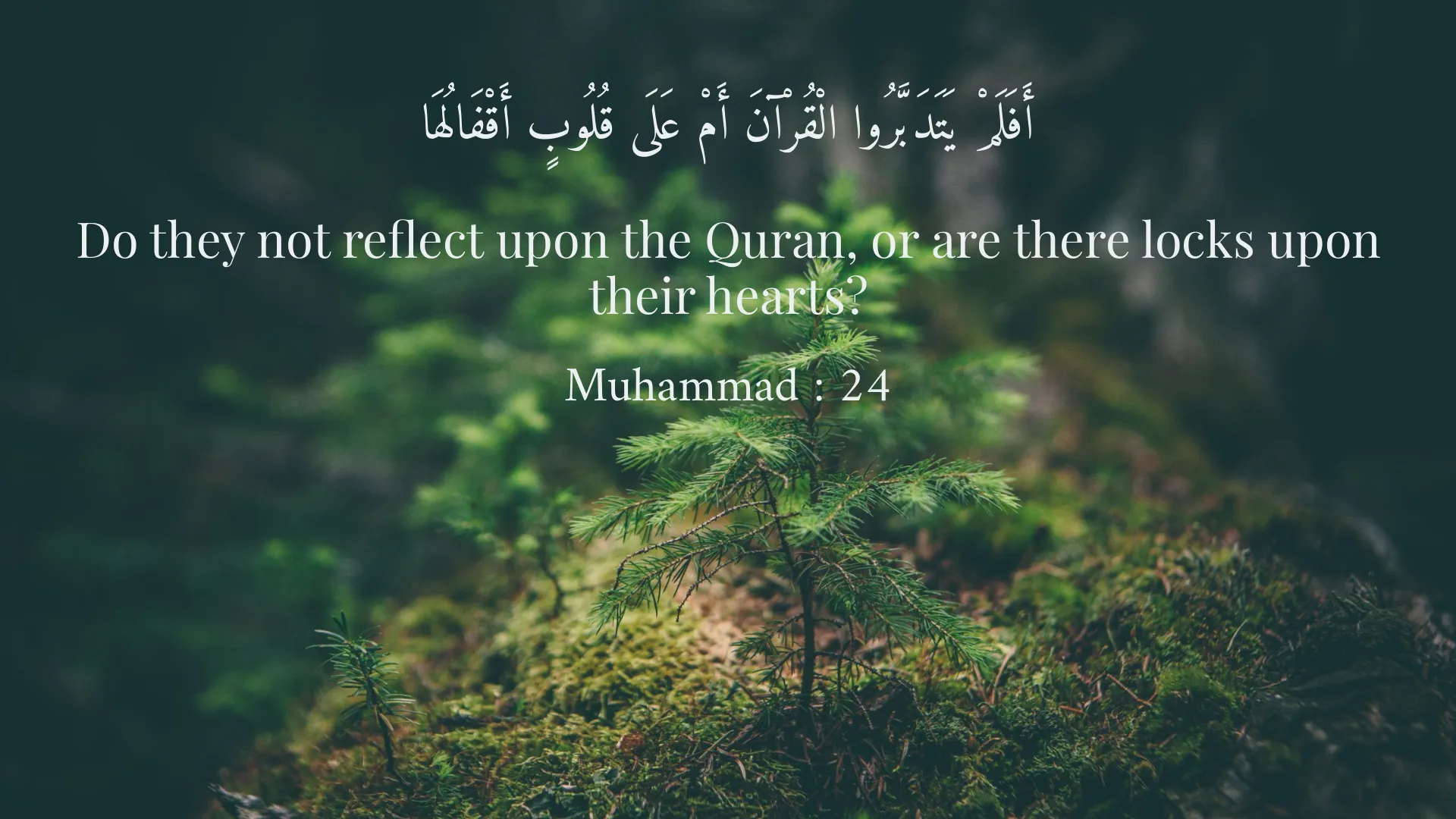
أَفَلَمْ يَتَدَبَّرُوا الْقُرْآنَ أَمْ عَلَى قُلُوبٍ أَقْفَالُهَا
Do they not reflect upon the Quran, or are there locks upon their hearts?
Muhammad : 24
هُوَ الَّذِي أَنزَلَ عَلَيْكَ الْكِتَابَ مِنْهُ آيَاتٌ مُحْكَمَاتٌ هُنَّ أُمُّ الْكِتَابِ وَأُخَرُ مُتَشَابِهَاتٌ ۖ فَأَمَّا الَّذِينَ فِي قُلُوبِهِمْ زَيْغٌ فَيَتَّبِعُونَ مَا تَشَابَهَ مِنْهُ
He it is who has sent down to you the Book; in it are verses that are precise, they are the foundation of the Book.
Al-Imran : 7
Short Story
One day, a person named Hasan decided to study the verses of the Quran with more attention. He dedicated a few hours each day to the Quran, and by reflecting on its meanings, he felt that his life was transformed. Hasan realized that reciting with contemplation not only brought him closer to a deeper understanding of his faith but also provided him with an unparalleled inner peace.