Quranic Answer
Reciting the Quran beautifully and melodically holds a significant place in the hearts and minds of Muslims around the world. The Quran, the holy book of Islam, is not merely a text to be read; it is a living, breathing document that guides the worship, thoughts, and actions of believers. The significance of a melodious recitation goes beyond aesthetic appeal; it touches the very soul of the person reciting and those who listen. This article explores the profound effects of beautiful Quran recitation, as well as its spiritual, cultural, and social implications. One can begin to understand the importance of Quran recitation by delving into the words of the Quran itself. Surah Maryam emphasizes the beauty of sound and the harmony that can be found in the divine verses. Such verses not only encourage Muslims to read the Quran but to do so in a manner that reflects the beauty of its message. The Quran calls upon believers to use their voices effectively, indicating that a melodious recitation can enhance one's comprehension and connection to the text. Lifted by the beauty of tone and melody, listeners are often transported into a state of reflection and contemplation, coming to appreciate the intricacies of the divine message. The act of reciting the Quran beautifully is described as a spiritual experience that allows for a deeper connection to God. When Muslims recite Quranic verses in a melodious way, they are not only expressing their devotion but are also nudging others towards experiencing a sense of peace and warmth. Such a connection fosters a communal feeling among believers and invokes a sense of unity within the Islamic community. The importance of reciting with excellent intonation and rhythm is supported by Quranic verses that urge believers to engage with the text emotionally and intellectually, encouraging them to read with their hearts and minds while contemplating the meanings behind the words they utter. The act transcends the mechanical aspect of reading, elevating it to a level of worship and communion with the divine. Cultural and social dimensions also play a critical role in Quran recitation. Across various cultures within the Muslim world, there exists a rich tapestry of recitation styles and traditions. These styles highlight the diversity and yet the unity of the Islamic faith, where each culture brings its unique essence into the act of recitation. Whether it is the captivating sounds of the Moroccan reciters or the soulful melodies found in South Asia, each tradition has the common goal of drawing listeners closer to the message of the Quran. Moreover, the melodic recitation of the Quran has often been accompanied by storytelling and oral traditions, which carry the teachings and lessons of Islam to the next generation. The way a Quran is recited can effectively capture the emotions embedded in the text and communicate them to an audience. This artistic interpretation of divine words effectively becomes a medium for fostering collective memory and heritage within the community. In following the example of the Prophet Muhammad (peace be upon him), Muslims are reminded of the significance of beautifully reciting the Quran. Historical accounts describe how the Prophet would engage in the recitation of the Quran in a manner that moved those around him, demonstrating the power of eloquence coupled with sincerity. The Prophet's mesmerizing way of reciting the Quran serves as a template for Muslims today, encouraging them to refine their own recitation skills while embodying the humility and sincerity that characterized his approach. Just like any art form, the beauty of Quran recitation can be honed through practice, and aspiring reciters are encouraged to learn from the masters in their communities and appreciate the legacy of beautiful recitation passed down through generations. A deeper understanding of the Quran's themes can also arise from reciting it melodically. With the Quran's teachings deeply embedded in human experiences, the varied symbols and metaphors used demand reflection. A melodious recitation acts as a catalyst that amplifies one’s awareness of these themes and lessons. Many Muslims report that they derive personal guidance and inspiration from reciting or listening to the Quran in a beautiful way, as its verses resonate more profoundly within their hearts in a melodious format. The melodic quality transforms the act of trying to comprehend the messages from mere intellectual understanding to a heartfelt experience. In addition, the communal aspects of Quran recitation cannot be overstated. Personal acts of recitation morph into communal gatherings where believers bond over the shared experience of hearing and reflecting upon the divine words. These gatherings often become a sanctuary of peace where individuals come together to celebrate their faith. As such, reciting the Quran beautifully becomes not only a personal duty but also a social activity that builds camaraderie and collective identity. One hears a common refrain in many mosques around the world, echoing that beautiful recitation serves to invite believers closer to the Quranic teachings. In conclusion, reciting the Quran beautifully and melodically is an act that transcends mere vocalization. It embodies the essence of Islamic worship and community engagement, enriching the spiritual lives of individuals while fostering a cultural legacy that embraces diversity and unity. The Quran was revealed not just as a book of laws but as a source of healing, guidance, and connection with the divine. Thus, the act of reciting it beautifully enriches the soul, instills peace, and ignites a transformative discussion amongst Muslims about the teachings and guidance embodied in these divine verses. The melodic recitation of the Quran, guided by the examples of the Prophet Muhammad and the diverse traditions that exist today, transcends borders, bringing people closer together and drawing them nearer to the message that the Quran holds for humanity.
Related Verses
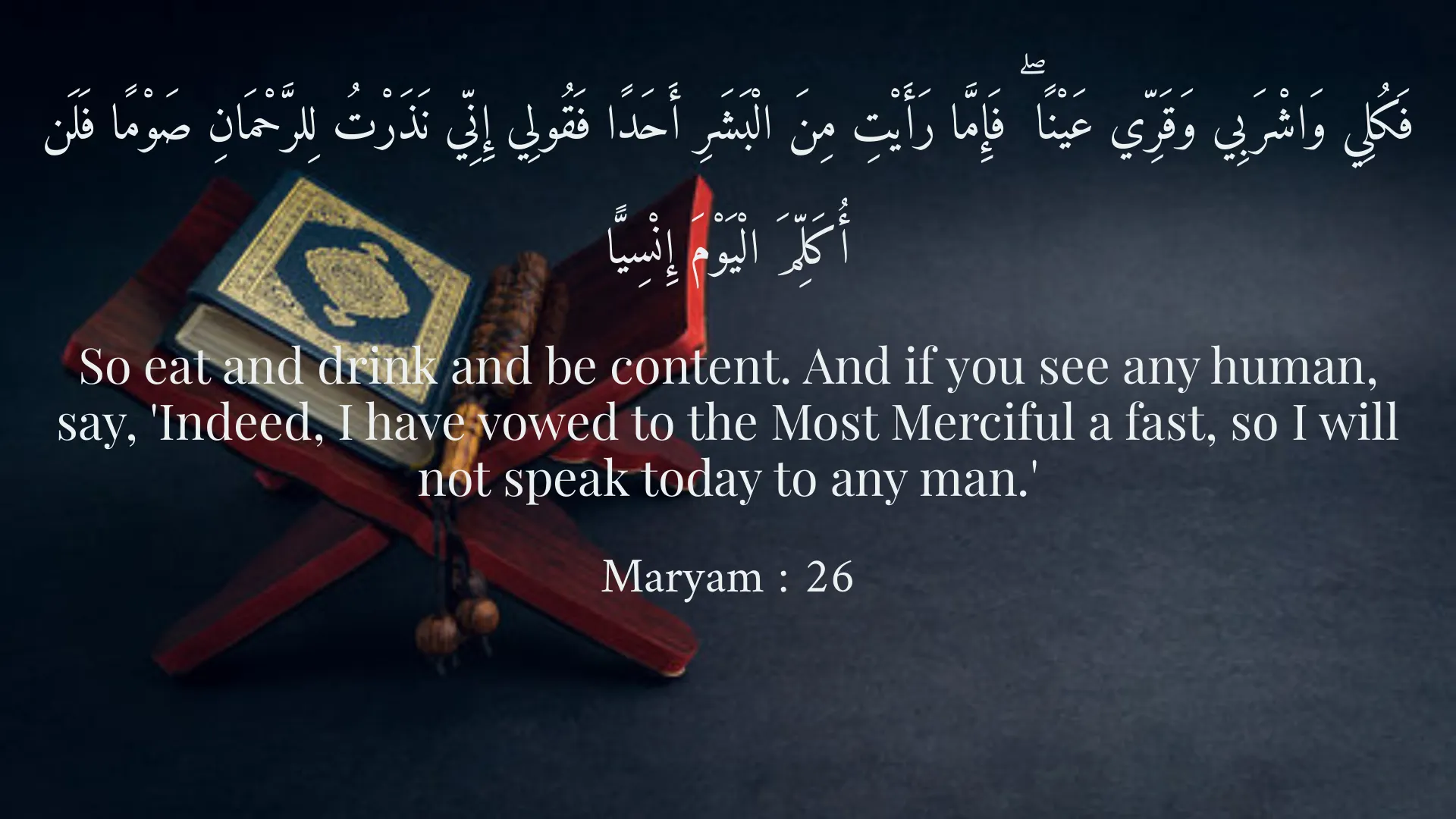
فَكُلِي وَاشْرَبِي وَقَرِّي عَيْنًا ۖ فَإِمَّا رَأَيْتِ مِنَ الْبَشَرِ أَحَدًا فَقُولِي إِنِّي نَذَرْتُ لِلرَّحْمَانِ صَوْمًا فَلَن أُكَلِّمَ الْيَوْمَ إِنْسِيًّا
So eat and drink and be content. And if you see any human, say, 'Indeed, I have vowed to the Most Merciful a fast, so I will not speak today to any man.'
Maryam : 26
وَقُلْ الْحَمْدُ لِلَّهِ الَّذِي لَمْ يَتَّخِذْ لَهُ وَلَدًا وَلَمْ يَكُن لَّهُ شَرِيكٌ فِي الْمُلْكِ وَلَمْ يَكُن لَّهُ وَلِيٌّ مِّنَ الذُّلِّ ۚ وَكَبِّرْهُ تَكْبِيرًا
And say, 'Praise be to Allah, who has not taken a son and has no partner in the dominion and has not any guardian out of humiliation.' And proclaim His greatness.
Al-Isra : 111
Short Story
Once upon a time, there was a young man named Amir living in a small neighborhood. He used to recite the Quran beautifully every day, and this made his neighbors come to his house to hear his melodious voice. One elderly neighbor always said that these beautiful recitations gave him peace and hope. Amir continued with great enthusiasm, and day by day, he became more familiar with the meanings of the Quran, and this profound friendship with the words of God impacted his life.