Quranic Answer
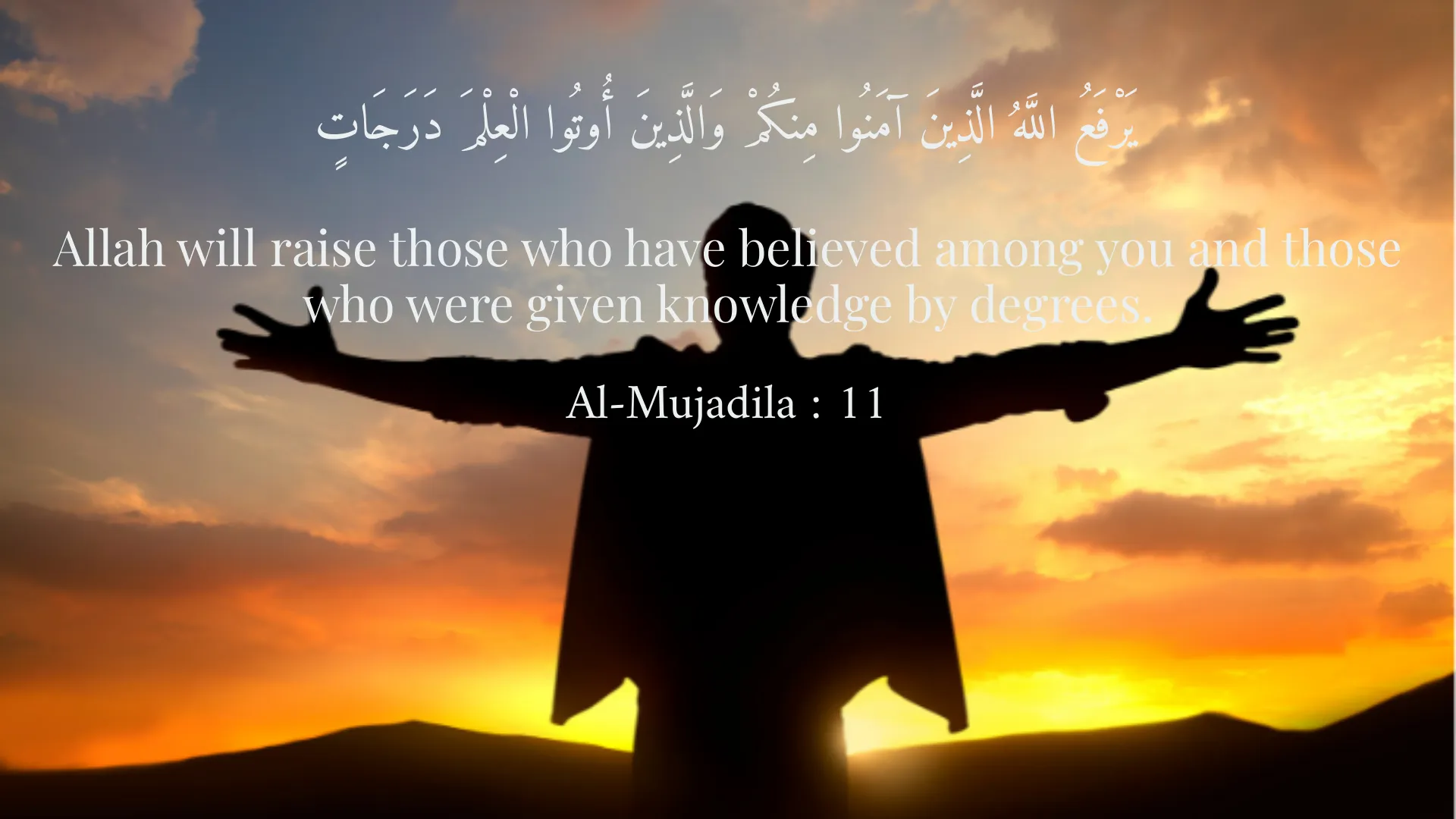
In the Holy Quran, knowledge is emphasized as a highly valued asset. Allah (SWT) mentions in Surah Al-Mujadila, verse 11: "Allah will raise those who have believed among you and those who were given knowledge by degrees." This verse teaches us that those who seek knowledge will attain a higher status in the eyes of God. The Quran recognizes knowledge not just as a pathway to personal advancement but also as a means to elevate the status of believers in a spiritual and societal context. Education and the pursuit of knowledge are cornerstones of Islamic teachings, and this notion is evident through various verses in the Quran. In Surah Al-Alaq, the initial verses, which emphasize the command to "Read in the name of your Lord," underline the significance of literacy, education, and the continual quest for understanding. This call to read is not merely about acquiring information but is an injunction to seek knowledge that draws one closer to Allah (SWT) and to those virtues that define a good life. Through education, individuals are empowered to make informed decisions, which is crucial in navigating the complexities of modern life. Knowledge serves multiple functions; it empowers individuals to make better decisions in their personal lives as well as in their roles within their communities. For instance, educated individuals are better equipped to understand various social, economic, and political issues that affect their lives and those around them. This understanding allows them to contribute positively to society, whether through social work, political activism, or community service. Furthermore, knowledge fosters personal growth, aiding individuals in developing critical thinking, fostering creativity, and encouraging innovation—all essential components for personal fulfillment and contributing to societal advancement. The effect of knowledge on personal and social growth is profound. It contributes significantly to the advancement of society as a whole. Knowledge instills confidence and empowers people to challenge injustices and work toward equality and fairness. Historically, figures such as Imam Ali and Imam Jafar Sadiq (AS) have significantly impacted the community through their deep knowledge and awareness of various fields, including jurisprudence, philosophy, and science. Imam Ali, known for his wisdom, led the Muslim community with a focus on justice, equality, and knowledge-sharing, which has inspired countless generations. Moreover, knowledge is essential for leadership. Students and individuals who pursue knowledge rigorously often emerge as leaders in society. They have the ability to influence and inspire others, guiding communities towards progress. Educational institutions serve as incubators for future leaders, nurturing their potential and preparing them for roles that involve making insightful decisions that benefit the larger community. Through a strong educational foundation, individuals can develop skills that will allow them to advocate for positive change, fostering an environment where enlightenment and knowledge-sharing flourish. In many ways, the pursuit of knowledge can be seen as a religious obligation. The emphasis placed on education in the Quran aligns with the principles of creating a well-informed and socially responsible believer. It highlights the importance placed on learning not just religious texts but also the sciences, arts, and philosophy to understand the world around us better. This holistic approach to education is necessary in today's rapidly evolving world, where access to information is easier than ever, yet the ability to critically analyze and understand that information is vital. Furthermore, in promoting the pursuit of knowledge, Islam encourages community development and social responsibility. The teachings of the Quran advocate for a balanced approach to personal and social growth. The knowledge that is acquired must be utilized for the benefit of others, reinforcing the concept that learning is not solely an individual pursuit but a communal obligation as well. When individuals prosper intellectually, they are better positioned to uplift others, leading to a collective advancement of society. In conclusion, the pursuit of knowledge is not only an individual endeavor but also a collective responsibility that bears great significance in the fabric of society. The Holy Quran profoundly emphasizes the value of education and knowledge, establishing them as fundamental components for both personal and societal growth. From the teachings of esteemed leaders like Imam Ali and Imam Jafar Sadiq (AS) to the modern-day implications of being educated, the quest for knowledge equips individuals to emerge as leaders who can foster change, combat injustices, and contribute to the greater good. Ultimately, knowledge is a divine asset that plays a critical role in shaping not just individuals, but also communities, and thus deserves our unwavering commitment and attention.
Related Verses
يَرْفَعُ اللَّهُ الَّذِينَ آمَنُوا مِنكُمْ وَالَّذِينَ أُوتُوا الْعِلْمَ دَرَجَاتٍ
Allah will raise those who have believed among you and those who were given knowledge by degrees.
Al-Mujadila : 11
اقْرَأْ بِاسْمِ رَبِّكَ الَّذِي خَلَقَ
Read in the name of your Lord who created.
Al-Alaq : 1
Short Story
The Prophet Muhammad (PBUH) once told a friend, "Knowledge is a lamp." The friend asked in wonder, "What do you mean by lamp?" The Prophet replied, "A lamp that illuminates the path, and if we learn and hold knowledge, we can find our way in darkness." This talk inspired the friend to pursue knowledge and get closer to the truths of life.