Quranic Answer
In the Holy Quran, the guidance provided to humanity is not merely a set of unchanging principles, but rather a dynamic and living resource that encourages believers to think critically, reflect, and draw lessons from the history and outcomes of past nations. This emphasis on historical awareness is encapsulated in various verses, where Allah urges us to observe, ponder, and learn from the successes and downfalls of those who came before us. By studying the past, we are afforded the opportunity to understand the fundamental principles of life, which can help shape a more prosperous and righteous future. One of the most notable verses that encapsulate this call to reflection is found in Surah Al-Imran, verse 137: "And already have the examples before you passed on; so traverse the earth and see how was the end of those who denied." This verse serves multiple functions—it encourages a physical journey to observe the remnants of past civilizations and a mental journey to critically analyze their choices and consequences. The act of traversing the earth is not merely about physical movement; rather, it signifies a deeper exploration into the fabric of history that weaves the tapestry of human experience. By observing the ruins of once-great empires and reflecting on their stories, believers are invited to uncover the lessons embedded within those narratives. The call to reflection extends beyond a historical curiosity; it is a moral imperative that urges us to learn from the missteps of previous civilizations. Many nations, despite being endowed with greater power and resources, fell into the traps of denial and arrogance, ultimately leading to their demise. Surah Al-An'am, verse 6 reinforces this notion: "Have they not traveled through the earth and observed how was the end of those before them? They were more numerous than them." This verse acts as a reminder of the ephemeral nature of power and prosperity. The implication is clear: true strength lies not in numeric superiority or material wealth, but in humility, faith, and obedience to divine guidance. Throughout history, numerous civilizations have thrived, only to succumb to their own hubris. The walls of ancient cities now stand as silent witnesses to the triumphs and failures of their inhabitants. The Quran invites us to see their stories as cautionary tales, exemplifying how the absence of faith often leads to ruin. The critical examination of these historical precedents allows contemporary societies to draw parallels, understanding the patterns of human behavior that have consistently led to downfall. Each story serves as a reminder of the ultimate accountability before Allah and how pride and disregard for divine commandments can have dire consequences. Learning from history also extends into the realm of morality and ethics. The Quran prompts us to reflect not only on the successes of virtuous rulers who adhered to justice, mercy, and compassion but also on those who fell into tyranny and oppression. Reflecting on these contrasts aids modern individuals and societies in determining the values they wish to embody and promote. By understanding the outcomes of their predecessors, we are inspired to pursue righteousness and prevent the societal corruption that has plagued many past civilizations. As we consider the fates of those who came before us, we recognize a universal truth: adherence to divine guidance leads to flourishing, while deviation results in despair. Moreover, the Quran emphasizes the importance of gratitude and acknowledgment of Allah's blessings upon us. As we examine the successes and failures of previous nations, it allows us to contextualize our own experiences and blessings. The tranquility provided by faith and the bounties granted to us serve as reminders of Allah's mercy and generosity. The Quran encourages believers to recognize these blessings and to remain conscientious about how they can serve to benefit others. Utilizing the lessons learned can inspire action towards social justice, compassion, and helping those in need. In a world increasingly marked by rapid change and uncertainty, the teachings of the Quran stand as a beacon of wisdom urging us to engage thoughtfully with our historical narratives, both as individuals and communities. We live in a global age where history is often overlooked or misinterpreted. However, the Quran prompts believers to embrace historical reflection as a means to build a foundation for a more enlightened society. In doing so, we are called to engage with our pasts to forge more equitable futures. In conclusion, the Quran’s emphasis on reflecting upon the history of past nations and learning from their examples offers invaluable insight for contemporary humanity. By traversing the earth, both literally and figuratively, we can learn about divine justice and human folly. The lessons of past generations are not inert tales but dynamic teachings meant to guide our existence and decision-making processes. Such reflections are crucial not only in understanding the socio-political dynamics of the world but also in nurturing a spiritual and ethical consciousness. Therefore, let us heed the call to remember the past, apply its lessons earnestly, and strive to cultivate a community anchored in faith and righteousness.
Related Verses
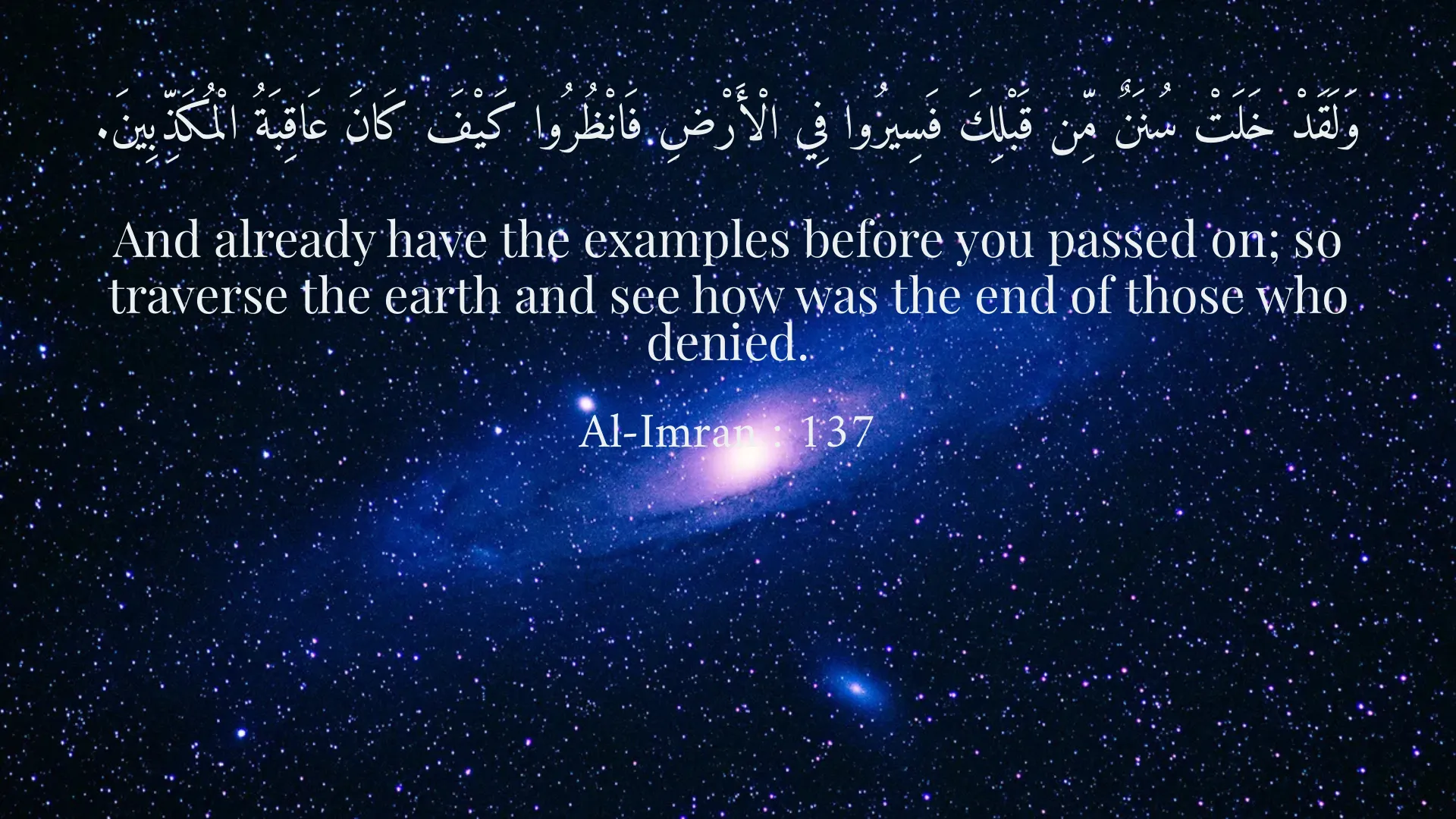
وَلَقَدْ خَلَتْ سُنَنٌ مِّن قَبْلِكَ فَسِيرُوا فِي الْأَرْضِ فَانْظُرُوا كَيْفَ كَانَ عَاقِبَةُ الْمُكَذِّبِينَ.
And already have the examples before you passed on; so traverse the earth and see how was the end of those who denied.
Al-Imran : 137
أَوَلَمْ يَسِيرُوا فِي الْأَرْضِ فَيَنْظُرُوا كَيْفَ كَانَ عَاقِبَةُ الَّذِينَ مِن قَبْلِهِمْ ۚ كَانُوا أَشَدَّ مِنْهُمْ قُوةً.
Have they not traveled through the earth and observed how was the end of those before them? They were more numerous than them.
Al-An'am : 6
Short Story
One day, a man named Hasan sat in a corner pondering the past. He recalled the stories his grandfather had told him and realized that they had faced hardships and challenges through life, each with lessons for us. Hasan decided to study history and learn from the experiences of his ancestors to find the right path for his future, thus benefiting from the efforts of those who came before him.