Quranic Answer
Viewing the world through the lens of the Quran is not only a profound spiritual undertaking but also offers a rational framework that promotes peace and happiness in life. The Holy Quran, revered by millions of followers around the globe, provides critical insights and directives that shape a believer's understanding of existence, purpose, and moral conduct. Through its verses, the Quran emphasizes the significance of understanding and correctly interpreting the world, establishing a delicate balance between worldly pursuits and spiritual obligations. One of the most central themes conveyed in the Quran is the transient nature of worldly life. It teaches believers that all things material are temporary and that true fulfillment comes from a deeper understanding of existence. In Surah Al-Imran, verse 185, it states: "Every soul will taste death, and you will only be given your full recompense on the Day of Resurrection. So whoever is removed from the Fire and is admitted to Paradise has certainly attained a great triumph. And what is the worldly life except the enjoyment of delusion." This profound verse serves as a stark reminder that life passes swiftly, urging believers to reflect on their actions and the consequences that stem from them. The Quran encourages introspection, promoting the idea that every individual must strive to utilize their time wisely in this fleeting world. The emphasis on the inevitability of death serves as a catalyst for meaningful action, motivating believers to engage in deeds that contribute positively to their spiritual journey. Also, it underlines that while worldly existence may come with its joys and distractions, they are often deceptive, leading many away from the path of true contentment. Moreover, the Quran critiques the idea that material wealth and power equate to happiness. In Surah Al-Kahf, verse 46, it states: "Wealth and children are [but] adornment of the worldly life, but the enduring good deeds are better to your Lord for reward and better for [one's] hope." This assertion offers a direct challenge to the common belief that accumulation of riches brings satisfaction. It invites believers to consider the quality of their actions over the quantity of worldly possessions. The Quran places a high value on righteous conduct, emphasizing that genuine happiness is derived not from material success but from fulfilling one's spiritual duties and contributing to the welfare of others. From the Quranic perspective, adopting a comprehensive worldview is essential in navigating the complexities of life. Believers are encouraged to prioritize their spiritual growth and maintain a conscious relationship with their creator, allowing them to find deeper meaning in their existence. The teachings of the Quran advocate for compassion, generosity, and ethical behavior, which serve both to guide personal conduct and to foster harmonious relationships within communities. By aligning their actions with the ethical teachings of the Quran, individuals can chart a path that leads to divine satisfaction and lasting joy. Essentially, viewing the world through the Quran invites individuals to maintain a balance between material and spiritual values. This balance is crucial for achieving harmony in life. A Quran-centric view advocates for a life lived in moderation, where one acknowledges worldly desires but does not become ensnared by them. Instead of allowing worldly pursuits to divert them from their spiritual path, believers are encouraged to integrate their experiences in the material world with their commitment to ethical principles and divine obligations. Additionally, the Quran promotes the significance of gratitude, resilience, and humility as foundational aspects of a fulfilling life. Gratitude is a recurring theme throughout the Quran, reminding believers that acknowledging the countless blessings of life is essential for attaining inner peace. When individuals appreciate what they have, regardless of their circumstances, they are less likely to fall prey to envy or dissatisfaction. Consequently, a mindset of gratitude again directs believers toward the eternal rewards that lie beyond the physical world. Resilience and steadfastness are also emphasized in the Quran, particularly in the face of life’s challenges and adversities. The Quranic narrative constantly reassures believers that trials are an inherent part of life, yet, if navigated with faith and trust in divine wisdom, they serve as tools for personal growth and spiritual elevation. This understanding encourages individuals to remain hopeful and embedded in the belief that each challenge is an opportunity for profound transformation. Humility, a core value championed in the Quran, is a vital reminder of the fundamental equality of all human beings. The Quran teaches that no one is superior due to wealth or status, but rather, it is one’s piety and good deeds that elevate them in the eyes of God. This perspective disabuses believers of the notion that success is defined solely by societal standards, thus allowing them to find peace and contentment in their individual journeys. In conclusion, the teachings of the Quran provide a robust framework for understanding life, encouraging individuals to perceive the world not just through rose-colored glasses but with a discernible focus on spirituality and integrity. By interpreting the world through the lens of the Quran, believers can cultivate a life imbued with peace, purpose, and happiness. They are motivated to prioritize their spiritual obligations while engaging constructively with the material world. Ultimately, a Quran-centric view enriches one’s life experience, harmonizing worldly pursuits with divine approval and ethical stewardship, leading individuals to greater fulfillment and eternal success.
Related Verses
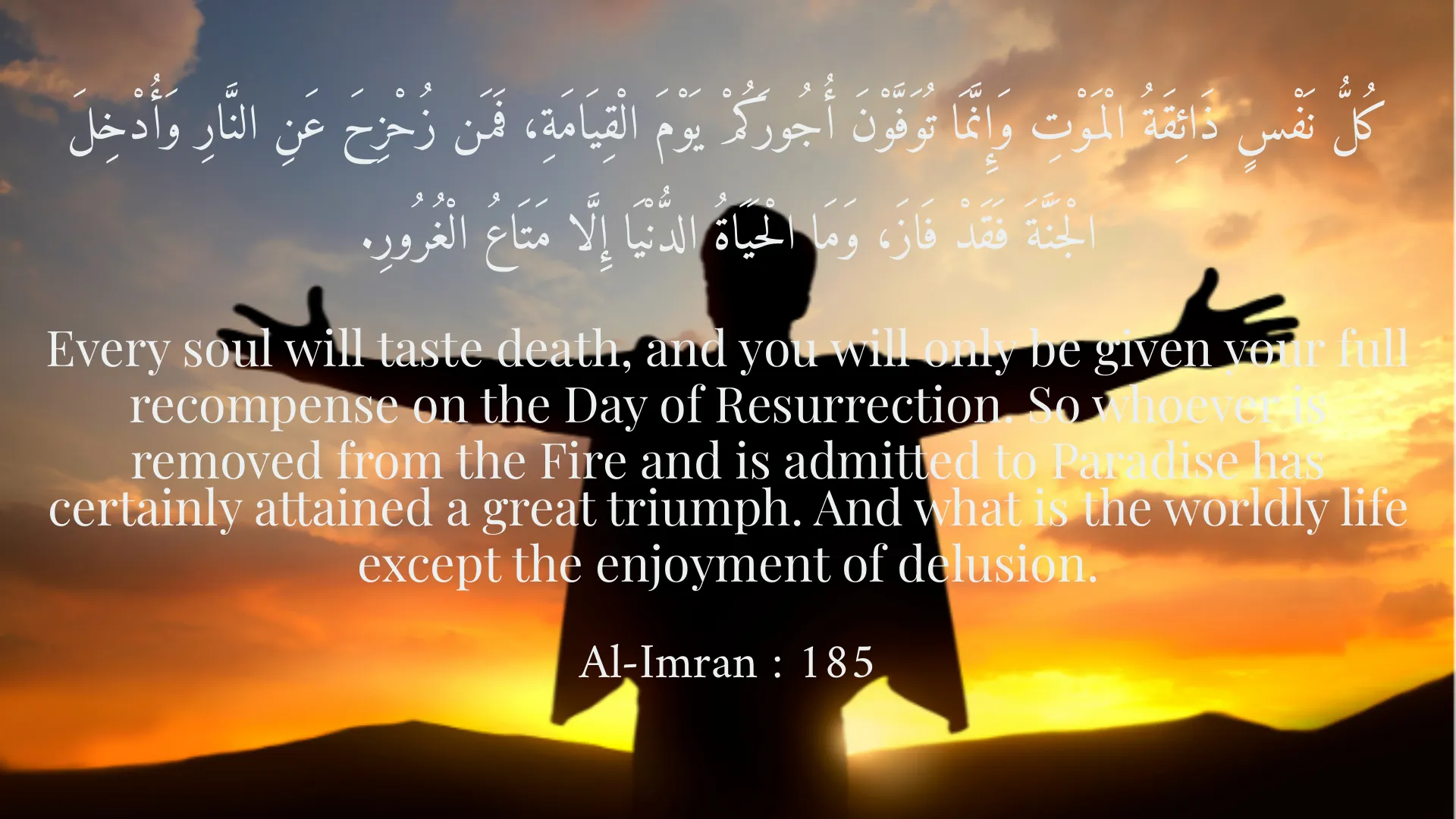
كُلُّ نَفْسٍ ذَائِقَةُ الْمَوْتِ وَإِنَّمَا تُوَفَّوْنَ أُجُورَكُمْ يَوْمَ الْقِيَامَةِ، فَمَن زُحْزِحَ عَنِ النَّارِ وَأُدْخِلَ الْجَنَّةَ فَقَدْ فَازَ، وَمَا الْحَيَاةُ الدُّنْيَا إِلَّا مَتَاعُ الْغُرُورِ.
Every soul will taste death, and you will only be given your full recompense on the Day of Resurrection. So whoever is removed from the Fire and is admitted to Paradise has certainly attained a great triumph. And what is the worldly life except the enjoyment of delusion.
Al-Imran : 185
الْمَالُ وَالْبَنُونَ زِينَةُ الْحَيَاةِ الدُّنْيَا وَالْبَاقِيَاتُ الصَّالِحَاتُ خَيْرٌ عِندَ رَبِّكَ ثَوَابًا وَخَيْرٌ أَمَلًا.
Wealth and children are [but] adornment of the worldly life, but the enduring good deeds are better to your Lord for reward and better for [one's] hope.
Al-Kahf : 46
Short Story
Once upon a time, a young man named Mahdi wandered the streets in search of happiness. He chased after wealth and fame, yet he never felt satisfied. One day, he entered a bookstore and picked up a Quran. He began reading its verses and realized that to find true happiness, he needed to focus on spiritual values. From that day on, his life changed and was filled with peace.