Quranic Answer
The Holy Quran, the scripture of Islam, offers a profound and intricate view of the role and significance of animals within the framework of creation. This perspective underscores the deep bond between humans and the animal kingdom, and reflects on the divine wisdom and purpose behind each living being. Throughout the Quran, animals are celebrated as creations of Allah, imbued with their own communities, roles, and contributions to the ecosystem. This article seeks to explore the Quranic verses that acknowledge animals, elucidate their significance in the divine narrative, and advocate for the respect and protection of these creatures as part of a larger ecosystem influenced by divine order. At the core of the Quran's teachings is the assertion that all creatures are manifestations of Allah's artistry and greatness. In Surah Al-An’am (Chapter 6, Verse 38), Allah states, 'And there is no creature on earth, nor a bird that flies with its wings, except that they are communities like you. We have not neglected anything in the Book. Then to their Lord, they will be gathered.' This verse serves a dual purpose: it acknowledges animals as spiritually significant beings and acts as a reminder of the collective responsibility of humanity toward the wider creation. Just like human beings, animals form communities, cooperate, and contribute to life on earth, which makes it imperative for believers to regard all living beings with dignity and reverence. The verse also indicates a divine system in which every creature is valued and serves a unique role within the grand tapestry of existence. This collective of living beings forms a community—an ecological network that balances life and survival. This concept effectively establishes that humans are not separate from the rest of creation, but rather part of a larger, interconnected environment that requires a sustainable approach toward existence and living in harmony. Moreover, the Quran emphasizes that divine signs are found in the creation of various beings—including animals. As mentioned in Surah Al-Mu’minun (Chapter 23, Verses 21-30), these signs of Allah's power are evident in the diversity and qualities of animals, each showcasing a testament to His capabilities. Verse 19 states: 'And indeed, for you in the cattle is a benefit.' This identification of benefits signifies that animals are crucial to human survival and prosperity. Be it in agriculture, transportation, companionship, or resource provision, animals have substantially contributed to enriching human lives in myriad ways. This notion is pivotal; it implies that animals are not simply resources for consumption but are vibrant parts of the creation that require respect, compassion, and care. In the traditional agricultural societies prevalent during the time of the Quran's revelation, livestock and domesticated animals were integral to people's livelihoods. Their significance in providing sustenance, labor, and companionship highlights the vital interdependence between humans and animals. This interrelationship further invites a reflection on how contemporary practices towards animals should align with Quranic teachings. The principles outlined in the Quran calls for ethical treatment of animals—a mandate that resonates with the contemporary movements advocating animal rights and welfare. Animal cruelty and exploitation can be seen not only as social and moral issues, but as acts that contravene the teachings of the Quran, which encourages mercy, kindness, and compassion. Furthermore, animals serve as teachers in their own right, showcasing essential life lessons about ecosystems, biodiversity, and the balance of existence. The Quran illustrates how animals inherently follow their instincts and fulfill their roles in the wild without deviation, exemplifying the notion of surrendering to the divine order. The coexistence and interdependence of various animal species further echo Islamic teachings about stewardship and gratitude towards creation. As stewards of the earth, humans are charged with preserving these relationships and ensuring that no creature is harmed or neglected. In many Islamic traditions, the Prophet Muhammad's (peace be upon him) teachings, known as Hadith, further explicate the Quranic messages regarding animals. He advocated for treating animals with kindness and respect, famously saying, 'A woman was punished in Hell because of a cat which she had confined until it died. She did not give it to eat or drink when it was confined, nor did she free it so that it might eat the insects of the earth.' This narration underscores the seriousness with which the treatment of animals is taken in Islam, illustrating that their welfare is considered directly connected to one's faith and actions. Despite the advances in human technology and living standards, the Quranic perspective invites humanity to reflect on its relationship with the environment and its inhabitants. Each creature plays a role in the complexities of ecological balance; they help maintain the cycles of life essential for earth's functionality. The clear message from the Quran is to embrace a moral and responsible stewardship that respects all forms of life and acknowledges the craftsmanship of the Creator. In a world grappling with several environmental crises, the Quranic stance on animals offers crucial insights on sustainability and ethical engagement with the natural world. The safeguarding of wildlife habitats, advocacy against needless slaughter, and awareness about animal cruelty are modern-day reflections of the Quranic principles emphasizing respect for all creatures. Islam encourages robust action towards the protection of these communities, paving the way towards a more harmonious existence. In conclusion, the Holy Quran has an intricate and profound perspective on animals, recognizing them as significant and essential components of Allah's creation. The verses within emphasize respect, compassion, and responsibility towards these creatures, highlighting their multifaceted roles in the ecosystem and human lives. Understanding these teachings paves the way for ethical considerations and stewardship that aligns with the Quranic principles of respect for all living beings. Thus, it is imperative for believers and humanity at large to reflect deeply on their responsibilities towards the animal kingdom and create a world that celebrates the sanctity of all life, underpinning the divine blessings bestowed upon us through these marvelous creations.
Related Verses
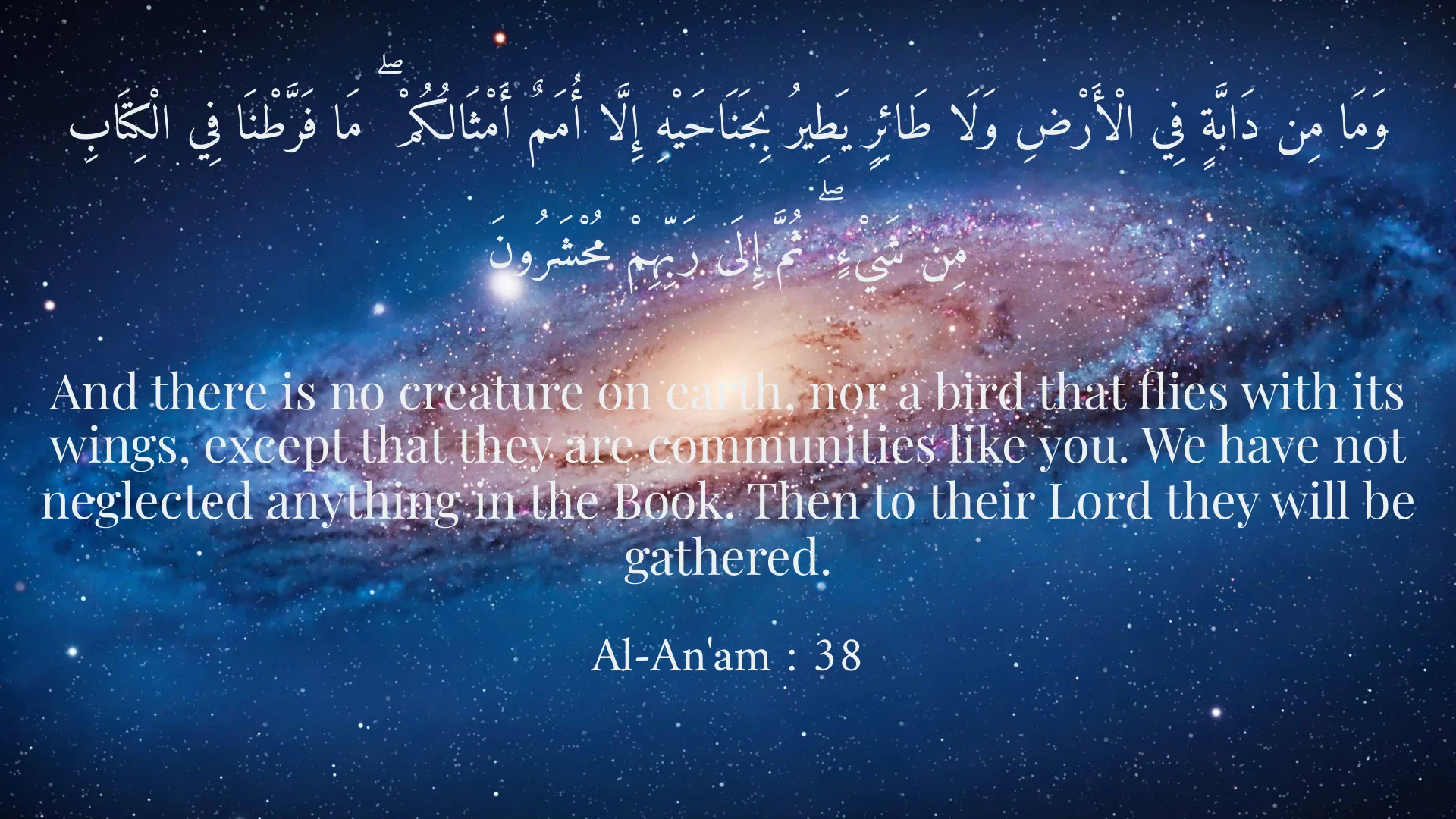
وَمَا مِن دَابَّةٍ فِي الْأَرْضِ وَلَا طَائِرٍ يَطِيرُ بِجَنَاحَيْهِ إِلَّا أُمَمٌ أَمْثَالُكُمْ ۖ مَا فَرَّطْنَا فِي الْكِتَابِ مِن شَيْءٍ ۖ ثُمَّ إِلَى رَبِّهِمْ مُحْشَرُونَ
And there is no creature on earth, nor a bird that flies with its wings, except that they are communities like you. We have not neglected anything in the Book. Then to their Lord they will be gathered.
Al-An'am : 38
وَإِنَّ لَكُمْ فِي الْأَنْعَامِ لَأَخَذٌ ۖ نُّوَدِّيكمُونَ إِلَى مَا يُنْفِقُونَ
And indeed, for you in the cattle is a benefit.
Al-Mu'minun : 21
Short Story
Once upon a time, there was a boy named Ali who, during a trip to the forest, realized the beauty and diversity of animals. He witnessed how animals lived together and each played an important role. Ali was reminded to respect all living beings and help them. This journey made him think not only about animals but also about protecting the environment.