Quranic Answer
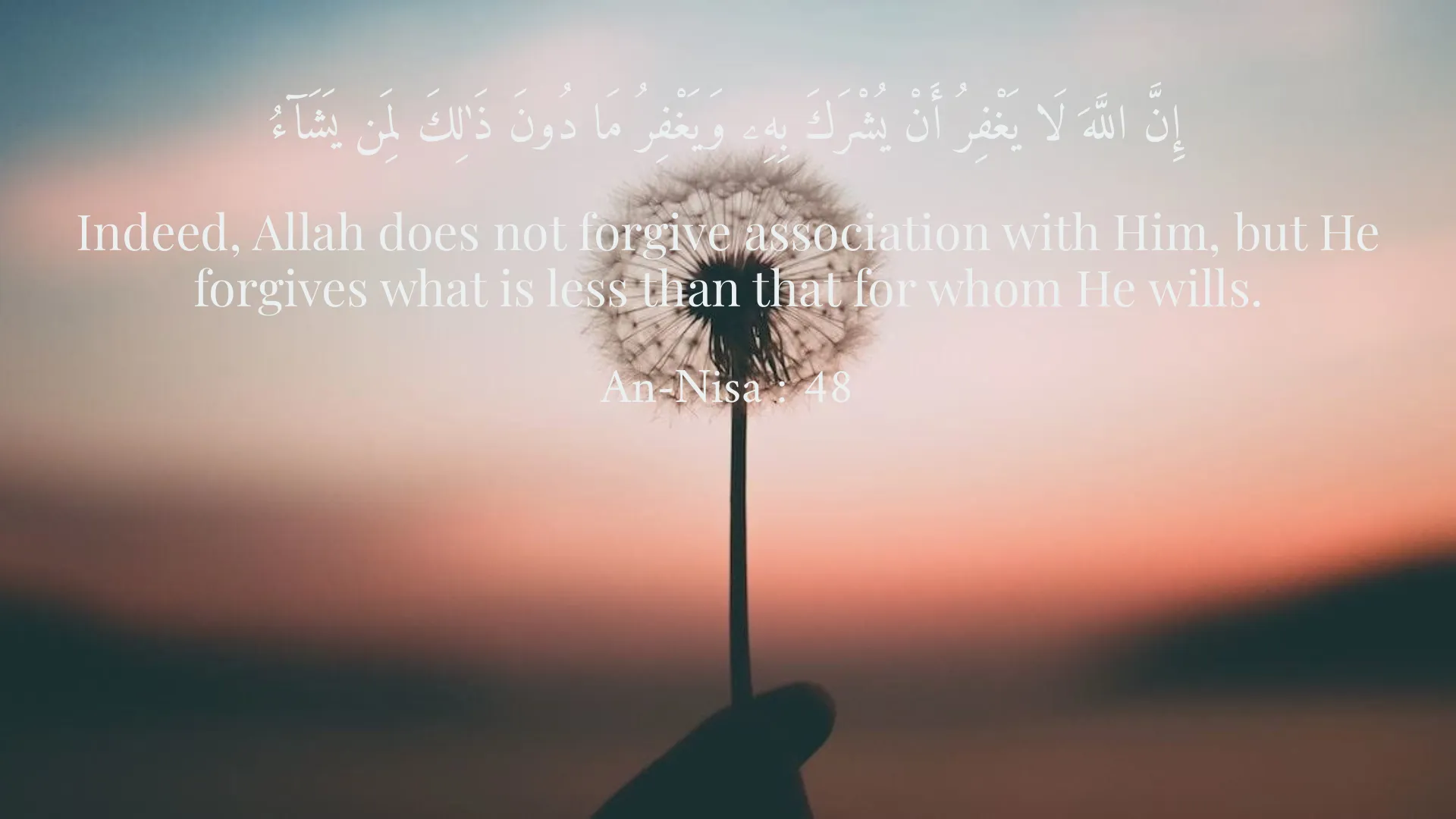
In the Holy Quran, numerous topics are explored, but the issue of sins and God's forgiveness stands out as a predominant theme. Central to this discussion is the concept of shirk, which involves associating partners with Allah, an act considered to be one of the gravest sins. The significance of shirk is underscored in Surah An-Nisa, verse 48, where Allah explicitly states: 'Indeed, Allah does not forgive association with Him, but He forgives what is less than that for whom He wills.' This verse serves as a foundation for understanding the gravity of shirk and illustrates that while God is incredibly merciful, there exists a boundary beyond which His forgiveness does not extend, particularly for those who engage in shirk. The Quran delineates between shirk and other types of sin, highlighting the unique severity of associating partners with God. To further emphasize this point, in Surah Al-Ma'idah, verse 72, Allah conveys: 'Indeed, he who associates others with Allah—Allah has forbidden him Paradise.' Such clear proclamations underline the notion that the act of shirk places one in a perilous position regarding their eternal fate, a warning that rings profoundly through time for all who seek to understand the divine will. On the contrary, the Quran reassures its followers with the promise of forgiveness for other sins. Allah, in His infinite mercy, provides opportunities for sinners to repent and return to His path. Surah Az-Zumar, verse 53, invites all of Allah's servants, saying, 'O My servants who have believed, fear your Lord. For those who do good in this world is good, and the earth of Allah is spacious. Indeed, the patients will be given their reward without account.' This invitation embodies the compassionate nature of God, encouraging those who have sinned to turn back, regardless of their past misdeeds, so long as they approach Him with sincerity and a heartfelt intention. Repentance in Islam, known as Tawbah, holds a fundamental place in the life of a believer. It is not merely an acknowledgment of one’s sins; it involves a comprehensive process that includes remorse, a firm decision to refrain from the sin, and a commitment to mend one's ways. Sincere repentance acts as a purifying force for an individual's heart and soul, allowing them to reconnect with their Creator. It embodies an essential aspect of faith and demonstrates an individual's humble acknowledgment of their dependence on Allah's mercy. Throughout the Quran, there are multiple instances where Allah illustrates the cycle of sin and repentance. Many of the prophets and previous nations faced trials and temptations; however, Allah always provided a means of redemption for them. These stories serve as motivational examples for Muslims to emulate in their personal struggles against sin. The story of Prophet Yunus (Jonah) is particularly noteworthy. After he turned away from his mission, he realized his error while in the belly of a fish and prayed sincerely to Allah for forgiveness. His sincere call was answered, and he was granted forgiveness and a second chance, demonstrating Allah's mercy even in severe situations. Moreover, the act of seeking forgiveness is also socially significant. In Islam, believers are encouraged to forgive one another and mend relationships. This collective approach promotes harmony within the community, allowing for a space where individuals are accountable not only to God but also to fellow human beings. In this respect, seeking forgiveness makes way for unity and compassion among believers, fostering an environment that emphasizes the importance of forgiveness in building strong communal and social bonds. It is evident that Allah's mercy encompasses all forms of sin except for the unforgivable act of shirk. Even the most grievous of sins, when repented sincerely, can lead to forgiveness and redemption in the eyes of God. The eternal hope provided within the Quran offers a reassurance that encourages believers to remain steadfast on the path to righteousness despite their shortcomings. The door to repentance is always open, and the mercy of Allah remains vast and unfathomable. As Muslims navigate their faith journeys, it becomes crucial to recognize the weight of shirk and the importance of sincere repentance from other sins. Understanding the substitutionary nature of these concepts imbues believers with a sense of purpose in adhering to their faith, thus striving for the divine mercy that lies beyond their transgressions. Ultimately, Islam fosters a spirit of continual growth and improvement, underlining that despite the shadows of sin, the path toward God's mercy is illuminated through genuine contrition and revitalized faith. In conclusion, while shirk stands as an unforgivable sin that alienates individuals from Allah's mercy, other sins can be forgiven through sincere repentance and pure intentions. The divine teachings emphasize that every sinner can return to the fold of God, through heartfelt calls for mercy and committed actions toward reform. The concept of forgiveness in Islam is profound and transformative, reminding believers of the boundless compassion of Allah and the ever-present opportunity for redemption, thus nurturing a hopeful outlook even amidst the trials of life.
Related Verses
إِنَّ اللَّهَ لَا يَغْفِرُ أَنْ يُشْرَكَ بِهِۦ وَيَغْفِرُ مَا دُونَ ذَٰلِكَ لِمَن يَشَآءُ
Indeed, Allah does not forgive association with Him, but He forgives what is less than that for whom He wills.
An-Nisa : 48
إِنَّهُ مَن يُشْرِكْ بِاللَّهِ فَقَدْ حَرَّمَ اللَّهُ عَلَيْهِ الْجَنَّةَ
Indeed, he who associates others with Allah—Allah has forbidden him Paradise.
Al-Ma'idah : 72
يَا عِبَادِيَ الَّذِينَ آمَنتُمْ اتَّقُوا رَبَّكُمْ ۖ لِلَّذِينَ أَحْسَنُوا فِي هَذِهِ الدُّنْيَا حَسَنَةٌ وَأَرْضُ اللَّهِ وَاسِعَةٌ ۖ إِنَّمَا يُوفَّى الصَّابِرُونَ أَجْرَهُمْ بِغَيْرِ حِسَابٍ
O My servants who have believed, fear your Lord. For those who do good in this world is good, and the earth of Allah is spacious. Only the patient will be given their reward without account.
Az-Zumar : 53
Short Story
On a calm day, a man named Habib went to the mosque and engaged in prayer and supplication. He sought to be freed from the burden of his sins and asked Allah for forgiveness. After finishing his prayer, he felt a sense of lightness and decided to follow a new path in his life. He reflected on the verses of the Quran and understood that the gravest sin was associating partners with Allah. With this realization, Habib committed to avoiding all forms of shirk and improving his life through piety and devotion.