Quranic Answer
The Holy Quran, as a divine guide for all humanity, does not explicitly contain 'stories for children' in the sense of narratives specifically written with the language and literary structure of modern children's literature. The Quran is primarily a book of guidance, legislation, and enlightenment for people of all ages and levels of understanding throughout history. However, the narrative style and the rich, meaningful content of many Quranic stories make them an unparalleled treasure for educating and nurturing children. Although these stories were revealed for the general audience of the Quran, their simplicity of expression, depth of moral concepts, and captivating descriptions of events give them immense potential for educational purposes for children, helping to solidify the foundations of faith and ethics in their young hearts. The Quran recounts the stories of prophets, past nations, and historical events with eloquent and engaging prose. These stories are not merely entertaining; more importantly, they carry profound lessons and admonitions that are highly constructive for shaping the character and worldview of children and adolescents. For instance, the story of Prophet Yusuf (Joseph), known as 'Ahsan al-Qasas' (the best of stories), is replete with concepts of patience in the face of injustice, loyalty, forgiveness, hope in God, and crisis management. This story, with its numerous twists and turns, captivates a child's imagination while simultaneously imparting great lessons of piety and reliance on God. The account of Prophet Musa's (Moses) life, from his childhood and deliverance from Pharaoh, his struggle against oppression, and his patience and perseverance in the path of God, is another example of a captivating Quranic narrative that can link the heroic figures in a child's mind to divine role models. Stories such as those of Prophet Nuh (Noah) and his patience with his rebellious people, Prophet Ibrahim (Abraham) and his struggle against idolatry and his reliance on God, or Prophet Yunus (Jonah) and his experience in the belly of the fish and his return to God, all portray profound concepts like monotheism, prophethood, the Afterlife, divine justice, and the importance of repentance and seeking forgiveness, in a simple and tangible language for children through the depiction of real events. These narratives help children understand that God is always supportive of His righteous servants and empowers them to face life's challenges. Besides the stories of prophets, other narratives found in the Quran are also suitable for children, such as the story of the People of the Cave, which highlights the importance of faith and escaping the corruption of one's time, or the story of Luqman the Wise and his profound advice to his son, which includes invaluable moral and educational lessons, such as avoiding polytheism, showing kindness to parents, establishing prayer, enjoining good and forbidding evil, and humility. These recommendations directly address how children should be raised and morally developed. Therefore, although the Quran was not written directly for children, parents and educators can utilize these stories, with appropriate selection and simplification, to educate future generations. These narratives introduce children to concepts of faith, ethics, and human values, helping them recognize correct life patterns. The Quran's purpose in narrating these stories is to provide admonition, as stated in Surah Yusuf, verse 111: 'Indeed in their stories is a lesson for those who possess understanding.' These lessons are not only for adults but are also perceivable and understandable by children when presented in an age-appropriate manner, strengthening their mental and spiritual faculties and preparing them for a more fruitful life. Using Quranic stories for children offers multiple benefits: Firstly, it helps strengthen their faith and familiarizes them with the foundations of Islam, instilling a sense of connection with the Creator of the universe. Secondly, it nurtures their linguistic skills and imaginative power, encouraging them to think and reflect on events and characters. Thirdly, it presents complex moral and philosophical concepts in a simple and engaging format, providing them with practical guidance for proper conduct. Fourthly, it fosters empathy, courage, and perseverance in them, teaching them how to be patient and resilient in the face of life's difficulties. These stories provide strong foundations for the intellectual and spiritual growth of children, preparing them to face life's challenges. Thus, while the Quran is a comprehensive book for all humanity, through its narratives, it offers rich and effective content for the education and upbringing of children that can be well utilized in a family and educational setting, raising an aware and ethical generation.
Related Verses
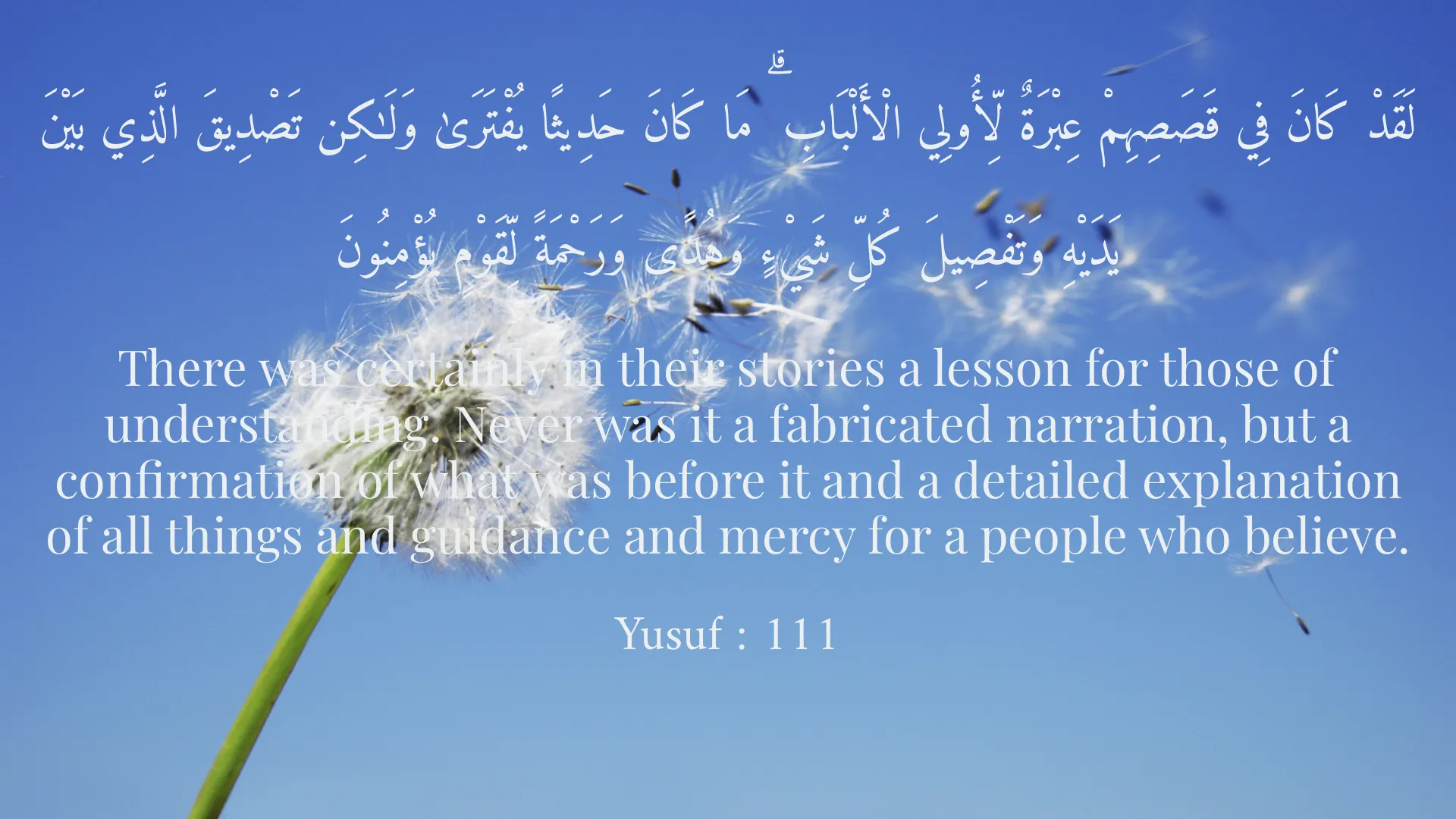
لَقَدْ كَانَ فِي قَصَصِهِمْ عِبْرَةٌ لِّأُولِي الْأَلْبَابِ ۗ مَا كَانَ حَدِيثًا يُفْتَرَىٰ وَلَٰكِن تَصْدِيقَ الَّذِي بَيْنَ يَدَيْهِ وَتَفْصِيلَ كُلِّ شَيْءٍ وَهُدًى وَرَحْمَةً لِّقَوْمٍ يُؤْمِنُونَ
There was certainly in their stories a lesson for those of understanding. Never was it a fabricated narration, but a confirmation of what was before it and a detailed explanation of all things and guidance and mercy for a people who believe.
Yusuf : 111
وَإِذْ قَالَ لُقْمَانُ لِابْنِهِ وَهُوَ يَعِظُهُ يَا بُنَيَّ لَا تُشْرِكْ بِاللَّهِ ۖ إِنَّ الشِّرْكَ لَظُلْمٌ عَظِيمٌ
And [mention, O Muhammad], when Luqman said to his son while he was instructing him, "O my son, do not associate [anything] with Allah. Indeed, association [with him] is great injustice."
Luqman : 13
وَهَلْ أَتَاكَ حَدِيثُ مُوسَىٰ
Has there reached you the story of Moses?
Ta-Ha : 9
Short Story
It is recounted in Saadi's Bustan that a kind father would sit with his child every evening and tell him tales of the virtuous and the great. One day, the son asked, "My dear father, what good are these stories?" The father smiled and said, "O my dear child, words that illuminate the heart and show the right path are often more effective than a thousand dry and lifeless pieces of advice. Stories of the past are like mirrors in which one can see the present and the future. The sweet narratives of the prophets are lessons in patience and perseverance, and the adventures of the righteous are a path towards good character. Just as a small seed one day grows into a mighty tree, so too do small stories plant the roots of wisdom in a child's heart." The son listened attentively and understood that stories were not merely entertainment, but guiding lights for life. And so it was that his heart was enlightened by the light of the stories, and his goodness and knowledge increased day by day.