Quranic Answer
The Holy Quran, as a comprehensive guide and source of wisdom for humanity, addresses various aspects of life, including the foundational principles of child-rearing. While it doesn't function as a modern, step-by-step parenting manual, it provides profound and timeless strategies that enable parents to raise righteous, faithful, and responsible offspring. These guidelines extend beyond spiritual and moral development to encompass social and even physical well-being. One of the most significant and comprehensive sections regarding this topic is the wise counsel of Luqman to his son, detailed in Surah Luqman. These exhortations form the backbone of Quranic child-rearing. The first and most fundamental principle is teaching and internalizing Tawhid (monotheism) and avoiding Shirk (associating partners with Allah). Luqman advises his son: "O my son, do not associate [anything] with Allah. Indeed, association [with Him] is great injustice" (Luqman: 13). This verse underscores that the root of all upbringing lies in familiarizing the child with their Creator and understanding His supreme position in existence. Parents should, from an early age, teach children about God in a simple and gentle manner, introduce them to divine blessings, and cultivate love and gratitude in their hearts. This forms the bedrock of faith upon which all other virtues are built. Following Tawhid, Luqman advises his son to establish prayer, enjoin good, forbid evil, and be patient in the face of adversity: "O my son, establish prayer, enjoin what is right, forbid what is wrong, and be patient over what befalls you. Indeed, that is of the matters [requiring] determination" (Luqman: 17). This highlights the importance of practical worship and social responsibilities. Parents should encourage their children to pray, not through coercion, but by setting an example, creating a spiritual atmosphere at home, and explaining the wisdom behind prayer. Furthermore, teaching social responsibility, promoting good deeds and deterring wrongdoing (within the child's understanding), and fostering patience and resilience in the face of difficulties are crucial parenting duties. Patience is key to success in this world and the hereafter, and it must be instilled in children from the beginning to ensure they are resilient when encountering life's challenges. These elements intertwine spiritual and moral development, preparing the child for a harmonious life within society. Moreover, the Quran strongly emphasizes moral virtues such as humility and avoiding arrogance. Luqman tells his son: "And do not turn your cheek in contempt toward people or walk through the earth exultantly. Indeed, Allah does not like every self-deluded and boastful person" (Luqman: 18), and "And be moderate in your pace and lower your voice; indeed, the most disagreeable of sounds is the voice of donkeys" (Luqman: 19). These verses underscore the importance of humility, respectful interaction with others, and politeness in speech and demeanor. Parents must exemplify these values through their own conduct. Courtesy in speech, respect for elders and youngsters, gentleness, and avoiding harshness or loud voices are among the manners that should be instilled in children. Emulating Prophet Muhammad (PBUH), renowned for his forbearance and excellent character, can serve as a guiding principle. Parents should strive to create an atmosphere of peace, courtesy, and mutual respect at home, enabling children to internalize these values naturally. Another vital principle is the parents' responsibility to protect themselves and their families from divine punishment. In Surah At-Tahrim, verse 6, Allah states: "O you who have believed, protect yourselves and your families from a Fire." This verse explicitly states that parents are not only responsible for their own faith and salvation but must also strive to keep their families and children away from deviation and corruption. This responsibility includes providing sound religious and moral education, monitoring the child's choice of friends and environment, and raising them according to Quranic values. This responsibility necessitates parents' awareness and adherence to religious teachings so they can serve as practical role models for their children. The Quran also highlights the significance of supplication and asking Allah for righteous offspring. In Surah Al-Furqan, verse 74, believers pray: "And those who say, 'Our Lord, grant us from our spouses and our offspring comfort to our eyes and make us leaders for the righteous.'" This supplication demonstrates that raising righteous children is achieved not only through parents' efforts and planning but also through reliance on and seeking assistance from Allah. Praying for children, strengthening their spiritual connection with God, and seeking goodness and welfare for them are crucial aspects of Islamic upbringing. Parents should not overlook the power of supplication, as it is a significant factor in attaining divine success for proper upbringing. In summary, the Quranic approaches to child-rearing encompass a comprehensive set of foundational principles that go beyond superficial advice. These strategies are built upon establishing faith and monotheism, cultivating excellent morals (such as humility, patience, courtesy in speech and conduct), encouraging acts of worship (especially prayer), teaching social responsibilities (enjoining good and forbidding evil), and avoiding arrogance and pride. Parents, in this journey, serve as role models and guides, and they must lead their children with love, wisdom, and patience towards human perfection and closeness to Allah. Quranic upbringing is a continuous and holistic process aimed at nurturing individuals who are successful and blessed in this life and attain salvation in the hereafter. This upbringing produces a generation that benefits not only themselves but also society and humanity, serving as a beacon of guidance for future generations. The emphasis on these principles demonstrates the Quran's long-term and profound perspective on upbringing and its role in shaping individuals and society.
Related Verses
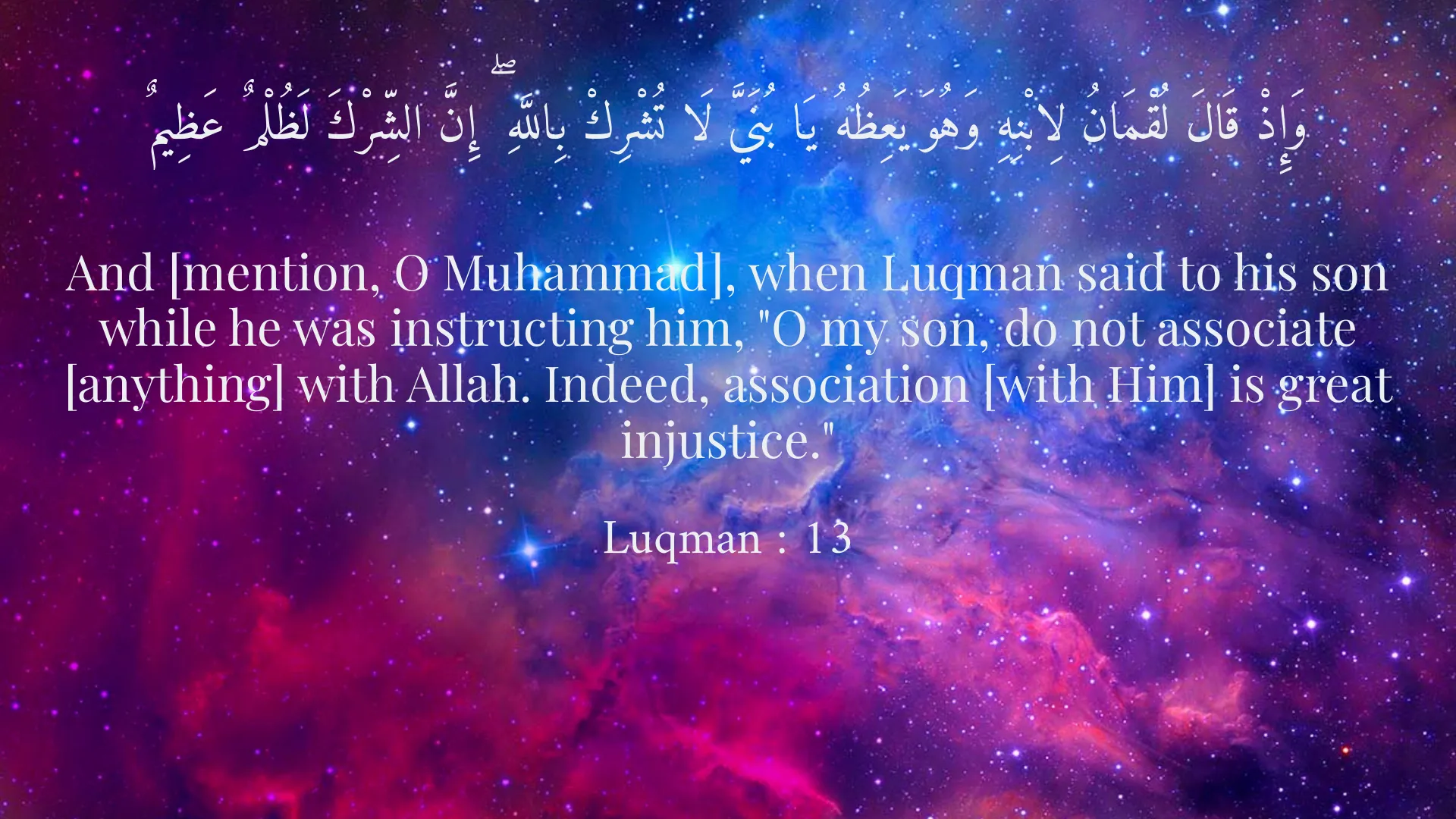
وَإِذْ قَالَ لُقْمَانُ لِابْنِهِ وَهُوَ يَعِظُهُ يَا بُنَيَّ لَا تُشْرِكْ بِاللَّهِ ۖ إِنَّ الشِّرْكَ لَظُلْمٌ عَظِيمٌ
And [mention, O Muhammad], when Luqman said to his son while he was instructing him, "O my son, do not associate [anything] with Allah. Indeed, association [with Him] is great injustice."
Luqman : 13
يَا بُنَيَّ أَقِمِ الصَّلَاةَ وَأْمُرْ بِالْمَعْرُوفِ وَانْهَ عَنِ الْمُنْكَرِ وَاصْبِرْ عَلَىٰ مَا أَصَابَكَ ۖ إِنَّ ذَٰلِكَ مِنْ عَزْمِ الْأُمُورِ
O my son, establish prayer, enjoin what is right, forbid what is wrong, and be patient over what befalls you. Indeed, that is of the matters [requiring] determination.
Luqman : 17
يَا أَيُّهَا الَّذِينَ آمَنُوا قُوا أَنفُسَكُمْ وَأَهْلِيكُمْ نَارًا وَقُودُهَا النَّاسُ وَالْحِجَارَةُ عَلَيْهَا مَلَائِكَةٌ غِلَاظٌ شِدَادٌ لَّا يَعْصُونَ اللَّهَ مَا أَمَرَهُمْ وَيَفْعَلُونَ مَا يُؤْمَرُونَ
O you who have believed, protect yourselves and your families from a Fire whose fuel is people and stones, over which are [appointed] angels, harsh and severe; they do not disobey Allah in what He commands them but do what they are commanded.
At-Tahrim : 6
وَالَّذِينَ يَقُولُونَ رَبَّنَا هَبْ لَنَا مِنْ أَزْوَاجِنَا وَذُرِّيَّاتِنَا قُرَّةَ أَعْيُنٍ وَاجْعَلْنَا لِلْمُتَّقِينَ إِمَامًا
And those who say, "Our Lord, grant us from our spouses and our offspring comfort to our eyes and make us leaders for the righteous."
Al-Furqan : 74
Short Story
In Saadi's Golestan, it is narrated that a king entrusted his son to a wise teacher to educate him. One day, the teacher told the prince, 'My son, know that teaching in childhood is like carving on stone, but in adulthood, it is like drawing on water.' The prince asked, 'Why do you say so?' The teacher replied, 'Because a child's soul is like soft dough that can be molded into any shape, but an adult's soul is like a baked brick; if you try to change it, it will break. Therefore, sow the seeds of goodness and knowledge in childhood, for they will take root and bear fruit in adulthood.' This beautiful story reminds us that childhood is the best time to plant the seeds of faith, good morals, and knowledge. Parents are like gardeners who must patiently and kindly water these young saplings so that they may grow into fruitful trees in the future.