Quranic Answer
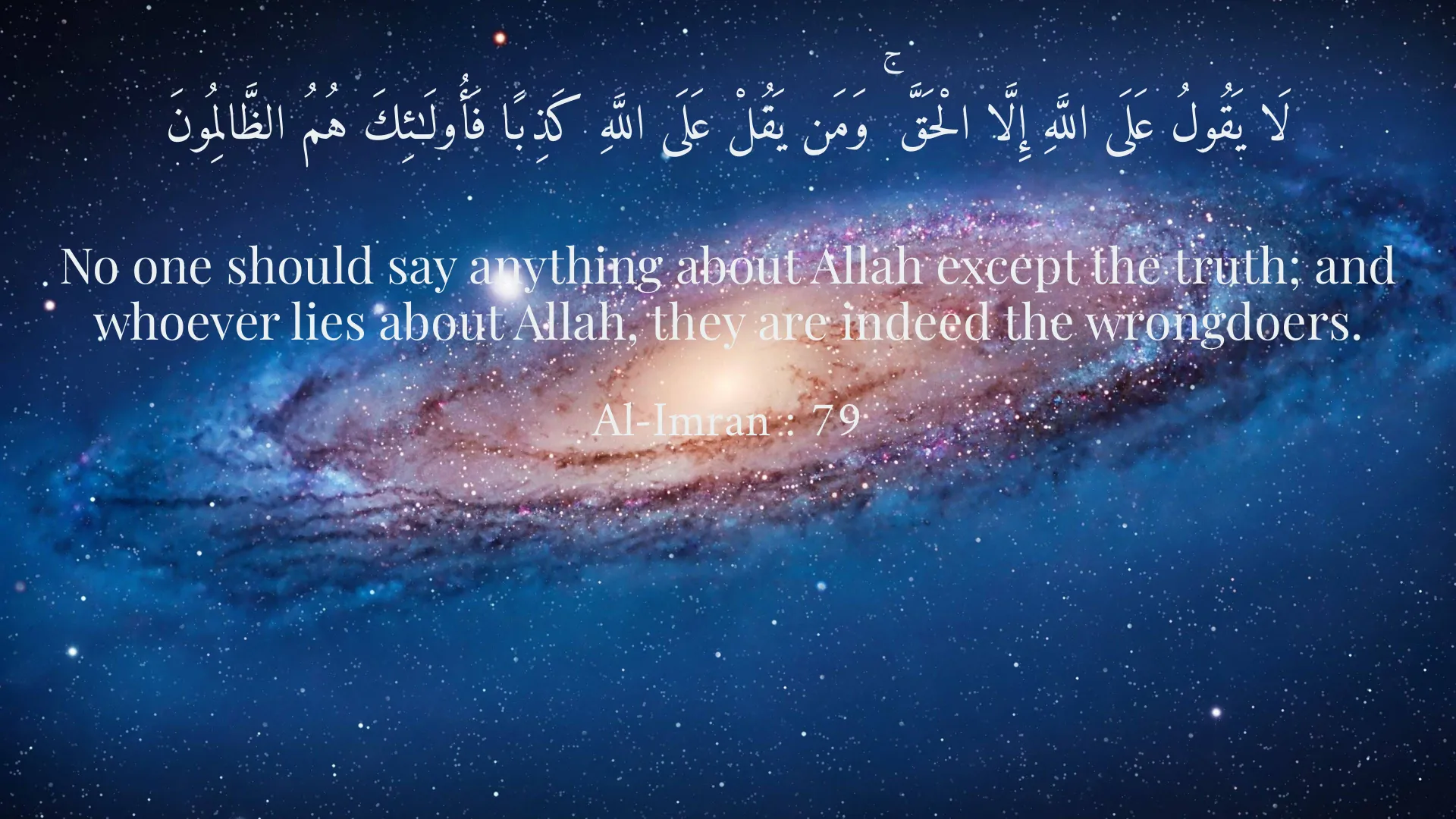
The Holy Quran emphasizes the importance of revelation as a source of guidance for humanity. It stands as a beacon of light in a world often clouded by confusion and misunderstanding. In Surah Al-Imran, verse 79, Allah explicitly states that no one has the right to speak on behalf of Him unless it is validated and confirmed by divine revelation. This profound assertion underscores the notion that without divine guidance, it becomes exceedingly difficult for individuals to grasp the essence of truth. Revelation, therefore, is not merely a source of information; it is the essential pathway that leads humanity toward a clearer understanding of their existence, purpose, and the moral framework within which they should operate. The significance of revelation is deeply rooted in the human experience. From the outset of time, humans have grappled with fundamental questions about existence, morality, and the ultimate destiny of the soul. These inquiries often lead to speculative thinking and subjective interpretations that can easily veer into errors if not anchored by a divine framework. In this context, the Quran provides solace and answers. By highlighting the crucial role of revelation, the Quran ensures that the quest for truth is grounded in a source of infallibility—God's own words, conveyed through His chosen messengers. Further delving into the Quran's teachings, Surah Al-Maidah, verse 67, adds another layer of understanding. It states: 'O Messenger, convey what has been revealed to you from your Lord.' This command not only reflects the importance of the Prophet Muhammad’s mission but also illustrates how revelation serves as a crucial mechanism for connecting the public with God. The duty bestowed upon the Prophet to communicate these divine messages exemplifies the vital link between the divine and humanity, thus providing a structured framework through which individuals can comprehend the divine will. Revelation, therefore, is not just about receiving messages; it is about the interaction between the divine and the mortal realm. The guidance provided through revelation allows individuals to transcend their limited perspectives and obtain a broader, more accurate understanding of their surroundings. It invites people to look beyond themselves, encouraging them to seek knowledge that aligns with divine intent. Without such revelation, individuals may find themselves lost in the complexities of life. They may fall prey to misinformation and end up developing skewed perceptions of what constitutes reality. History bears witness to the struggles of those who sought the truth without the guidance of revelation. From ancient civilizations that revered numerous deities to the modern philosophical movements that question the existence of a singular truth, it is evident that humanity’s journey toward enlightenment has been riddled with challenges when it diverts from divine guidance. Figures throughout history, such as philosophers and reformers, although sometimes illuminating paths to understanding, often found themselves amidst controversy and division. Without a cohesive divine source, these seekers frequently led society towards erroneous ideologies and misguidance. Moreover, the natural inclination of individuals to search for answers beyond the physical realm shows an innate recognition of the limitations of human reason. The Quran presents itself as a divine perspective, offering clarity to individuals in their pursuits of understanding. Revelation mitigates the chaos surrounding human thought, shaping coherent worldviews based on divine wisdom rather than flawed personal interpretations. Such clarity is indispensable in a rapidly changing world fraught with challenges. In moments of distress, confusion, or moral dilemmas, it is often the words of revelation that provide the comfort, direction, and assurance needed to navigate complex issues. The Quran further elucidates the multifaceted nature of revelation, acknowledging that it comes in various forms—scriptural teachings, prophetic traditions, and spiritual insights. Each method serves to enhance the human experience and guide individuals towards making decisions that are aligned with divine will. This divine connection fosters a sense of accountability in human behavior, reminding individuals that their actions have consequences beyond the immediate sphere of their lives. In today's context, the relevance of revelation remains as pronounced as ever. In a world grappling with crises of identity, morality, and spiritual disconnection, the Quran emerges as a timeless text that addresses the core concerns of humanity. The emphasis on the necessity of divine revelation acts as a reminder to society at large about the fragility and complexity of the human condition. It invites individuals to engage in sincere reflection, to seek truth constructed on the foundations laid by the Almighty. The realization that humanity requires revelation to attain truth and accurate understanding is not merely an abstract concept; it is a fundamental principle upon which societies can build. The wisdom embedded within the Quran serves to elevate the human spirit, guiding individuals toward paths of righteousness, compassion, and understanding. This divine communication illustrates the prioritized need for humanity to reconnect with God to find their rightful course in life. In conclusion, one can firmly assert that the essence of revelation, as articulated by the Holy Quran, is pivotal for attaining truth and embarking on a journey toward correct understanding. It is this divine connection that steers humanity along the right path amid chaos, offering clarity, guidance, and a deeper understanding of existence. Hence, embracing revelation is not solely an act of faith; it is fundamentally an acknowledgment of humanity's inherent need for divine guidance. As seekers of truth and knowledge, individuals stand to gain immeasurable insights from the guidance that revelation offers, thus enriching their lives and fortifying their spirits against the trials of existence.
Related Verses
لَا يَقُولُ عَلَى اللَّهِ إِلَّا الْحَقَّ ۚ وَمَن يَقُلْ عَلَى اللَّهِ كَذِبًا فَأُولَـٰئِكَ هُمُ الظَّالِمُونَ
No one should say anything about Allah except the truth; and whoever lies about Allah, they are indeed the wrongdoers.
Al-Imran : 79
يَا أَيُّهَا الرَّسُولُ بَلِّغ مَا أُنزِلَ إِلَيْكَ مِن رَّبِّكَ ۖ وَإِن لَّم تَفْعَل فَمَا بَلَّغْتَ رِسَالَتَهُ ۗ وَاللَّهُ يَعْصِمُكَ مِنَ النَّاسِ ۚ إِنَّ اللَّهَ لَا يَهْدِي الْقَوْمَ الْكَافِرِينَ
O Messenger, convey what has been revealed to you from your Lord. And if you do not, then you have not conveyed His message. And Allah will protect you from the people. Indeed, Allah does not guide the disbelieving people.
Al-Maidah : 67
Short Story
One day, a man was determined to discover the truth of life. He tried hard, searching everywhere, but found no results. Then he recalled the Quranic verses that say, 'And We have not sent you, [O Muhammad], except as a mercy to the worlds.' He understood that divine guidance comes through revelation. He decided to adhere to the faith and its teachings, and thus found solace in his life.