Quranic Answer
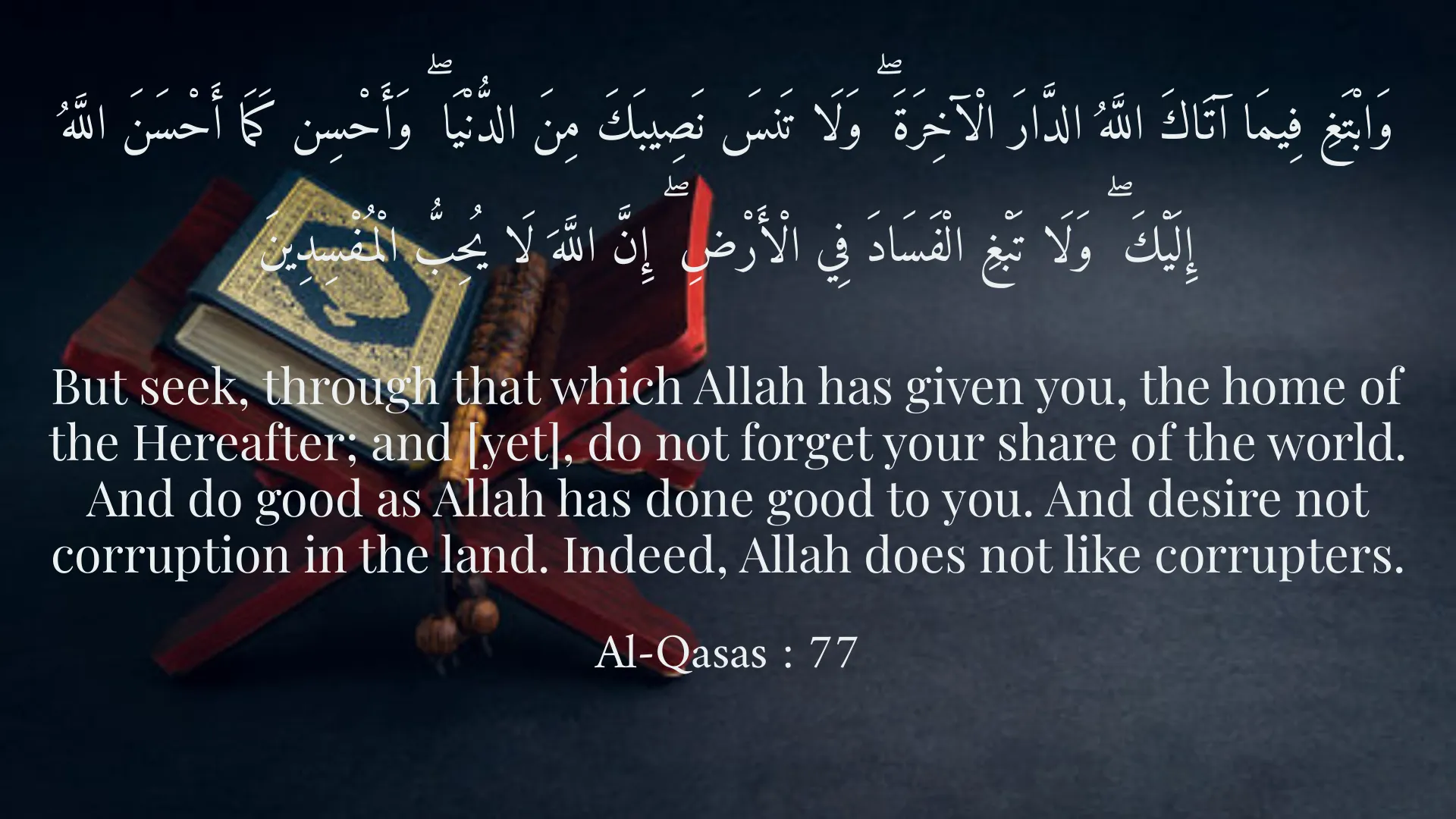
In the teachings of the Holy Quran, the concept of success and prosperity has deeper roots than mere material achievements and accumulation of wealth. True success, from a Quranic perspective, not only does not contradict simple living, but often aligns closely with it. The Quran primarily links success (falah or fawz) to salvation in the Hereafter, piety, righteousness, performing good deeds, and obedience to divine commands. Within this framework, simple living means avoiding extravagance, excessive attachment to worldly possessions, and unrestrained consumerism, not abandoning efforts to earn a lawful living or embracing voluntary poverty. In fact, a simple life is a tool that enables an individual to focus primarily on higher, eternal goals and to be free from the shackles of worldly attachments. The Holy Quran teaches us that this world is a transient place for passage and test, and the ultimate goal of a believer is to achieve divine pleasure and eternal life in the Hereafter. In Surah Al-Qasas, verse 77, it states: “But seek, through that which Allah has given you, the home of the Hereafter; and [yet], do not forget your share of the world. And do good as Allah has done good to you. And desire not corruption in the land. Indeed, Allah does not like corrupters.” This verse indicates a crucial balance: one must work for the Hereafter while also having a share of this world, but this enjoyment should not lead to corruption or extravagance, nor should it distract one from the main objective. Simple living is not about denying worldly pleasures, but about not being immersed in them, consuming moderately, and avoiding ostentation. This lifestyle helps individuals avoid falling into the trap of greed and ensures their hearts are not unduly attached to worldly possessions. Quranic success hinges on inner peace, contentment, and satisfaction with divine decree. When a person struggles against materialistic temptations and is content with what they have, they find greater peace of mind, and this peace is a fundamental basis for greater success in spiritual and even material dimensions (if without attachment). The Prophet Muhammad (PBUH), the infallible Imams (AS), and many divine saints are prime examples of individuals who, despite having the ability and opportunity to enjoy worldly luxuries, lived simple lives and yet achieved the highest levels of spiritual success, just governance, and influence over humanity. This demonstrates that success and simple living are not contradictory; rather, they can be complementary. Simple living helps individuals break free from material constraints and focus their energy on advancing in piety and serving humanity. On the other hand, the Quran strongly opposes extravagance and wastefulness. In Surah Al-Isra, verse 29, we read: “And do not make your hand shackled to your neck [in stinginess] or extend it completely [in extravagance] so that you become blameworthy and destitute.” This verse emphasizes moderation in spending and avoiding excess or deficiency. Simple living is an embodiment of this moderation. Someone who chooses a simple life is not necessarily poor or without purpose; rather, they are an individual who has defined their values beyond materialism and understands that accumulating wealth, in itself, neither brings happiness nor is it a sign of success. True success lies in achieving a tranquil soul (Nafs al-Mutma’innah) and a sound heart, which is more easily attained through simple living and non-attachment to the glitter of this world. Therefore, from a Quranic perspective, it is indeed possible to be both successful and live a simple life. Success primarily depends on the elevation of the soul and proximity to God, and this is more achievable by being free from material constraints and choosing a life free from extravagance and wastefulness. Simple living is not an obstacle to success; rather, it can pave the way for sustainable and true successes, especially in spiritual and moral dimensions, and help a person lead a more purposeful life. This lifestyle provides a space for spiritual growth, service to the community, and focus on matters that truly matter, freeing individuals from unnecessary worldly worries that often hinder true progress. Ultimately, true success is found in Allah's pleasure and inner peace, which are more fully realized through contentment and a simpler life.
Related Verses
وَابْتَغِ فِيمَا آتَاكَ اللَّهُ الدَّارَ الْآخِرَةَ ۖ وَلَا تَنسَ نَصِيبَكَ مِنَ الدُّنْيَا ۖ وَأَحْسِن كَمَا أَحْسَنَ اللَّهُ إِلَيْكَ ۖ وَلَا تَبْغِ الْفَسَادَ فِي الْأَرْضِ ۖ إِنَّ اللَّهَ لَا يُحِبُّ الْمُفْسِدِينَ
But seek, through that which Allah has given you, the home of the Hereafter; and [yet], do not forget your share of the world. And do good as Allah has done good to you. And desire not corruption in the land. Indeed, Allah does not like corrupters.
Al-Qasas : 77
وَلَا تَجْعَلْ يَدَكَ مَغْلُولَةً إِلَىٰ عُنُقِكَ وَلَا تَبْسُطْهَا كُلَّ الْبَسْطِ فَتَقْعُدَ مَلُومًا مَّحْسُورًا
And do not make your hand shackled to your neck [in stinginess] or extend it completely [in extravagance] so that you become blameworthy and destitute.
Al-Isra : 29
قَدْ أَفْلَحَ الْمُؤْمِنُونَ
Certainly will the believers prosper,
Al-Mu'minun : 1
Short Story
It is narrated that a dervish once told a king, "O King! You possess so much wealth that you never ponder its eventual demise, nor do you ever spare a glance for a dervish who lacks even a morsel of bread." The king, surprised, asked, "What do you mean by this?" The dervish, with a kind smile, replied, "My intention is that true happiness and abundance do not follow the accumulation of wealth unless contentment is present. With this apparent poverty, I am the wealthiest, and you, with all your riches, might be the poorest, for your heart is enslaved by them." The king took heed of the dervish's profound words and understood that contentment is a treasure that transforms poverty into richness, and wealth, no matter how vast, brings nothing but suffering without contentment. This story reminds us that true peace of heart and inner tranquility are often found in simple living and detachment from worldly glitter, not in the accumulation of possessions.