Quranic Answer
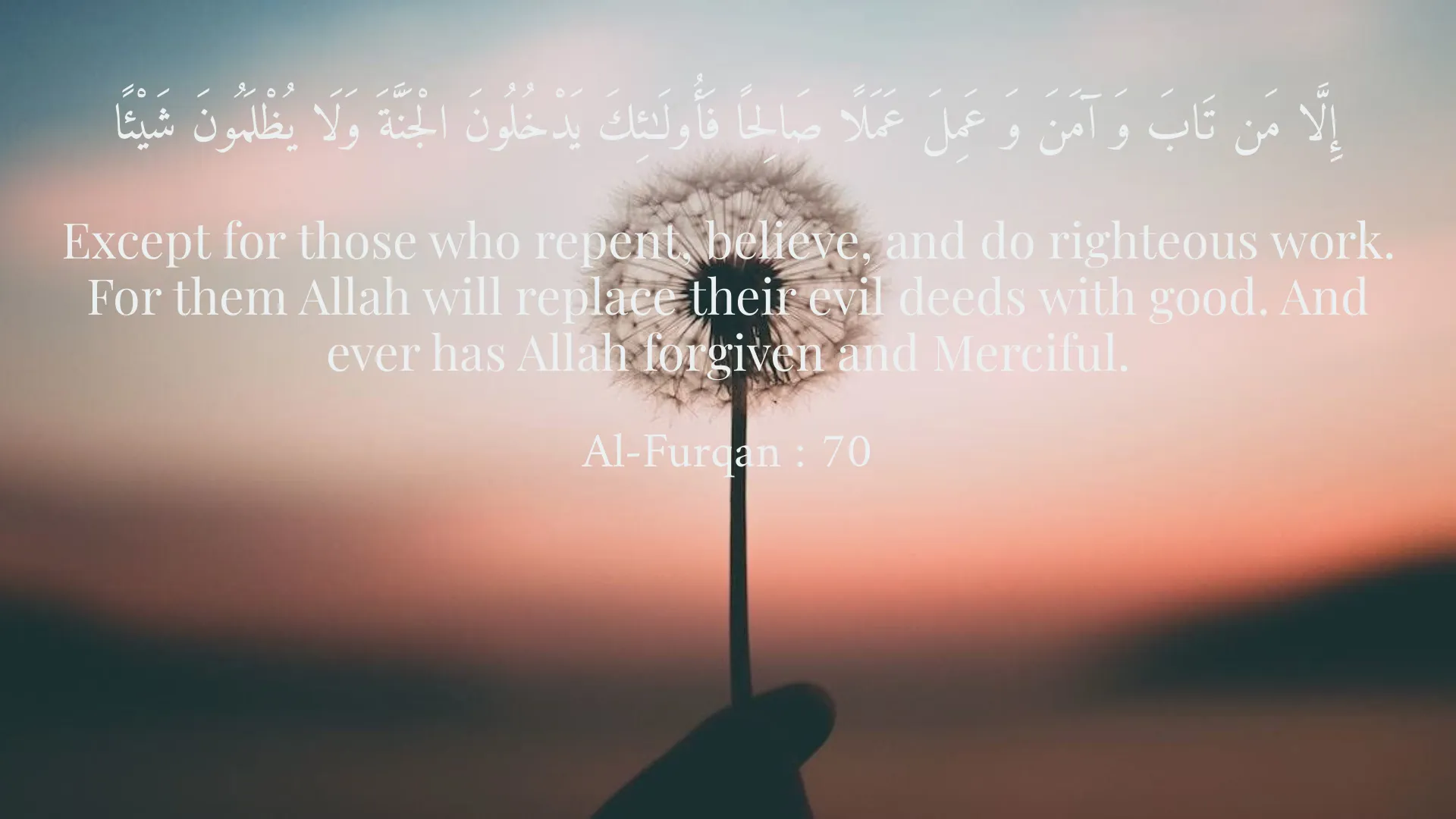
In the Holy Quran, Allah emphasizes the importance of good deeds, presenting them as essential components of a faithful life. The interconnectedness of good deeds, repentance, and the remembrance of Allah forms a central theme in many verses of the Quran. As believers navigate through life, they often encounter temptations, challenges, and moral dilemmas that can lead them astray. However, the promise of forgiveness and the opportunity to redeem oneself through righteous actions provides a pathway to regain one's standing in the eyes of Allah. One of the most striking verses that highlight the significance of good deeds and their role in erasing sins is found in Surah Al-Furqan, verse 70. This verse states: 'Except for those who repent, believe, and do righteous work. For them Allah will replace their evil deeds with good. And ever has Allah forgiven and Merciful.' This verse illustrates that the conditions for redemption—repentance, faith, and righteous actions—are clearly defined. Repentance, or Tawbah, is not merely an expression of regret but is accompanied by a sincere intention to change and improve one's behavior. This transformative process emphasizes that one’s relationship with Allah can be restored through sincere efforts and a commitment to righteousness. In Islam, the concept of faith (Iman) is not static; it requires action and adherence to the teachings of Allah. The merging of faith with action elevates an individual’s spiritual journey, aligning them closer to divine approval. The assurance that Allah will replace evil deeds with good upon repentance reinforces the boundless mercy and compassion of Allah towards His creation. It emphasizes the idea that no sin is beyond redemption, and every believer has the potential to be transformed through sincere repentance and good actions. Moreover, Surah Al-Imran, verse 135 states: 'And those who, when they commit an immorality or wrong themselves by sin, remember Allah and seek forgiveness for their sins.' This verse underscores the theme of remembrance—those who err must not lose hope but rather turn back to Allah in remembrance and supplication for forgiveness. The act of remembering Allah serves as a powerful motivator for believers to seek His mercy and to strive towards a life filled with good deeds. This call to remember Allah during moments of weakness becomes a mechanism for self-reflection, prompting a believer to assess their actions and behaviors in light of divine expectations. Furthermore, the notion of good deeds as a remedy for sins is reiterated in Surah Hud, verse 114, which states: 'And establish prayer at the two ends of the day and at the approach of night. Indeed, good deeds wipe away bad deeds.' This verse illustrates the significance of prayer (Salah) and its role as a spiritual foundation for Muslims. Prayer, being one of the five pillars of Islam, is a direct connection between the believer and Allah. It serves not only as an act of worship but also as a means of spiritual purification. Regular performance of good deeds, including prayer, contributes to the cultivation of a righteous character and helps to diminish the weight of negative actions. The implication of this verse extends beyond mere actions; it implies an entire lifestyle anchored in the regular practice of good deeds. It shows the impact of discipline and consistency in performing acts of worship and kindness, suggesting that good deeds contribute to substantive changes in one's life, both internally and externally. By integrating prayer and righteous acts into their daily routine, believers create an environment in their lives that is conducive to spiritual growth and moral uprightness. The Quran repeatedly emphasizes the importance of balancing hope and fear, drawing attention to Allah's mercy while also recognizing the consequences of one's actions. The ultimate objective is to foster an environment of sincerity where individuals strive earnestly for improvement while placing their trust in Allah's mercy. This duality—in seeking forgiveness while engaging in good deeds—serves to strengthen faith and resilience. In conclusion, the teachings within the Holy Quran profoundly articulate the relationship between good deeds, repentance, and the remembrance of Allah. The verses illustrate that while humans are prone to err, there lies in every sin an opportunity for redemption through sincere repentance and righteous actions. The promise of Allah's mercy serves as a beacon of hope for all believers, encouraging them to persistently engage in good deeds as a means to atone for their wrongs. Ultimately, the path to forgiveness and redemption is as much about the quality of deeds and prayer as it is about the intentions behind them. By nurturing a steadfast spirit and a heart inclined towards goodness, believers can aspire to achieve purity of soul and attain Allah’s forgiveness, demonstrating the transformative power of faith in action.
Related Verses
إِلَّا مَن تَابَ وَ آمَنَ وَ عَمِلَ عَمَلًا صَالِحًا فَأُولَـٰئِكَ يَدْخُلُونَ الْجَنَّةَ وَلَا يُظْلَمُونَ شَيْئًا
Except for those who repent, believe, and do righteous work. For them Allah will replace their evil deeds with good. And ever has Allah forgiven and Merciful.
Al-Furqan : 70
وَالَّذِينَ إِذَا فَعَلُوا فَاحِشَةً أَوْ ظَلَمُوا أَنفُسَهُمْ ذَكَرُوا اللَّهَ فَاسْتَغْفَرُوا لِذُنُوبِهِمْ
And those who, when they commit an immorality or wrong themselves by sin, remember Allah and seek forgiveness for their sins.
Al-Imran : 135
وَأَقِمِ الصَّلَاةَ طَرَفَيِ النَّهَارِ وَزُلفًا مِنَ اللَّيْلِ إِنَّ الْحَسَنَاتِ يُذْهِبْنَ السَّيِّئَاتِ
And establish prayer at the two ends of the day and at the approach of night. Indeed, good deeds wipe away bad deeds.
Hud : 114
Short Story
Once upon a time, there was a man named Hassan who had made many mistakes in his life. Hassan turned to God in repentance and decided to do good deeds. He began to help the needy and show kindness to his family. Over time, Hassan felt a heavy burden lifted off his shoulders. At that moment, he realized that his good deeds not only refreshed his spirit but also cleansed him of his sins.