Quranic Answer
Understanding the impact of hidden sins on human destiny requires a deep comprehension of the Quran's perspective on Qada and Qadar (Divine Decree and Destiny) and human free will. Islam teaches that absolutely nothing is hidden from Allah's infinite knowledge. He is aware of every thought, every intention, and every action, whether it is manifest or concealed. This divine omniscience is the most fundamental principle in addressing this question. Surah Al-Imran, verse 29, explicitly states: "Say, 'Whether you conceal what is in your breasts or reveal it, Allah knows it. And He knows what is in the heavens and what is on the earth. And Allah is over all things competent.'" This verse is a strong affirmation of Allah's complete encompassment of all details of our existence and actions, both open and hidden. From a Quranic perspective, destiny is not a pre-determined, unchangeable path in which humans have no role. Rather, destiny includes Allah's eternal knowledge of all human choices and reactions throughout their lives. Humans possess free will (Ikhtiyar), and this free will is itself a part of the Divine Decree (Qadar). Hidden sins, although they remain concealed from human sight, are meticulously recorded in the divine ledger. Surah Al-Kahf, verse 49, reveals this truth: "And the book will be placed [before them], and you will see the criminals fearful of that within it, and they will say, 'Oh, woe to us! What is this book that leaves nothing small or great except that it has enumerated it?' And they will find what they did present [before them]. And your Lord does injustice to no one." This verse indicates that all deeds, even the minutest ones, are recorded in the books of deeds and will be presented to humanity one day. The impact of hidden sins on destiny can be examined in several ways. Firstly, there is the spiritual and psychological effect: Sin, especially recurring hidden sin not accompanied by remorse and sincere repentance, darkens the human heart and creates a veil between the individual and divine light. This spiritual darkness hinders proper understanding, prevents inner peace, and diminishes the enjoyment derived from acts of worship. A heart stained by sin is less receptive to divine guidance and inspiration, gradually losing its inclination towards obedience and closeness to Allah. This steadily diverts an individual from the path of spiritual growth, leading them towards spiritual decline, even if their outward life appears successful. The loss of Barakah (blessings) in one's life—whether in sustenance, relationships, time, or peace of mind—is another hidden consequence of sin. The Prophet Muhammad (peace be upon him) said: "Indeed, a servant is deprived of provision because of a sin he commits." This deprivation does not always mean material poverty; it can refer to a lack of contentment and ease in life, even amidst wealth and power. A person who sins in private may constantly struggle with feelings of guilt, internal anxiety, and a deep sense of dissatisfaction, preventing them from achieving true peace and lasting happiness, regardless of their external achievements. Secondly, there is an impact on one's life trajectory and the outcomes of actions: Although hidden sins are not directly linked to the 'writing of destiny' on the Preserved Tablet (Lawh al-Mahfuz), from a human perspective, our choices determine the course of our lives. Every sin, even a hidden one, can over time reinforce negative habits, weaken one's resolve, and lead to committing greater sins. This chain of sins gradually steers an individual's life in a direction they might not have initially imagined. Allah states in Surah Ar-Ra'd, verse 11: "Indeed, Allah will not change the condition of a people until they change what is in themselves." This verse states a universal divine law: changes in human circumstances, whether positive or negative, originate from changes within themselves. Hidden sins introduce negative internal changes that ultimately lead to undesirable shifts in one's apparent and inner destiny. These shifts might manifest as missed opportunities, unforeseen problems, or a lack of success in endeavors, even if the root cause remains unknown to others. For example, a person who secretly engages in dishonesty might eventually face financial ruin or relationship breakdowns, while others remain unaware of the true reason. Furthermore, hidden sins can lead to the withdrawal of divine aid for good deeds, depriving an individual of Allah's subtle graces. However, Allah's mercy and forgiveness open a vast door for change. The most crucial factor that can neutralize the negative effects of sins, both open and hidden, and steer human destiny towards good and righteousness, is 'Tawbah Nasuh' or sincere repentance. Repentance is a genuine return to Allah, remorse for the sin, a firm resolve to abandon it in the future, and making amends (if possible). Allah says in Surah Az-Zumar, verse 53: "Say, 'O My servants who have transgressed against themselves [by sinning], do not despair of the mercy of Allah. Indeed, Allah forgives all sins. Indeed, it is He who is the Forgiving, the Merciful.'" This verse encompasses all sins, including hidden ones. Repentance not only purifies sins but can also transform evil deeds into good ones, changing the course of life towards good and blessings. Therefore, by choosing to commit a sin (even a hidden one), a person can steer their destiny towards decline, and by choosing to repent and return to Allah, they can change their destiny towards ascent and success. This change is essentially a change in the human's 'state' and 'actions,' which in turn leads to a 'change in outcomes' and 'blessings' in their life, all within the framework of Allah's eternal knowledge and will. Thus, hidden sins undoubtedly impact human destiny, not by negating divine decree, but by determining the path and quality of one's worldly and otherworldly life, and the opportunity for return and change is always open through repentance.
Related Verses
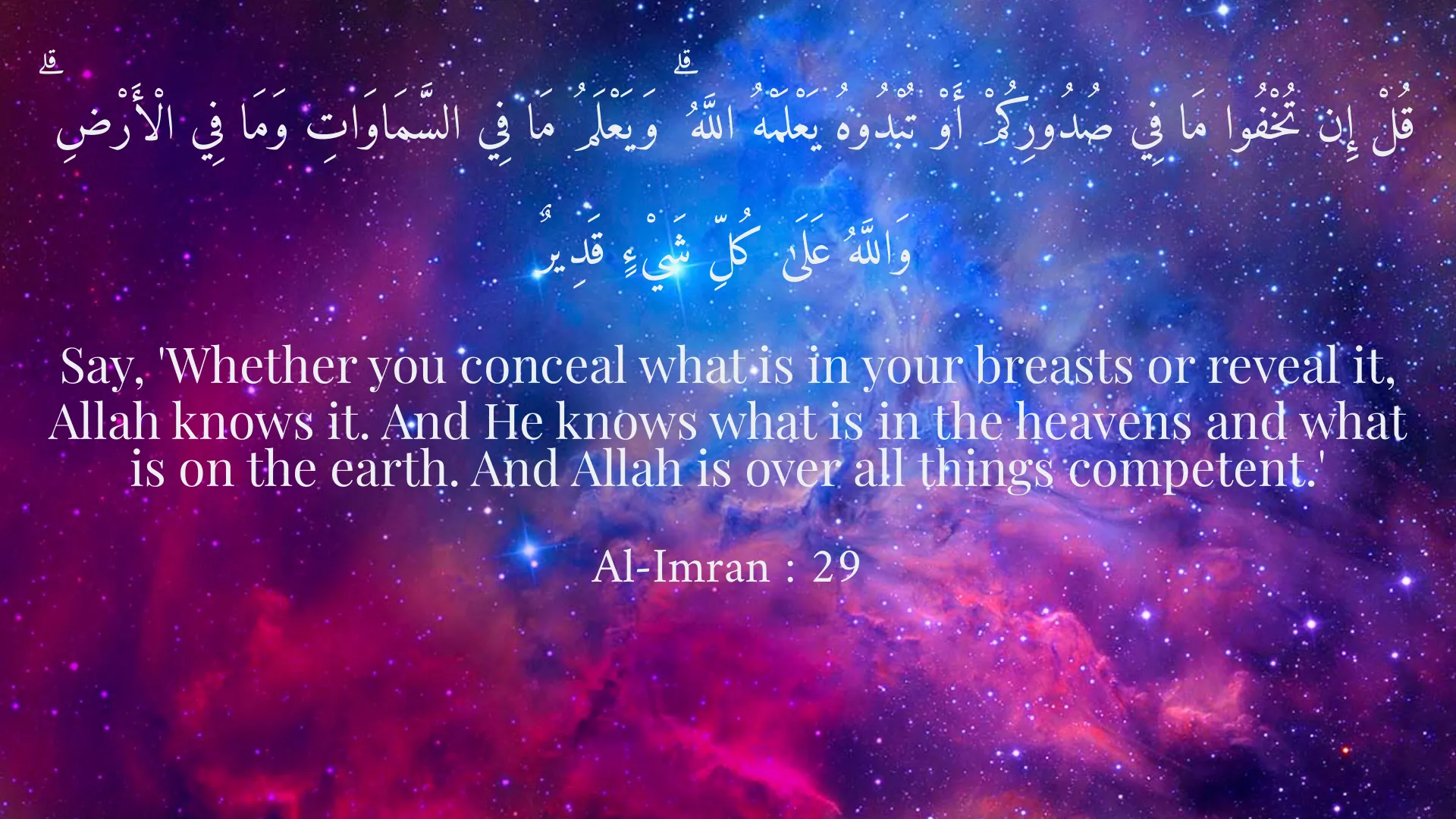
قُلْ إِن تُخْفُوا مَا فِي صُدُورِكُمْ أَوْ تُبْدُوهُ يَعْلَمْهُ اللَّهُ ۗ وَيَعْلَمُ مَا فِي السَّمَاوَاتِ وَمَا فِي الْأَرْضِ ۗ وَاللَّهُ عَلَىٰ كُلِّ شَيْءٍ قَدِيرٌ
Say, 'Whether you conceal what is in your breasts or reveal it, Allah knows it. And He knows what is in the heavens and what is on the earth. And Allah is over all things competent.'
Al-Imran : 29
وَوُضِعَ الْكِتَابُ فَتَرَى الْمُجْرِمِينَ مُشْفِقِينَ مِمَّا فِيهِ وَيَقُولُونَ يَا وَيْلَتَنَا مَالِ هَٰذَا الْكِتَابِ لَا يُغَادِرُ صَغِيرَةً وَلَا كَبِيرَةً إِلَّا أَحْصَاهَا ۚ وَوَجَدُوا مَا عَمِلُوا حَاضِرًا ۗ وَلَا يَظْلِمُ رَبُّكَ أَحَدًا
And the book will be placed [before them], and you will see the criminals fearful of that within it, and they will say, 'Oh, woe to us! What is this book that leaves nothing small or great except that it has enumerated it?' And they will find what they did present [before them]. And your Lord does injustice to no one.
Al-Kahf : 49
لَهُ مُعَقِّبَاتٌ مِّن بَيْنِ يَدَيْهِ وَمِنْ خَلْفِهِ يَحْفَظُونَهُ مِنْ أَمْرِ اللَّهِ ۗ إِنَّ اللَّهَ لَا يُغَيِّرُ مَا بِقَوْمٍ حَتَّىٰ يُغَيِّرُوا مَا بِأَنفُسِهِمْ ۗ وَإِذَا أَرَادَ اللَّهُ بِقَوْمٍ سُوءًا فَلَا مَرَدَّ لَهُ ۚ وَمَا لَهُم مِّن دُونِهِ مِن وَالٍ
For him are successive [angels] before him and behind him who protect him by the decree of Allah. Indeed, Allah will not change the condition of a people until they change what is in themselves. And when Allah intends for a people ill, there is no repelling it. And there is not for them besides Him any protector.
Ar-Ra'd : 11
قُلْ يَا عِبَادِيَ الَّذِينَ أَسْرَفُوا عَلَىٰ أَنفُسِهِمْ لَا تَقْنَطُوا مِن رَّحْمَةِ اللَّهِ ۚ إِنَّ اللَّهَ يَغْفِرُ الذُّنُوبَ جَمِيعًا ۚ إِنَّهُ هُوَ الْغَفُورُ الرَّحِيمُ
Say, 'O My servants who have transgressed against themselves [by sinning], do not despair of the mercy of Allah. Indeed, Allah forgives all sins. Indeed, it is He who is the Forgiving, the Merciful.'
Az-Zumar : 53
Short Story
It is mentioned in Saadi's Gulistan that in a certain era, there was a renowned merchant who outwardly appeared pious and devout, and people spoke well of him. However, in his private moments, he sometimes succumbed to the temptations of his lower self, unjustly appropriating the wealth of orphans, thinking no one would ever know. Although his wealth increased and his status grew, peace departed from his heart. At night, in his bed, the anguish of his conscience tormented him, and by day he tasted no comfort. The glitter of the outside world offered no solace for his inner pain. One day, a severe illness befell him, and he lay bedridden. Friends and physicians gathered around him, but they found no cure for the hidden ailment of his soul. He knew in his heart that this distress and misery stemmed from those very hidden sins he thought would have no impact on his destiny. Until, at last, he repented sincerely, with a broken heart, turning to God, and returned the orphans' wealth. Thereafter, although his apparent wealth diminished, a peace returned to his heart that was incomparable to any gold or silver. Thus, his destiny shifted from hidden ruin to inner soundness and eternal tranquility, for in truth, what we do in secret is a mirror that shapes our destiny.