Quranic Answer
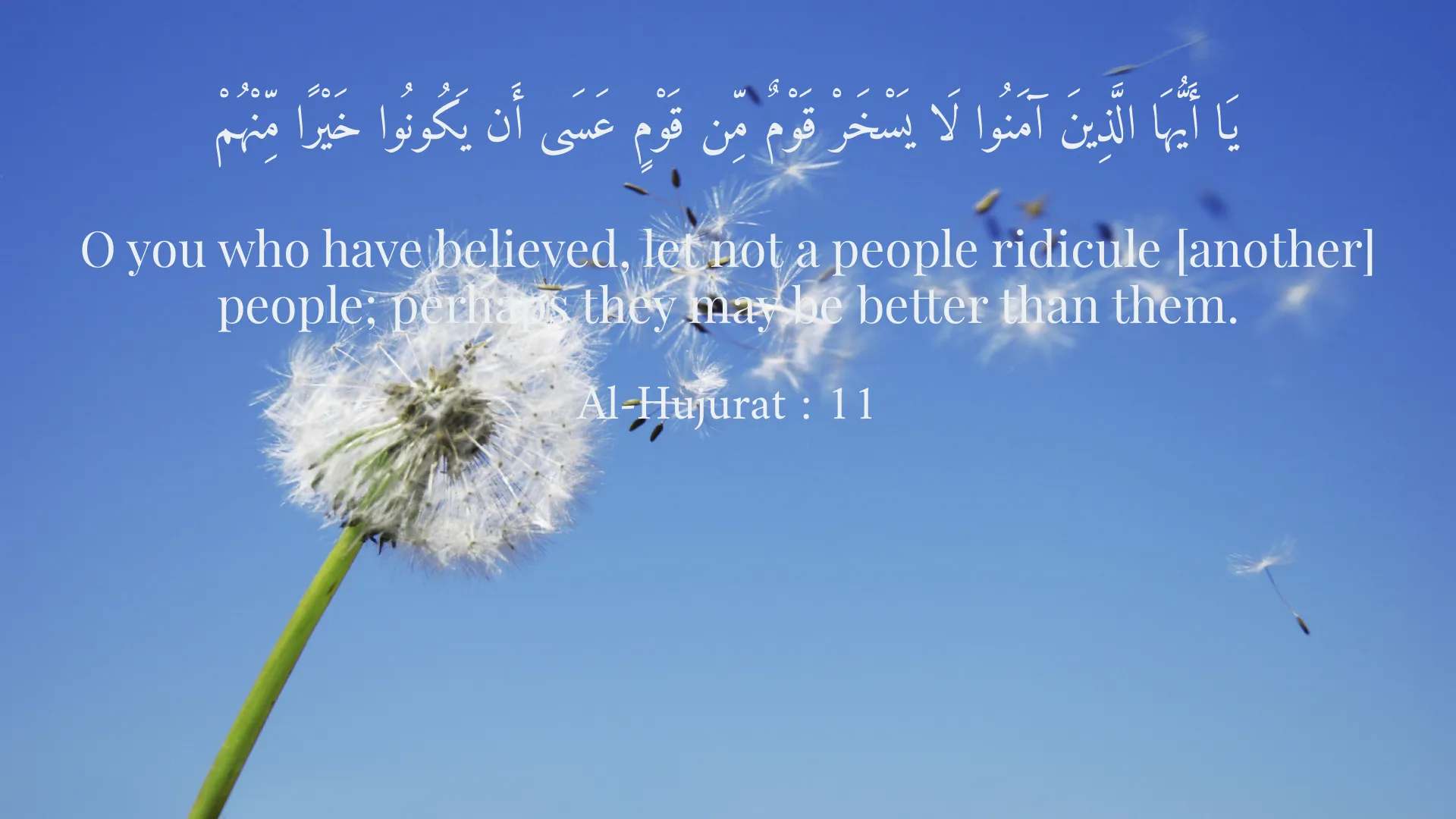
In the Holy Quran, the significance of speech and human words is emphasized as a powerful reflection of one's character and spiritual state. The very way individuals express themselves plays a pivotal role in shaping their thoughts, beliefs, and ultimately their lives. Words are not mere tools for communication; they embody intentions, emotions, and moral values. The Quran guides believers towards understanding the profound impact of their words and encourages them to choose their expressions wisely. One of the notable verses addressing the importance of speech is found in Surah Al-Hujurat, verse 11, which states: "O you who have believed, let not a people ridicule [another] people; perhaps they may be better than them." This verse acts as a stern reminder against the act of mocking or belittling others. Such behavior not only demonstrates a lack of respect but also has the potential to create divisions and animosity within a community. The implication here is that every individual possesses inherent worth and dignity, and no one should be judged based on superficial attributes or circumstances. The dangers of negative speech are further illustrated in Surah Al-Mu'minun, verse 46, where it is revealed: "And We certainly sent [messengers] to nations before you, and We seized them with hardship and adversity that perhaps they might humble themselves." This verse highlights a critical lesson: those who engage in malicious speech, whether directed at others or even in their inner dialogue, may face adverse consequences in their sustenance and blessings. The implication is that our interactions with others and the energy we project through our words can reciprocally affect our own lives and fortunes. This leads to a broader understanding of how important it is to engage in thoughtful and kind communication; negative words not only create negative environments but can also attract hardship and adversity into one’s life. Conversely, the Quran encourages believers to engage in uplifting and positive discourse. The emphasis on positive thinking and kind words is further reinforced in Surah Az-Zumar, verse 53, where it is stated: "Say, 'O My servants who have believed, fear your Lord. For those who do good in this world is good, and the Earth of Allah is spacious.'" This verse reiterates that those who embody goodness and speak positively are more likely to receive divine blessings. It calls upon individuals to be mindful of their words and actions, suggesting that there is a direct correlation between one’s spirituality and the kindness extended to others. The impact of speech is not only confined to the individual level; it extends into communities and societies at large. Language has the extraordinary power to inspire change, foster understanding, and heal divisions. It can also incite hatred, reinforce stereotypes, and perpetuate injustice. The Quran serves as a continuous reminder that as stewards of language, we bear a significant responsibility for the quality of discourse in our communities. Speaking kindly can nurture relationships and promote solidarity, while negative speech can yield toxicity and resentment. Moreover, how words influence one’s personal and spiritual journey cannot be overlooked. It is often said that what we speak becomes our reality. If one consistently indulges in negative thoughts and harsh words, it can give rise to a mindset that views the world through a lens of cynicism and despair. On the contrary, fostering an attitude of gratitude and using words of affirmation can lead to a more fulfilling and blessed existence. The Quran teaches that focusing on positivity and affirming goodness through speech can create pathways for blessings and abundance in life. Furthermore, it is essential for believers to reflect on their communication styles, especially in a world filled with conflict, misunderstanding, and intolerance. The principles outlined in the Quran provide guidance on how to navigate these complexities. Engaging in constructive dialogue, refraining from speaking ill of others, and actively listening are fundamental aspects of effective communication. These practices not only cultivate mutual respect but also enhance empathy and compassion within communities. The Quran’s emphasis on the power of words is also evident in the cultural practices of Islamic societies, where oratory skills are highly regarded, and eloquence is considered a virtue. The traditions of great scholars and eloquent speakers serve as a testament to the notion that effective communication can be transformative. Speaking with purpose, clarity, and positivity resonates deeply with listeners and can have lasting effects on their thoughts and actions. In conclusion, the Quran's teachings regarding speech and the significance of human words extend beyond mere conversation; they touch upon the core of our humanity. It is a call to mindfulness, compassion, and respect in our interactions with others. The impact of our words can shape not only our personal destinies but also the fabric of our societies. We are reminded that our speech should be infused with kindness, understanding, and generosity to foster an atmosphere of peace and prosperity. Therefore, it is essential for individuals to engage in positive thinking and to articulate kind words, effectively attracting blessings both for themselves and for those around them. This charge to uplift one another through speech is not just a personal endeavor but a collective responsibility, as we all bear the potential to build a more harmonious world through our words.
Related Verses
يَا أَيُّهَا الَّذِينَ آمَنُوا لَا يَسْخَرْ قَوْمٌ مِّن قَوْمٍ عَسَى أَن يَكُونُوا خَيْرًا مِّنْهُمْ
O you who have believed, let not a people ridicule [another] people; perhaps they may be better than them.
Al-Hujurat : 11
وَلَقَدْ أَرْسَلْنَا إِلَى أُمَمٍ مِّن قَبْلِكَ فَأَخَذْنَاهُم بِالْبَأْسَاء وَالضَّرَّاء لَعَلَّهُمْ يَتَضَرَّعُونَ
And We certainly sent [messengers] to nations before you, and We seized them with hardship and adversity that perhaps they might humble themselves.
Al-Mu'minun : 46
قُلْ يَا عِبَادِيَ الَّذِينَ آمَنْتُمُ اتَّقُوا رَبَّكُمْ ۖ لِلَّذِينَ أَحْسَنُوا فِي هَذِهِ الدُّنْيَا حَسَنَةٌ وَأَرْضُ اللَّهِ وَاسِعَةٌ
Say, 'O My servants who have believed, fear your Lord. For those who do good in this world is good, and the Earth of Allah is spacious.'
Az-Zumar : 53
Short Story
One day, Adel, a thoughtful man, was reflecting on his words. He realized that negativity and harmful words could affect his life. Thus, he decided to speak positive words instead and think about his sustenance. Gradually, he began to feel that his life was positively impacted by his truthful and positive statements, and he started to gain more blessings.