Quranic Answer
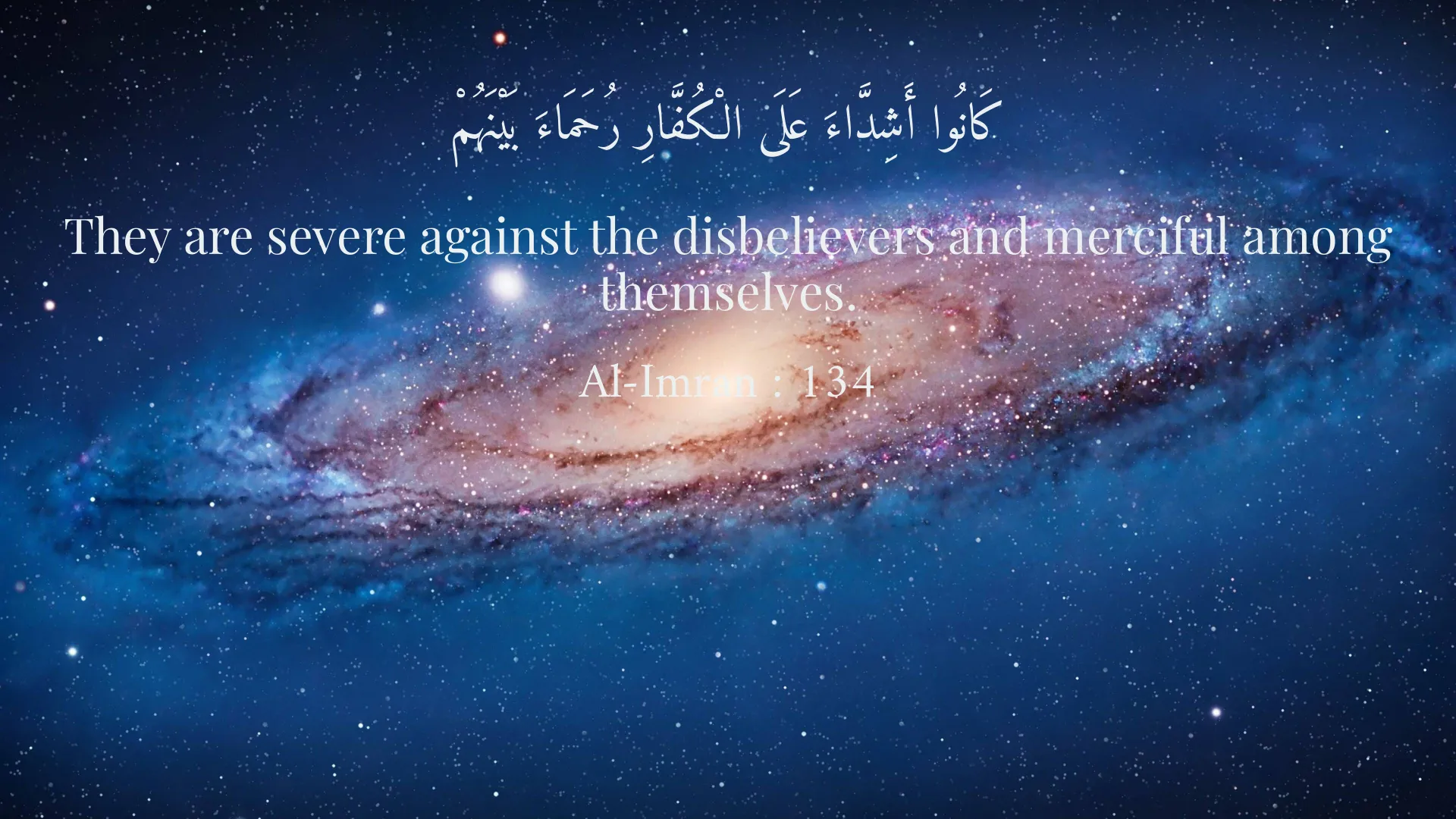
### The Dual Nature of Anger and Mercy in the Context of the Quran Anger is a deeply ingrained emotional response that affects human behavior and interaction. It can arise from feelings of injustice, hurt, or frustration, and often leads to conflict both in personal relationships and in larger social contexts. In the teachings of Islam, particularly as articulated in the Holy Quran, there is a notable emphasis on the balance between anger and mercy. The Quran provides references that not only acknowledge the reality of anger as a human emotion but also offer guidance on how to navigate this emotion in a way that is pleasing to God and beneficial to humanity. One of the key verses that addresses the nature of anger and its relationship with divine mercy is found in Surah Al-Imran. In verse 134, Allah states: 'They are severe against the disbelievers and merciful among themselves.' This verse exemplifies the duality of human emotion, emphasizing that while believers should be firm and resolute in the face of disbelievers—presumably to uphold the tenets of righteousness—they must simultaneously embrace mercy when dealing with fellow believers. This highlights an important facet of emotional intelligence: the ability to differentiate between when to display strength and when to exercise compassion. Believers are reminded that while the expression of anger can sometimes be warranted—especially when confronting injustice or hostility—there is a significant moral imperative to engage with fellow believers through a lens of mercy and compassion. The emphasis on mercy among believers serves as a reminder that maintaining strong, empathetic relationships is essential for a harmonious community. Anger, if left unchecked, can lead to resentment and discord, distancing individuals not only from one another but also from divine acceptance and mercy. Further reinforcing the importance of managing anger is Surah Al-Mu'minun, verse 96, which states: 'Repel evil with that which is best.' This verse suggests an active response to anger or wrongdoing; rather than succumbing to negative emotions such as rage or revenge, individuals are encouraged to respond with goodness. The Quran here advocates for a transformative approach to conflict: instead of allowing anger to dictate actions, believers are urged to seek higher moral ground and respond to aggression or negativity with kindness and integrity. This transformative approach reflects a broader spiritual principle that underlines the importance of embodying characteristics that align with God's mercy. In doing so, one is not only fulfilling their religious and moral obligations but is also contributing to a more just and compassionate society. In this light, anger is not condemned outright; rather, it is seen as a natural human response that must be managed with wisdom and restraint. By repelling evil with goodness, believers can cultivate an atmosphere in which mercy thrives, effectively creating a buffer against the divisive nature of anger. Nevertheless, the relationship between anger and God’s mercy is complex. While anger does not inherently obstruct one from receiving divine mercy, it can, if unchecked, lead individuals to actions that distance them from God's guidance and favor. The Quran teaches that neglecting divine commandments amid bouts of anger can result in spiritual estrangement. When individuals allow anger to override their moral compass, they may engage in behaviors that run contrary to God's teachings, ultimately leading to a sense of isolation from divine grace. This is profoundly significant because it underlines the notion that controlling anger is not merely about self-regulation; it is about aligning oneself with divine will and fostering a relationship with God that is characterized by love and mercy. Confronting our anger requires mindfulness and effort. The Quran urges believers to cultivate traits such as patience, forgiveness, and understanding as antidotes to anger. In many instances, it is within the realm of our emotional responses that we experience our deepest tests of faith. Recognizing this, believers may turn to prayer, reflection, and community support as means to manage their emotions in a manner that honors God's commandments and enriches their relationship with Him. In practical terms, controlling anger involves conscious decision-making and often the re-evaluation of personal responses to challenges. This can be achieved through several strategies, such as practicing self-awareness, employing techniques from cognitive behavioral therapy, or engaging in spiritual practices that promote peace and calm. By being proactive in controlling anger, believers can foster more positive interpersonal relationships and enjoy deeper, more fulfilling connections with others. Moreover, seeking God’s mercy is integral to this process. The Quran portrays God as the Most Merciful, a title that repeatedly emphasizes the importance of mercy within the framework of God’s relationship with humanity. By recognizing our own shortcomings and turning toward God in humility, we open ourselves to receive His mercy—not just as a divine gift but as a guiding principle in our daily lives. Invoking God's mercy can serve as a powerful motivator for nurturing compassion in moments of anger. When we consciously remember that we are seekers of mercy, our response to anger can shift from reactionary defensiveness to a purposeful choice toward understanding and forgiveness. In summary, the interplay between anger and mercy in the teachings of the Quran provides profound guidance for believers striving to navigate the complexities of human emotions. The verses from Al-Imran and Al-Mu'minun serve as pivotal reminders that while anger is a natural human emotion, it should be harnessed and managed. Through mercy, patience, and goodness, one can transform negative emotions into positive actions that reflect divine qualities. Consequently, this not only fosters personal growth but strengthens the bonds of community and deepens one’s relationship with God. Ultimately, by striving to control anger, seek mercy, and respond with kindness, believers can create a profound legacy of compassion, reflecting the essence of their faith in every aspect of their lives.
Related Verses
كَانُوا أَشِدَّاءَ عَلَى الْكُفَّارِ رُحَمَاءَ بَيْنَهُمْ
They are severe against the disbelievers and merciful among themselves.
Al-Imran : 134
فَادْفَعْ بِالَّتِي هِيَ أَحْسَنُ السَّيِّئَةَ
Repel evil with that which is best.
Al-Mu'minun : 96
Short Story
One day, a man named Ali was walking down the street when he suddenly encountered someone who had upset him. He remembered a verse from the Quran that advised him to respond to wrongdoings with goodness. Thus, Ali calmly approached the individual and spoke to him, setting aside his anger. The outcome of this conversation was not only that his anger diminished, but also that a new friendship formed, and he felt God's mercy in his life.