Quranic Answer
Respecting animals and ensuring their well-being is a fundamental principle enshrined within the teachings of Islam, specifically within the verses of the Holy Quran and the sayings of the Prophet Muhammad (peace be upon him). The concept of compassion towards animals is not merely a moral guideline; it reflects an integral aspect of faith that emphasizes the responsibility humanity holds towards all living beings. In this article, we explore the immense significance of treating animals with kindness and respect as outlined in Islamic teachings, and why it is a pressing issue that deserves attention in today’s world. The Quran, the holy book of Islam, contains various verses that call for kindness towards all of Allah's creations. One of the most illuminating verses related to this topic is found in Surah Al-An'am, verse 38, which states, 'There is no creature on earth, nor a bird flying with its wings, but they are communities like you.' This verse emphasizes that animals, just like humans, form their own communities and ecosystems. Each creature plays a role in the divine tapestry of life that Allah has created. By acknowledging that animals live in communities, we establish a connection between their existence and our own, reinforcing the notion that they deserve respect and consideration. Moreover, the teachings of the Prophet Muhammad (peace be upon him) offer further insight into the importance of kindness towards animals. Numerous hadiths recount examples of the Prophet’s compassion for creatures. In one notable incident, it is reported that a woman was punished in Hell because she neglected a cat. She had refrained from providing it with water and food, demonstrating how her lack of compassion led to severe consequences. This powerful narrative serves as a cautionary tale that illustrates that our treatment of animals is not taken lightly in the eyes of Allah. It consolidates the message that disrespecting or harming animals can lead to dire spiritual and moral repercussions. The Quran also outlines humanity's role as stewards of the earth, placing upon us the responsibility to care for Allah's creations. In Surah Al-Baqarah, verse 30, Allah states, 'And when your Lord said to the angels, ‘Indeed, I will make upon the earth a successive authority.’' This verse not only reflects the honored position of humans among Allah's creations but also implies a profound duty towards stewardship. As authorities tasked with managing the earth, it is incumbent upon us to protect not just ourselves but all creatures sharing this planet. This stewardship invites us to consider the ways in which our actions, both big and small, impact the lives of animals and the environment. The theme of respect for animals spans across various other religious and ethical teachings as well, underscoring its universal significance. However, within Islam, the specific injunctions and narratives present an explicit framework that encourages Muslims to act with compassion and care towards all beings. Disrespecting animals, therefore, is not just an ethical failure but a grave sin that contradicts the essence of Islamic teachings. Understanding this moral obligation sheds light on the ways we treat animals in our daily lives, whether it be domesticated pets, livestock, or wildlife. The modern era presents a host of challenges for animals, from habitat destruction to inhumane treatment in industrial farming. An examination of contemporary practices highlights an urgent need for a reassessment of our relationship with animals. Many animals live in conditions that are starkly at odds with the principles outlined in the Quran and the sayings of the Prophet (peace be upon him). Whether it's witnessing cats and dogs left homeless on the streets or observing the exploitation of farm animals for profit, these situations call for a collective awakening to the plight of animals and our responsibilities toward them. In light of these challenges, there is a pressing need for Muslims to lead by example in promoting animal welfare. Initiatives can include supporting animal rescue programs, advocating against cruelty, and collaborating with organizations devoted to animal rights. Educational programs that raise awareness about the humane treatment of animals should be integrated within communities and religious institutions to instill compassion and kindness from a young age. Furthermore, as we navigate the complexities of modern life, it is essential to reflect on the dietary choices we make as consumers. The Quran permits the consumption of certain animals, but it also stipulates humane methods of slaughtering, emphasizing that the animal must not be made to suffer. Ensuring that our food sources adhere to ethical and humane practices not only aligns with Islamic teachings but also safeguards the welfare of these creatures. Promoting animal welfare is a cause that benefits everyone in society. The act of treating creatures with kindness nurtures a more compassionate community, fostering an environment where empathy and cooperation thrive, ultimately leading to a higher moral ground. Moreover, by respecting animals and treating them with dignity, we align ourselves more closely with the principles of Islam, which emphasizes mercy and benevolence in all actions. In conclusion, the teachings of the Holy Quran and the life of the Prophet Muhammad (peace be upon him) present a compelling case for the ethical treatment of animals. The obligation to care for animals stems from our role as caretakers of the earth and is articulated vividly through various verses and hadiths. Disrespecting animals and causing them harm is not only condemned in Islam but is also seen as a grave sin with significant consequences. As we strive for a more compassionate world, let us remember our responsibilities towards all God's creations and ensure that our actions reflect kindness and respect for the animals that share our lives.
Related Verses
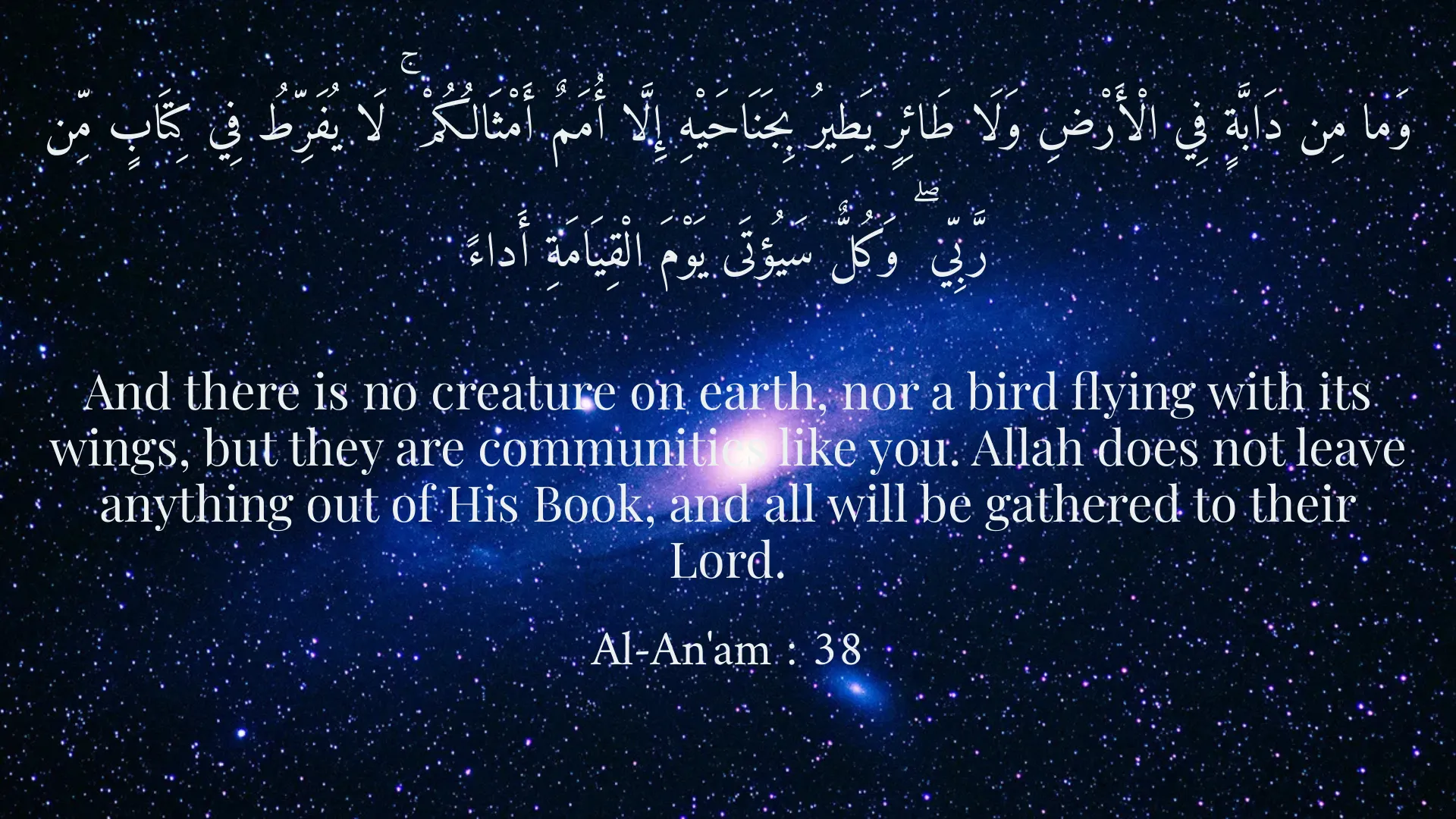
وَما مِن دَابَّةٍ فِي الْأَرْضِ وَلَا طَائِرٍ يَطِيرُ بِجَنَاحَيْهِ إِلَّا أُمَمٌ أَمْثَالُكُمْ ۚ لَا يُفَرِّطُ فِي كِتَابٍ مِّن رَّبِّي ۖ وَكُلٌّ سَيُؤتَى يَوْمَ الْقِيَامَةِ أَداءً
And there is no creature on earth, nor a bird flying with its wings, but they are communities like you. Allah does not leave anything out of His Book, and all will be gathered to their Lord.
Al-An'am : 38
وَإِذْ قَالَ رَبُّكَ لِلْمَلَائِكَةِ إِنِّي جَاعِلٌ فِي الْأَرْضِ خَلِيفَةًۭ قَالُوا أَتَجْعَلُ فِيهَا مَن يُفْسِدُ فِيهَا وَيَسْفِكُ الدِّمَاءَ وَنَحْنُ نُسَبِّحُ بِحَمْدِكَ وَنُقَدِّسُ لَكَ قَالَ إِنِّي أَعْلَمُ مَا لَا تَعْلَمُونَ
And when your Lord said to the angels, 'Indeed, I will make upon the earth a successive authority.' They said, 'Will You place therein one who causes corruption therein and sheds blood, while we declare Your praise and sanctify You?' Allah said, 'Indeed, I know that which you do not know.'
Al-Baqarah : 30
Short Story
Once upon a time, a man named Ehsan was reflecting on his life. He had always been indifferent to animals and ignored them. However, one day, he encountered an injured cat in his yard. Seeing the cat and its pain stirred a deep feeling within him. He decided to help the cat and heal it. From that day on, Ehsan began to pay attention to animals and always made an effort to respect them. He realized that this not only benefited the animals but also brought him peace and joy.