Quranic Answer
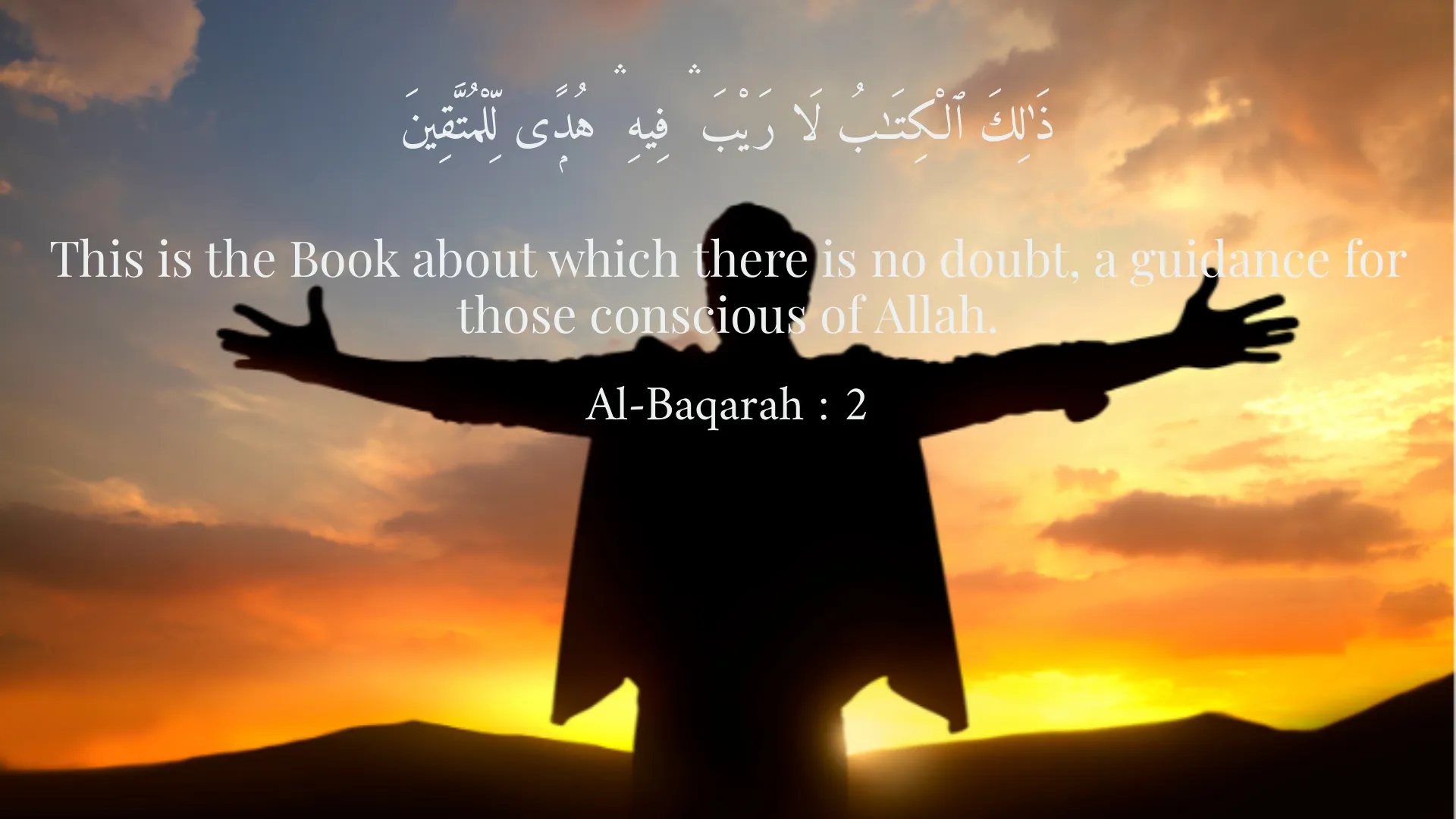
The Holy Quran, revered by millions around the globe, is regarded as the ultimate guide for humanity. However, its profound teachings and wisdom are accessible only to those who approach it with reverence, commitment, and an earnest desire to understand its meanings. This notion is beautifully encapsulated in Surah Al-Baqarah, verse 2, which states: 'This is the Book about which there is no doubt, a guidance for those conscious of Allah.' This verse establishes a critical premise: the Quran serves as a guiding light, but only for those who possess taqwa, or consciousness of Allah. Thus, it becomes evident that a sincere heart and pure intentions are prerequisites for deriving benefit from the Quran's teachings. This concept is further reinforced throughout multiple verses within the Quran, highlighting the importance of an individual's relationship with their faith and the divine will in grasping its messages. The Quran is unique in that it does not merely offer guidance as a self-help manual but rather sets forth a comprehensive framework for living a dignified and meaningful life. In Surah Al-Isra, verse 9, it is stated: 'Indeed, this Quran guides to that which is most suitable.' This verse implies a much deeper understanding of guidance; it does not only denote knowledge but also the right actions and the most suitable paths that lead towards both spiritual and worldly well-being. To truly benefit from the Quran, one must actively engage with its teachings. This means that superficial reading without contemplation or application in daily life will not yield the intended outcomes. Moreover, understanding the Quran requires more than mere literacy. Surah Aal-E-Imran, verse 79, states: 'And it is not feasible for anyone to interpret Allah's verses unless Allah wills.' This verse brings forth the understanding that divine guidance is subject to Allah's will. It emphasizes the importance of divine support in comprehending the intricacies of the Quran. This reliance on Allah's wisdom illustrates the limitations of human intellect when it comes to understanding the divine text. It reinforces the idea that guidance is not an inherent right but rather a blessing bestowed upon those deemed worthy by Allah. The implications of this divine will extend beyond just interpretation; they highlight a profound relationship between the believer and their Creator. Indeed, those who wish to receive guidance from the Quran must fully dedicate themselves, embodying the Quran's teachings and commandments in their lives. This earnestness is marked by actions stemming from a deep-seated faith and a commitment to following the path laid out by the Quran. It is important to note that the Quran does not discriminate between readers based on their backgrounds, social status, or education. However, the issue lies within one's intentions and the quality of engagement with its content. A faithful Muslim who reads the Quran with the aim to worship and genuinely seek guidance from Allah is much more likely to reap the benefits compared to someone who approaches the text casually or merely as a ritual. This underscores the necessity to cultivate a mindset focused on understanding, reflecting, and engaging with the Quran rather than treating it as a mere object of recitation. Furthermore, the Quran challenges individuals to acquire knowledge actively, urging them to ponder upon its verses, reflect on their meanings, and apply them in their personal lives. The emphasis on interpretation and contemplation is echoed in the prophetic tradition; the Prophet Muhammad (peace be upon him) is reported to have urged followers to seek knowledge, implying that striving for understanding is continuous and lifetime pursuit. The idea of guidance in the Quran is holistic; it encompasses every aspect of life, including morality, ethics, spirituality, and social justice. The Quran provides guidelines on personal conduct and interactions with others, advocating for values such as compassion, honesty, and justice. Ultimately, the Quran serves as a compilation of divine wisdom that, when employed correctly, can transform lives and societies. However, the realization of such transformative potential is contingent upon an earnest relationship with the text and the divine will behind it. Additionally, the Quran places a significant emphasis on the importance of prayer, reflection, and supplication as means to connect with God. Engaging consistently in prayer cultivates mindfulness, strengthens faith, and enables a believer to seek guidance further within the Quranic text. This spiritual practice establishes a bond between the reader and their Creator, allowing for divine assistance in understanding the Quran's meanings. Through prayer, believers are reminded to submit their will to Allah, acknowledging His sovereignty and seeking guidance in matters both trivial and profound. In conclusion, while the Quran stands as a monumental guide for mankind, its benefits extend only to those hearts that are open to its teachings. Pure intentions and sincere efforts in understanding its verses are essential for receiving genuine guidance. The Quran should be seen as a lifelong partner in faith, encouraging readers to seek knowledge, reflect upon divine wisdom, and apply its teachings in their lives. Thus, through dedicated engagement with the Quran, individuals can experience spiritual transformation and receive the divine guidance that is deeply rooted in intentions and actions.
Related Verses
ذَٰلِكَ ٱلْكِتَـٰبُ لَا رَيْبَ ۛ فِيهِ ۛ هُدًۭى لِّلْمُتَّقِينَ
This is the Book about which there is no doubt, a guidance for those conscious of Allah.
Al-Baqarah : 2
إنَّ هذا الْقُرْآنَ يَهْدِي لِلَّتِي هِيَ أَقْوَمُ
Indeed, this Quran guides to that which is most suitable.
Al-Isra : 9
وَإِنَّهُ لَا يُؤْتَى إِلَّا مِنْ شَاءَ اللَّهُ
And it is not feasible for anyone to interpret Allah's verses unless Allah wills.
Aal-E-Imran : 79
Short Story
One day, a person named Ali decided to read the Quran and benefit from its concepts. He would read a surah every day and reflect on its verses. After a while, he noticed how his life changed; not only did he find more peace, but he also improved the way he interacted with others. Ali realized that the Quran is like a light that guides one towards the right path, and by acting upon its verses, his life was set on the right track.