Quranic Answer
Love and affection are among the most profound and complex emotions that humans experience. These feelings can shape our relationships, drive our decisions, and influence our lives in myriad ways. In many cultures, love is revered almost as a sacred element of the human experience, highlighted by poetry, songs, and literature throughout history. However, while love is often viewed as a positive and powerful force, it raises a compelling question: can love hinder logical thinking? This inquiry invites a deeper examination of the interplay between emotions and reason, particularly as reflected in religious texts such as the Holy Quran. The Holy Quran, the central religious text of Islam, addresses the concepts of love and affection in various verses. It presents these emotions with a balanced, logical approach, emphasizing their significance while cautioning against their potential to distract from crucial judgments. This duality is particularly evident in Surah Al-Imran, verse 14, which states, 'Beautified for people is the love of that which they desire - of women and offspring, heaped-up sums of gold and silver...' This verse captures the diversity of human interests and desires, portraying how love can manifest in various forms, whether it be love for material possessions, familial bonds, or romantic partners. However, alongside this recognition of love's beauty, there is also a notable warning: such loves should not divert us from the right path. This directive resonates throughout the Quran, highlighting the importance of maintaining a sense of discernment and critical thinking amid strong emotional influences. This balance between affection and rationality is further underscored in verse 29 of Surah Al-Baqarah, which implores humans to distinguish between good and evil. This concept of discernment is pivotal; it suggests that the ability to think critically is not merely an intellectual exercise but an essential aspect of human survival and moral integrity. The Quranic perspective hints at a profound philosophical principle: while love and affection can enrich our lives, they should not cloud our judgment or lead to irrational behavior. The ideal state involves a synthesis of love and reason, where one does not overshadow the other. In practice, this means that individuals must aim to nurture their capacity for love while simultaneously honing their analytical skills. The challenge lies in transforming emotions into constructive insights rather than yielding to impulsive reactions that may arise from passionate feelings. In our everyday lives, we frequently encounter situations where reason and emotion intersect. Love can inspire us to act in ways that benefit others, but it can also lead us to make decisions that may not be in our best interest. For example, consider the love of a parent who wants the best for their child. This affection can motivate the parent to provide unwavering support and encouragement. However, if the parent’s affection leads them to overlook their child’s shortcomings or fail to expose them to constructive criticism, it may hinder the child's growth and development. In such cases, emotional decisions could produce outcomes that conflict with logical reasoning. Furthermore, love can significantly impact interpersonal relationships, often serving as the foundation for trust and connection. Yet, these feelings can also generate conflict and misunderstandings. In romantic relationships, for instance, individuals may experience intense emotions that compel them to overlook incompatibilities or enable unhealthy dynamics. Here, the ability to engage in logical thinking becomes essential in navigating these complexities and ensuring that love does not transform into blind attachment. One could argue that the strength of love lies in its ability to foster emotional awareness and empathy, qualities that coexist with logical reasoning. This perspective encourages individuals to embrace both dimensions of the human experience—feeling and thinking—without allowing one to dominate the other. By nurturing emotional intelligence along with critical thinking, individuals can develop a more holistic understanding of their relationships and navigate life's challenges with greater wisdom. To illustrate this dynamic between love and logical thinking, consider the realm of decision-making in personal and professional settings. In business, for example, leaders must often balance their emotional attachment to their company, products, and employees with the need for sound strategic choices. Decisions guided solely by passion, such as investing in a creative vision without adequate financial planning, can lead to detrimental outcomes. Conversely, when leaders integrate their love for innovation and their care for their teams with rational analysis and foresight, they create an environment conducive to success and growth. Similarly, the lessons derived from the Quran can be applied in various contexts, urging individuals to discern between genuine affection and the potential pitfalls of unchecked emotional indulgence. By focusing on the significance of discernment, the Quran provides a moral compass that guides believers toward maintaining balance in their relationships and decision-making processes. In conclusion, love and affection are indeed fundamental aspects of the human experience, deeply embedded in our interactions with others and ourselves. However, the teachings of the Holy Quran remind us that while these feelings can enhance our lives, they should not serve as blinders that obscure our ability to think critically. Instead, a harmonious balance between love and logical reasoning is essential for fostering meaningful relationships, making rational decisions, and ultimately living a fulfilled life. As individuals navigate their emotions, they must remember that the heart and mind can coexist, helping them to act with both passion and wisdom.
Related Verses
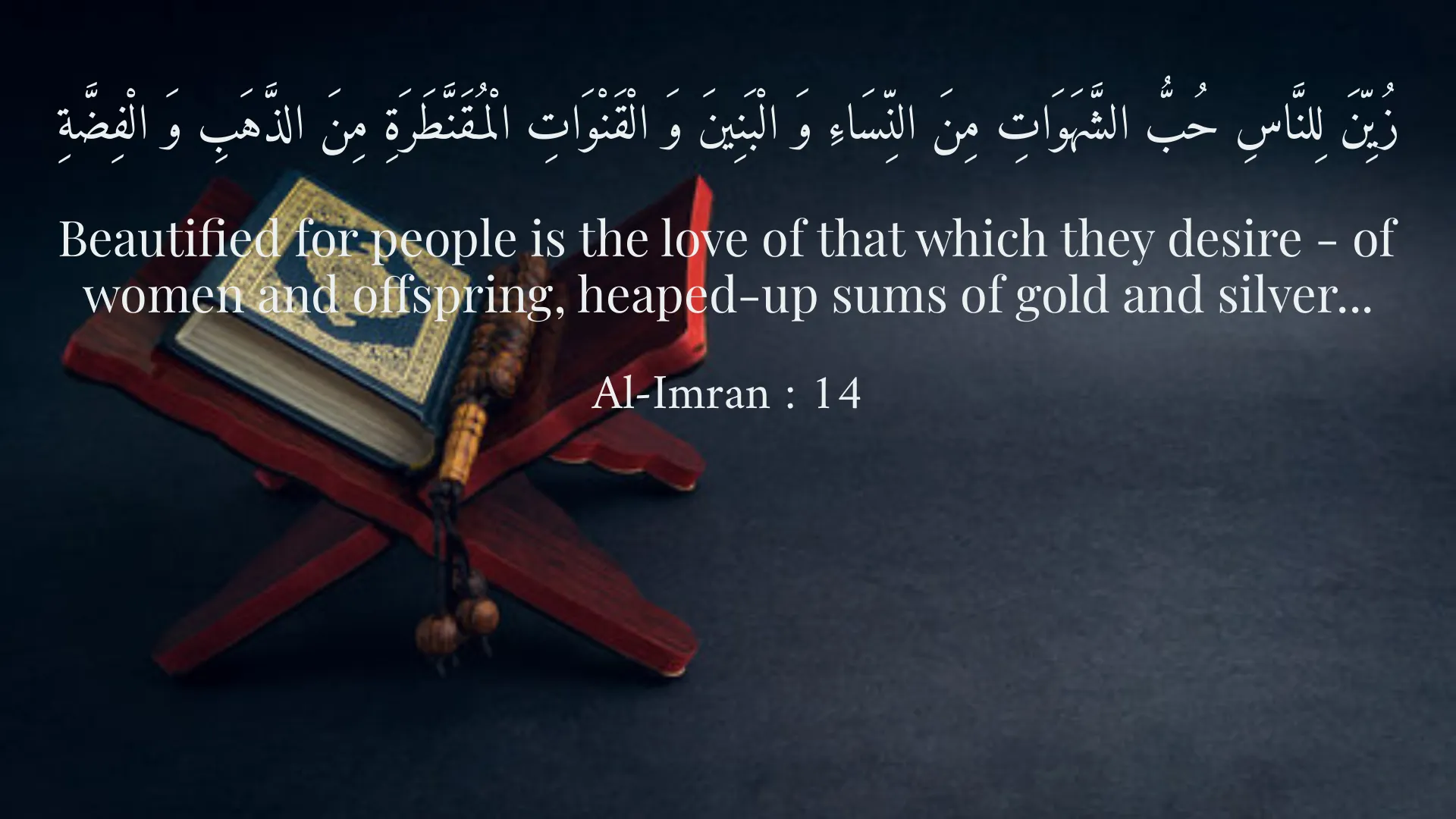
زُيِّنَ لِلنَّاسِ حُبُّ الشَّهَوَاتِ مِنَ النِّسَاءِ وَ الْبَنِينَ وَ الْقَنْوَاتِ الْمُقَنَّطَرَةِ مِنَ الذَّهَبِ وَ الْفِضَّةِ
Beautified for people is the love of that which they desire - of women and offspring, heaped-up sums of gold and silver...
Al-Imran : 14
وَإِذَا قِيلَ لَهُمُ اتَّبِعُوا مَا أَنْزَلَ اللَّهُ قَالُوا بَلْ نَتَّبِعُ مَا أَلْقَى آباؤُنَا وَمَا أَوْلَـٰئِكَ خَزَائِنُ وَجُحُودٌ بِلْمَعلوماتِ
And when it is said to them, 'Follow what Allah has revealed,' you see the hypocrites turning away from you in aversion.
Al-Baqarah : 29
Short Story
Once a young man named Sajjad found himself confused due to his strong affection for his parents. He tried hard to please them, but this love sometimes hindered his logical decision-making. He then decided to visit a counselor. The counselor patiently explained that while love can be immensely valuable, it should be coupled with reason and logic. Sajjad soon realized that in life, he needed to balance love and logic together. This kind of thinking helped him make better decisions while always respecting and loving his family.