Quranic Answer
The concept of accountability in the Quran is a profound topic that underlines the justice and mercy of God, particularly concerning the age of maturity. Asstressed within Islamic teachings, the notion of sins and the accountability of individuals emerges significantly after reaching maturity. This principle is illustrated distinctly in various verses of the Quran, emphasizing that moral responsibilities are tied to personal development and maturity. In Surah Al-Anfal, verse 28, Allah provides insight into the nature of worldly attachments and tests. The verse states, "Your wealth and children are but a test, and Allah has with Him a great reward." This critical notion underscores that both wealth and offspring are not merely blessings but also tests that can distract individuals from their spiritual duties. The focus on 'test' implies that individuals will be evaluated based on how they fulfill their responsibilities in light of these worldly blessings. The eventual accountability that individuals will face brings forth the significance of understanding and navigating one's duties, which invariably are enhanced through maturity. Having children and managing wealth can bring about trials that necessitate moral judgment, responsibility, and ultimately, the choices an individual makes. This intricate relationship between worldly possession and spiritual well-being speaks volumes about the expectations God has for its believers. Accountability begins when a person achieves enough discernment to understand right from wrong, a milestone that is inherently tied to maturity. Moreover, another critical mention of maturity and accountability comes from Surah An-Noor, verse 15. In this verse, Allah mentions his omniscience, stating that He observes human actions, especially regarding the deeds performed after reaching maturity. This observation assures believers that their actions are not overlooked and that divine justice prevails. The distinction drawn here is between actions performed in childhood, which are generally exempt from accountability, and those performed after the age of maturity. This implies that maturity marks the onset of moral accountability, reinforcing the idea that truly understanding the consequences of one’s actions is intrinsic to being held responsible for them. Furthermore, in Surah An-Najm, verse 50, another significant declaration reaffirms individual accountability. Allah asserts that no soul bears the burden of another’s sins. This verse unambiguously states that every individual is answerable for their own actions. It highlights the concept of personal responsibility, reinforcing that the choices made by individuals after they have reached maturity carry weight when it comes to judgment. This understanding empowers individuals, as it indicates that their decisions matter and that they are creators of their own moral paths. Thus, people must realize that despite potential influences from their environment or upbringing, they ultimately possess the agency to determine their actions. Additionally, Islamic teachings convey that misdeeds done during childhood are not recorded as sins. From a theological perspective, children are seen as innocent and free from the burdens of sin until they reach the age of maturity. This distinction bears several psychological and social implications. It provides a comforting assurance to parents and guardians about the spiritual welfare of their children, as well as inviting a nurturing approach to raising the young. Children, in this regard, are perceived as pure beings who, while they may exhibit misbehavior due to their developmental stages, are not punished for those actions within the framework of divine justice. As children grow, there is a pivotal transition where they begin to comprehend the implications of their actions. This critical period is marked by the development of a conscience capable of distinguishing right from wrong. Religious teachings underline the necessity of education during this phase to equip the youth with knowledge and morality. It is a pivotal responsibility for families and communities to engage young adults in moral discussions, impart knowledge about ethical standards, and teach them the gravity of their decisions. In essence, the nurturing of children through education and guidance can lead them towards responsible adulthood, where they can utilize their understanding to make reasoned choices aligned with divine commands. In conclusion, a thorough examination of accountability in the context of the Quran illustrates a balanced paradigm of justice and mercy. The accountability of individuals is intrinsically linked to their development, maturity, and understanding of ethical behavior. The divine assurance provided in relation to childhood actions and the distinct demarcation of responsibility following maturity underscore a compassionate and fair framework laid out by God. Therefore, it is vital to cultivate an environment where children are not only delineated as potentials but nurtured in ways that prepare them to assume their moral responsibilities once they reach maturity. Ultimately, individuals are urged to reflect upon their actions consciously, for when the time comes, each one will be held accountable for what they have chosen to do, as ordained by divine wisdom.
Related Verses
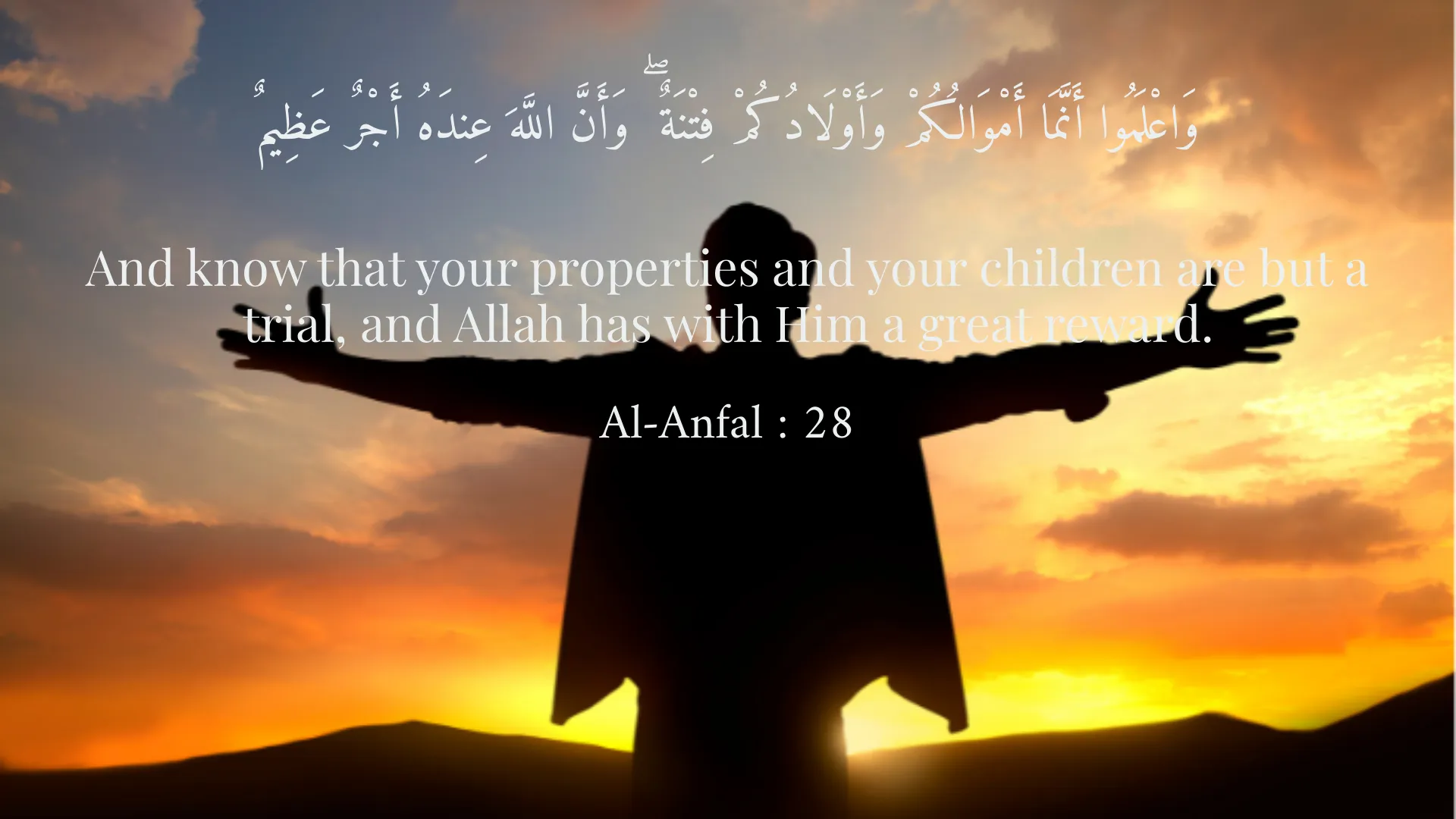
وَاعْلَمُوا أَنَّمَا أَمْوَالُكُمْ وَأَوْلَادُكُمْ فِتْنَةٌ ۖ وَأَنَّ اللَّهَ عِندَهُ أَجْرٌ عَظِيمٌ
And know that your properties and your children are but a trial, and Allah has with Him a great reward.
Al-Anfal : 28
إِنَّ الَّذِينَ يُحِبُّونَ أَن تَشِيعَ الفَاحِشَةُ فِي الَّذِينَ آمَنُوا لَهُمْ عَذَابٌ أَلِيمٌ فِي الدُّنْيَا وَالْآخِرَةِ ۗ وَقَدْ عَلِمَ اللَّهُ الَّذِينَ آمَنُوا وَقَدْ عَلِمَ الَّذِينَ هُمْ مُنافِقُونَ
Indeed, those who love to see scandal spread among the believers will have a painful punishment in this world and the Hereafter. And Allah knows those who believe and knows those who are hypocrites.
An-Noor : 15
وَأَلَّا تَزِرُ وَازِرَةٌ وِزْرَ أُخْرَىٰ ۚ وَأَنَّ الْإِنْسَانَ لَمَا سُلِّطَ عَلَيْهِ لَصَالِحٌ
And that no bearer of burdens will bear the burden of another; and that man is himself responsible for all his actions.
An-Najm : 50
Short Story
One day in a small village, there was a boy named Hassan who often made little mistakes. However, he learned from his errors and tried to do better in the future. One day, a religious scholar came to the village, and Hassan asked him if God would judge him for his mistakes. The scholar kindly replied: 'Dear Hassan, God knows well that you are a child, and He does not account for the errors of childhood. If you do not continue and strive to improve, God will forgive you.' From that day on, Hassan decided to focus on doing good deeds and remember that God is very forgiving.