Quranic Answer
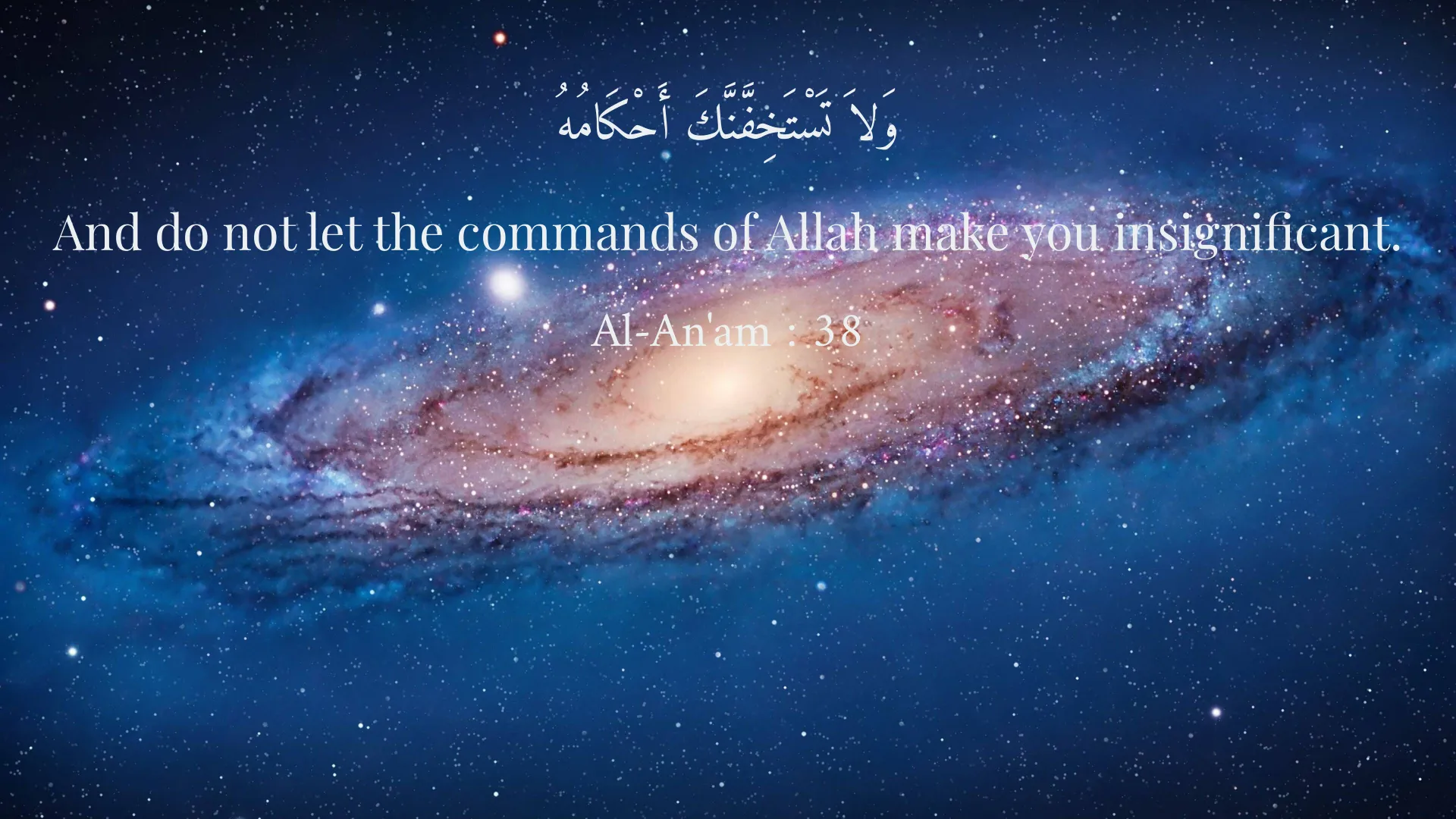
In the Holy Quran, the emphasis on humane treatment and respectful coexistence with all living beings, including animals, is a central tenet of Islamic teachings. The Quran serves as a guiding framework for the behavior of humans towards their fellow creatures, stressing the ethical and moral responsibility that comes with the stewardship of God's creations. These teachings illuminate the profound interconnectedness of all life and stress the importance of compassion and empathy towards animals. One of the remarkable verses that expound on this principle is found in Surah Al-An'am, verse 38, which states: 'And do not let the commands of Allah make you insignificant.' This verse indicates that the divine laws of Allah are applicable not just to humanity but extend to all living creatures. The significance here lies in the understanding that every creature has its own purpose and place in the ecosystem created by Allah. It emphasizes that mere human existence should not overshadow or belittle the lives of other beings. The verse calls upon humanity to be vigilant in adhering to the divine principles, reinforcing that neglecting the rights of animals is a disregard for Allah’s commands. Another critical verse is found in Surah Al-Ma'idah, verse 32: 'Whoever kills a soul unless for a soul or for corruption [done] in the land - it is as if he had slain mankind entirely.' Here, the Quran explicitly condemns the unjust taking of life, highlighting that such an action is tantamount to the loss of humanity itself. The parallel drawn between killing a human being and harming an animal illustrates a profound message about the sanctity of life in all forms. By making this connection, Allah unequivocally advocates for the protection of all living beings and underscores the moral obligations that come with possessing power over them. The essence of these verses clearly indicates that God is observant of our attitudes and behaviors towards animals. In Islam, a kind and compassionate demeanor towards all of Allah's creations is not merely recommended, it is obligatory. This principle finds a vivid expression in the teachings and exemplary practices of the Prophet Muhammad (PBUH), who consistently advocated for the well-being of animals during his lifetime. The Hadith literature is replete with examples of the Prophet's compassion, such as his admonition against overburdening animals, or his teachings that promote kindness to pets and working animals alike. Furthermore, in Surah An-Nahl, verse 8, the Quran declares: 'And your God is one God,' a statement which reinforces the concept of the unity of God and emphasizes that all beings exist under His sovereignty. This brings to light the idea that our relationship with animals is not merely an act of kindness; it is a spiritual reflection of our understanding of God’s singularity and omnipotence. Each act of compassion towards animals can be viewed as an act of worship, a way to express gratitude for the life that Allah has bestowed upon us. Hence, our attitude towards animals directly mirrors our broader perspective on creation and spirituality, shaping our interactions in daily life with all beings. To truly follow the guidance set forth in the Quran and by the Prophet Muhammad (PBUH), Muslims are called to treat animals with the same respect and consideration as they would wish for themselves. This means providing them with shelter, food, and water, as well as ensuring their well-being and comfort. It also necessitates a mindful approach towards wildlife conservation, promoting practices that protect animal habitats and diversity. The Islamic teachings call for responsible stewardship of the environment, encouraging humans to engage in sustainable practices that uphold the rights of all creatures. Neglecting these responsibilities can have spiritual ramifications; Allah is known to be sensitive to human behavior towards His creations. It is believed that all actions, whether good or bad, will be accounted for in this world and the hereafter. Therefore, Muslims must remain vigilant and intentional in nurturing a compassionate outlook towards all forms of life. The Quran poses a challenge to humanity: can we embrace a lifestyle that genuinely respects animals and reflects our understanding of divine principles? In the modern world, where many cultures prioritize efficiency and productivity, the treatment of animals often falls to the wayside. This poses a unique challenge for Muslims, as teachings emphasize a balanced approach that respects all of Allah’s creation. Practices that may seem trivial, such as being kind to pets or caring for stray animals, build towards a broader ideology that values life in all forms. Moreover, contemporary issues such as factory farming, animal testing, and habitat destruction magnify the ethical responsibility of individuals and communities. Islamic teachings provide a foundational perspective on why these practices should be challenged and reformed. The neglect of animals and their rights not only contradicts the values laid out in Islamic scriptures but also puts humanity at risk of losing the spiritual and ethical compass that guides moral behavior. In conclusion, the Quran’s teachings regarding the treatment of animals underscore a vital aspect of Islamic ethics that must be heeded in everyday life. The principles found in Surah Al-An'am, Surah Al-Ma'idah, and Surah An-Nahl collectively paint a picture of a world where all living beings are honored and treated with dignity. As stewards of the Earth, Muslims are tasked with the noble responsibility of ensuring the well-being of animals, respecting the intricate ties that bind all creatures under Allah's dominion. Failing to recognize this duty could lead to spiritual consequences, both in this world and the hereafter. Thus, embodying these teachings is essential, not only to fulfill divine commandments but also to enrich our collective humanity.
Related Verses
وَلاَ تَسْتَخِفَّنَّكَ أَحْكَامُهُ
And do not let the commands of Allah make you insignificant.
Al-An'am : 38
مَن قَتَلَ نَفْساً بِغَيْرِ نَفْسٍ أَوْ فَسَادٍ فِي الْأَرْضِ فَكَمَا قَتَلَ النَّاسَ جَمِيعاً
Whoever kills a soul unless for a soul or for corruption [done] in the land - it is as if he had slain mankind entirely.
Al-Ma'idah : 32
وَإِلَهُكُمْ إِلَهٌ وَاحِدٌ
And your God is one God.
An-Nahl : 8
Short Story
One day, a young worshipper beside the sea saw a man trying to save an insect. The young man realized that even that small creature craved love and mercy. He thought to himself: 'If God pays attention even to insects, why shouldn’t I act the same way?' From that day on, the worshipper treated all creatures with more love and always tried to act according to the teachings of the Quran in his deeds.