Quranic Answer
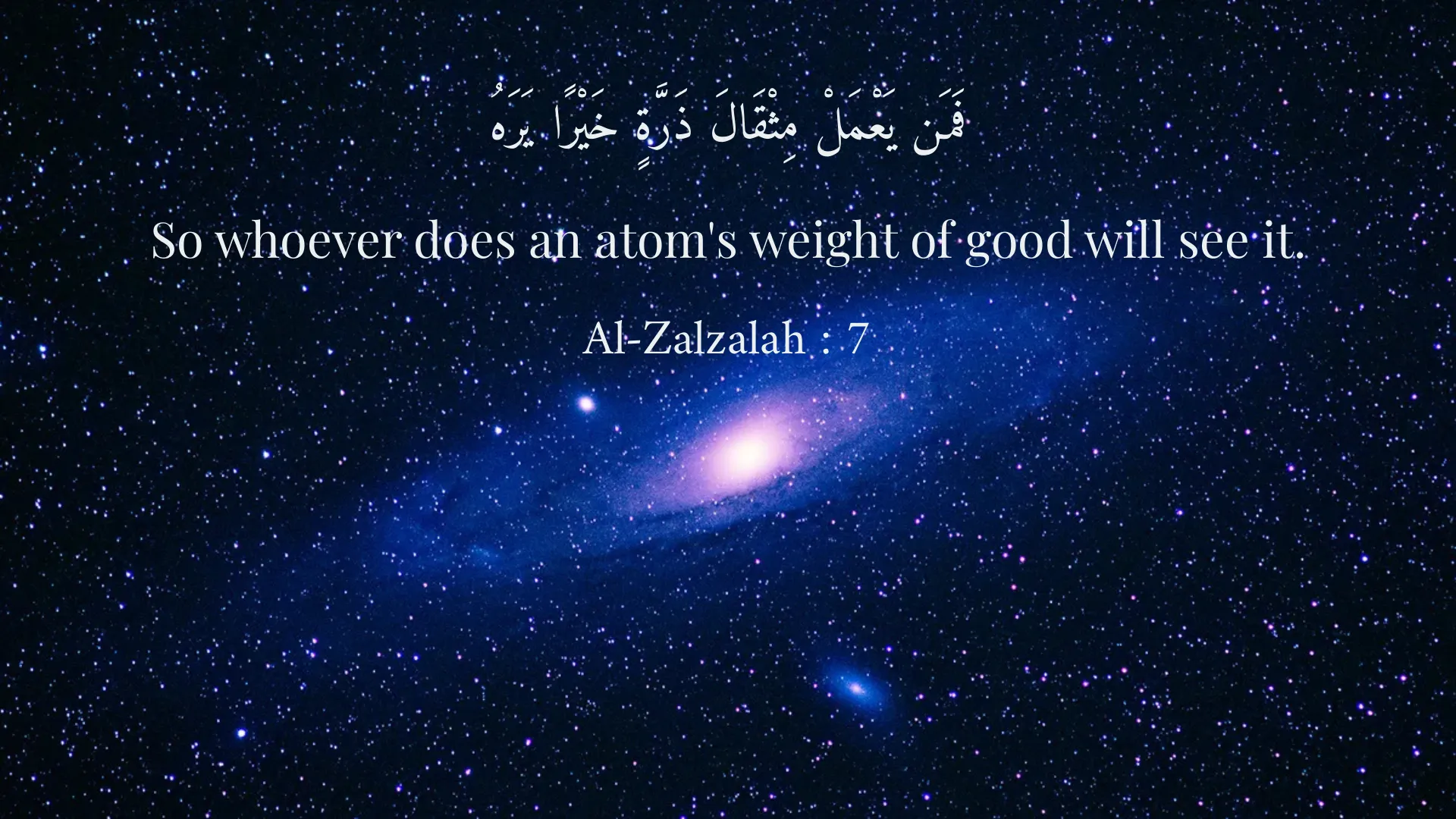
In the Holy Quran, one of the most compelling themes is the acute attention Allah pays to human behavior. It is articulated throughout various verses that nothing escapes His sight, symbolizing the omnipresence and omnipotence of the Creator. This spiritual acknowledgment forms the foundational principle of accountability in Islamic teachings. As such, it becomes essential for believers to understand the profound implications of their actions, as these will be met with divine scrutiny on the Day of Judgment. Allah’s emphasis on ethical behavior and the consequences of our actions aligns seamlessly with the theological undercurrents of justice and morality. The idea that every deed, no matter how minute, will be assessed is notably encapsulated in Surah Al-Zalzalah, verses 7 and 8, which state, ‘So whoever does an atom's weight of good will see it, and whoever does an atom's weight of evil will see it.’ This foundational verse serves as a reminder that individual actions, whether they carry significant weight or appear inconspicuous, are integral to our moral and spiritual fabric. This perspective compels us to ruminate on the nature of our deeds, as even the most negligible actions can bear significance in God’s accounting. It challenges the perception that only grand gestures of generosity or monumental acts of kindness are worthy of recognition. Instead, it emphasizes that our mundane daily behaviors and interactions—how we treat people, our level of honesty, and how we conduct ourselves in private and public spheres—are equally, if not more, critical in the eyes of Allah. To further illustrate this divine focus on human ethics, Surah Ar-Rahman introduces an exhortation: ‘O children of Adam, take your adornment at every masjid.’ This address emphasizes the importance of personal dignity and respect, both for ourselves and for others, while engaging in communal worship. Herein lies the significance of details in our actions. Adorning oneself for prayer is not merely about physical appearance; it symbolizes the values of respect, mindfulness, and dignity, promoting a broader ethos of virtue where we strive to conduct ourselves in an honorable manner. Thus, the exhortations contained within the Quran signal that believers ought to cultivate a keen awareness of their actions, ensuring that they align with moral values and divine guidance. It beckons individuals to hold themselves accountable, engendering social responsibility that transcends communal interactions and seeps into the responsibilities one has towards oneself and one’s relationship with the divine. There is a deep philosophical undertone in revisiting the concept of moral accountability. Ethical behavior becomes not just a guideline but a quintessential part of one's faith. The necessity to reflect on our actions is underscored by the understanding that these deeds are not ephemeral; rather, they contribute to the individual’s spiritual journey and ultimate standing in the afterlife. When we engage in reflective practice through self-assessment of our actions, we begin to foster a community where moral integrity is revered. Moreover, living in an era typified by a fast pace and constant distractions, this presence of accountability urges Muslims to carve out moments of introspection. The Quran encourages believers to evaluate their behavior deliberately and regularly. With the world’s complexities and the often overwhelming nature of daily life, taking time to reflect is a necessity. It impels individuals to assess whether their actions correspond with their values and beliefs, an essential process in fostering honesty and integrity. Transitions in consciousness as prompted by Quranic verses manifest in various ways through societal behaviors. Communities that adhere to these teachings often witness a transformation in their collective character. When each individual takes responsibility for their actions, a cultural ethos dedicated to virtue, respect, and collective growth materializes. Moreover, societal accountability emerges from individual accountability, thus promoting harmony and minimizing conflict. In many cultures influenced by Islamic teachings, this realization has prompted initiatives aimed at character building within the youth. Educational programs embed these values, emphasizing to younger generations that their smallest actions matter. Schools, community centers, and mosques play pivotal roles in fostering environments where lessons rooted in the Quran set a framework for moral dialogues and reflections. To encapsulate, the Holy Quran’s profound focus on human behavior, ethics, and accountability is an invitation to engage in a moral journey rich with reflection and self-awareness. The seemingly simple admonitions concerning good conduct reveal a deeper layer of spiritual wisdom that has characterized religious life for centuries. In conclusion, as Muslims, we must embody the teachings of the Quran, recognizing that our actions—be they grand or minute—are laced with significance. We have the divine obligation to engage in good actions, be mindful of our conduct, and uphold the virtues entrusted to us. Therefore, the admonition to consider the nature of our behavior should inspire not just vigilance but a dedicated commitment to continuously strive for excellence in our moral character. The essence of accountability is not merely a deterrent but a gracious opportunity for self-improvement and connection with the creator, ultimately reflecting the divine’s profound mercy and justice.
Related Verses
فَمَن يَعْمَلْ مِثْقَالَ ذَرَّةٍ خَيْرًا يَرَهُ
So whoever does an atom's weight of good will see it.
Al-Zalzalah : 7
وَمَن يَعْمَلْ مِثْقَالَ ذَرَّةٍ شَرًّا يَرَهُ
And whoever does an atom's weight of evil will see it.
Al-Zalzalah : 8
يَابَنِي آدَمَ خَذُوا زِينَتَكُمْ فِي كُلِّ مَسْجِدٍ
O children of Adam, take your adornment at every masjid.
Ar-Rahman : 31
Short Story
Once upon a time, there was a boy named Amin who always thought that small actions weren't important. However, one day while he watered a plant carefully in the park, he saw a beautiful bird coming close to drink from it. This image inspired him, and he realized that even small and good deeds can have a positive impact. From that day on, he gave more attention to the little behaviors in his life.