Quranic Answer
In the Holy Quran, modesty is recognized as a virtuous and commendable trait that does not hinder personal progress; rather, it can enhance it. The significance of modesty, often overlooked in the fast-paced modern world, is deeply ingrained in Islamic teachings. It serves as a foundation for individual character and social interactions, promoting respect, dignity, and ethical conduct across various facets of life. One of the key references to modesty in the Quran can be found in Surah Al-Ahzab, where it is articulated, 'modesty is a part of faith' (الْحَيَاءُ شُعْبَةٌ مِّنَ الْإِيمَانِ). This profound statement highlights the intertwined nature of faith and modesty. In Islam, modesty is not simply a trait to be admired; it is integral to one’s belief system, influencing not just personal behavior but also interactions with others in society. It underscores that modest individuals are not just guided by morality but are also motivated by spiritual considerations—their actions reflect their faith. The message of modesty as a pathway towards personal development is multi-dimensional. First and foremost, modesty helps in developing a strong sense of self. When individuals embrace modesty, they cultivate inner strength, allowing them to navigate the complexities of life without succumbing to negative influences. This enhances their decision-making abilities, as they prioritize moral clarity over societal pressures. Moreover, modesty is essential in building relationships, both personal and communal. In a society often riddled with arrogance and superficiality, those who carry the attribute of modesty tend to attract positive attention. They foster environments of trust and respect, creating strong, substance-based connections with others. This characteristic becomes a beacon of positive influence, encouraging others to adopt similar values, thereby enhancing communal harmony and mutual respect. Furthermore, modesty acts as a shield against undesirable actions. In the pursuit of ethical and religious values, it discourages behaviors that may lead individuals astray. Those who practice modesty tend to be more reflective and self-aware, continually evaluating their actions in light of moral standards. This capacity for introspection is vital in maintaining a clear moral compass through challenging times. Instead of adulating success through external validation, modest individuals appreciate the intrinsic value of hard work, perseverance, and integrity. They recognize that true success is not measured solely by material wealth or status but by one’s adherence to ethical principles and the positive impact they can make within their communities. In addition to personal and social aspects, modesty contributes significantly to emotional and psychological well-being. Those who embrace this virtue often experience lower levels of anxiety and depression. This is primarily because modest individuals are less likely to engage in unhealthy comparisons with others or fall prey to the pitfalls of arrogance and pride. They set realistic expectations for themselves and their achievements, leading to greater personal satisfaction and happiness. The humility that accompanies modesty allows them to appreciate their journey without fear of judgment or external pressures. As discussions around modesty evolve across various cultures, it's important to clarify that the Quranic understanding of modesty transcends mere physical appearance or dress code. Although modest attire is recognized within Islamic traditions, the essence of modesty lies within the attitude, behavior, and intentions of an individual. It is about how one conducts themselves in their thoughts, words, and actions. Modesty becomes a comprehensive approach to life, guiding individuals on how to engage with others respectfully while maintaining dignity and self-worth. Additionally, the Quran sets forth the significance of modesty not only for women but also for men. Both genders are encouraged to exhibit this quality, reinforcing the idea that modesty is a universal virtue applicable to all. As both sections of the population are called upon to embody modesty, it fosters a culture of accountability and shared responsibility within the community. In conclusion, the Quran celebrates the virtue of modesty as a catalyst for personal development, facilitating growth in various dimensions of life. It promotes self-awareness, ethical conduct, strong relationships, and emotional health. By adhering to the principle that 'modesty is a part of faith,' individuals are reminded that personal development is not solely a journey of self-improvement but is also deeply connected to spiritual and moral principles. In recognizing and embodying modesty, individuals pave the way for a more fulfilling life, one that is rich in purpose and aligned with essential ethical values. Through these teachings, the Quran encourages believers to embrace modesty not merely as a commendable trait but as a profound attribute that can lead to transformative personal and collective advancement.
Related Verses
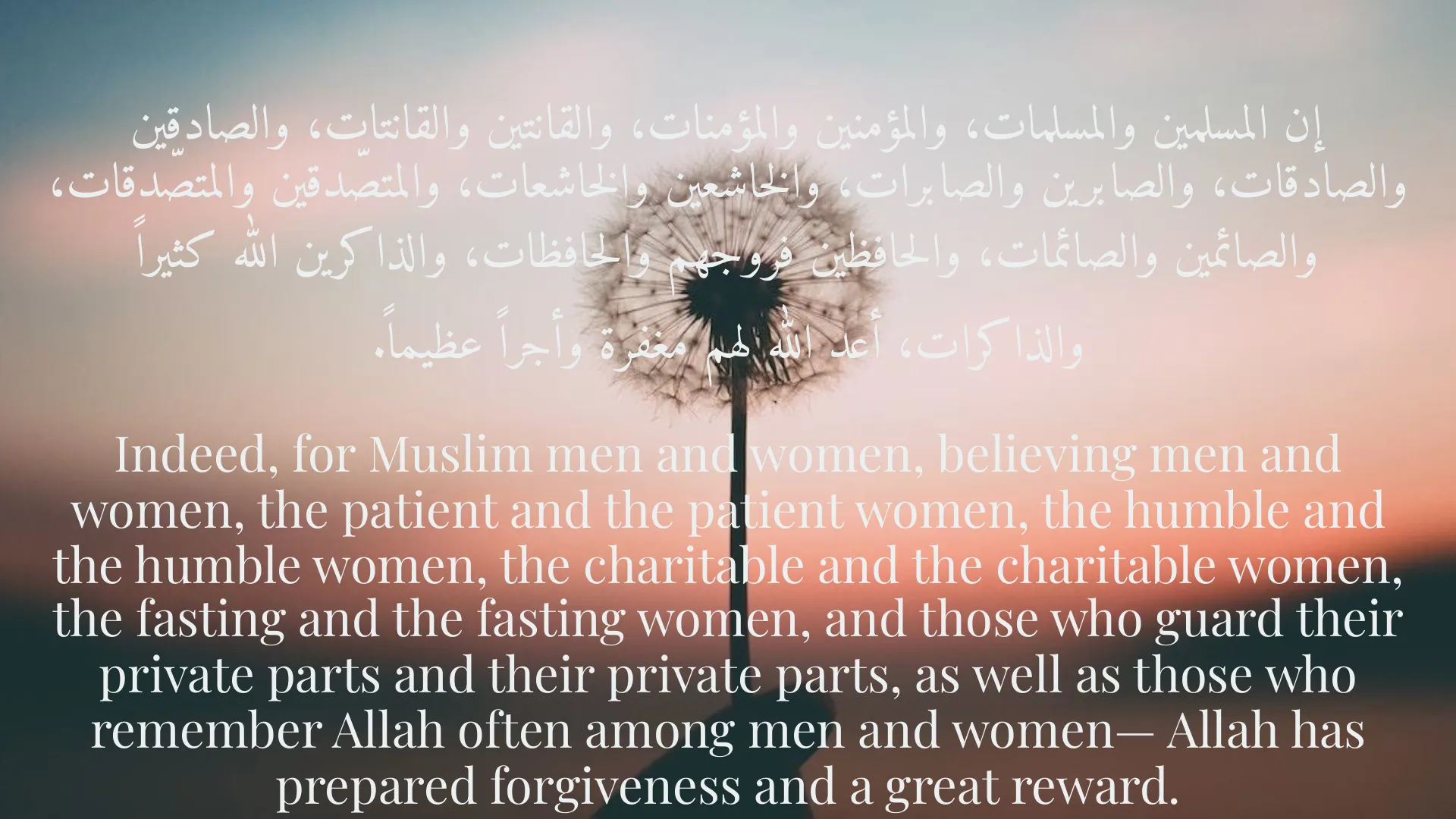
إن المسلمين والمسلمات، والمؤمنين والمؤمنات، والقانتين والقانتات، والصادقين والصادقات، والصابرين والصابرات، والخاشعين والخاشعات، والمتصّدقين والمتصّدقات، والصائمين والصائمات، والحافظين فروجهم والحافظات، والذاكرين الله كثيراً والذاكرات، أعد الله لهم مغفرة وأجراً عظيماً.
Indeed, for Muslim men and women, believing men and women, the patient and the patient women, the humble and the humble women, the charitable and the charitable women, the fasting and the fasting women, and those who guard their private parts and their private parts, as well as those who remember Allah often among men and women— Allah has prepared forgiveness and a great reward.
Al-Ahzab : 35
قُل لِّلْمُؤْمِنِينَ يَغُضُّوا مِنْ أَبْصَارِهِمْ وَيَحْفَظُوا فُرُوجَهُمْ ۚ ذَٰلِكَ أَزْكَىٰ لَهُمْ ۗ إِنَّ اللَّهَ خَبِيرٌ بِمَا يَصْنَعُونَ
Tell the believing men to reduce [some] of their vision and guard their private parts. That is purer for them. Indeed, Allah is Acquainted with what they do.
An-Nur : 30
Short Story
Once upon a time, a young man named Hamid was discussing his problems with a friend. His friend suggested that if he wanted to succeed in life, he must let go of some rules and modesty. However, Hamid replied with solid reasons that modesty had strengthened his character and kept him away from undesirable actions. He acknowledged that because of his modesty, he made better decisions and progressed in his professional life.