Quranic Answer
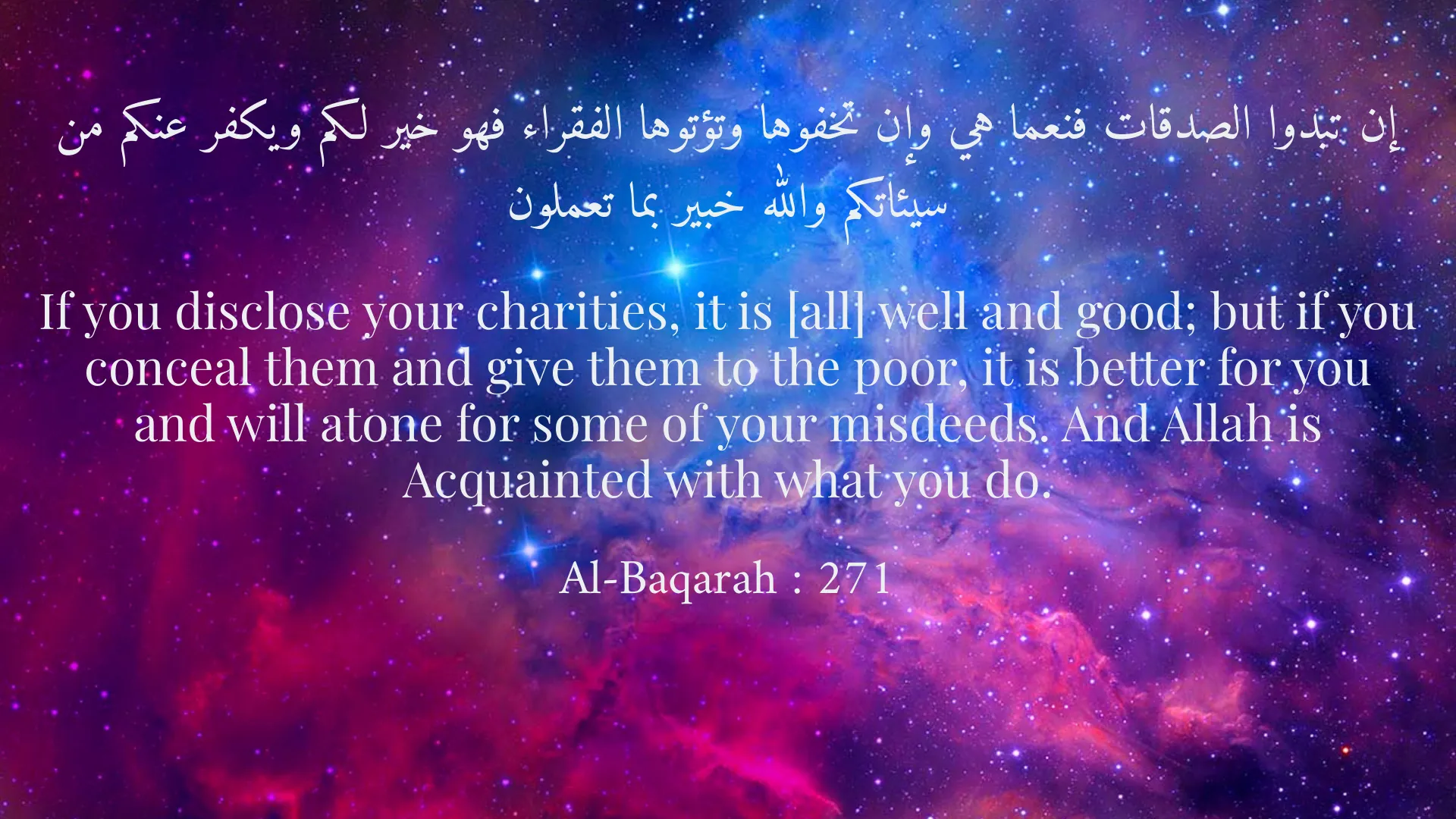
In the Holy Quran, the ethical imperative of supporting others, particularly through discreet assistance, is elucidated with profound clarity. One of the pivotal verses that encapsulate this principle is found in Surah Al-Baqarah, verse 271. In this verse, Allah conveys a pivotal message regarding the act of charity: 'If you disclose your charity, it is good, but if you conceal it and give it to the needy, it is better for you and will atone for some of your misdeeds.' This statement emphasizes the significant value placed on aiding those in need without the desire for recognition or praise. The notion of concealed charity is not merely a recommendation; it is a directive that highlights a deeper understanding of altruism and its implications on spiritual purification. The emphasis on discretion when giving to those less fortunate carries a profound significance. It reflects a pure intention that focuses on the welfare of the recipient, rather than the accolades that may come from public acknowledgment. When one provides assistance without seeking validation, it reinforces the idea that the act of giving is not an endeavor for personal glory, but rather a selfless contribution to the collective welfare of society. This kind of charity not only benefits the receiver materially but also fosters a sense of community and mutual support among individuals. In another illuminating verse, Surah Al-Kahf, verse 46, the Quran states, 'Wealth and children are adornments of the worldly life, while good deeds that endure are far better and more rewarding.' Here, Allah delineates the transient nature of worldly possessions, urging believers to focus on actions that cultivate lasting change and societal betterment. This perspective is crucial for individuals striving to lead a fulfilling and meaningful life. By shifting the focus from material accumulation to spiritual development through good deeds, believers are encouraged to prioritize their moral and ethical obligations to one another. The virtues of silent charity and discreet good deeds resonate deeply within the Islamic faith, fostering an environment where compassion and empathy flourish. This approach to altruism not only enhances the spiritual growth of the giver, but it also significantly impacts the lives of those receiving assistance. Acts of kindness performed with sincerity and humility possess a transformative power that can uplift individuals from difficult circumstances and instill hope in their hearts. The sincerity of one’s intentions is pivotal in shaping the outcomes of charitable acts. When individuals engage in helping others from a place of pure-heartedness, they open themselves up to unique blessings and divine mercy from Allah. This principle is reinforced by numerous narrations from the Hadith literature, where the Prophet Muhammad (peace be upon him) emphasized the importance of intention behind every action. In a world that often celebrates ostentation and public accolades, believers are continually reminded that the true measure of charity lies in its sincerity and its impact on the hearts of individuals. Moreover, the Quranic teachings advocate for love and sincerity in our collective actions. By fostering a culture of empathy, understanding, and support, Muslims can contribute to the development of a more equitable and harmonious society. In today’s world, where division and selfishness often prevail, cultivating these values is more critical than ever. The essence of community is built on the foundation of collective goodwill, where individuals support one another in both trials and triumphs. The act of concealed charity serves as a reminder of the impact individual efforts can have on the broader community. When people come together to help others without pursuing recognition, they collectively create an environment where altruism flourishes. This not only leads to tangible changes in the lives of the less fortunate but also inspires others to engage in similar acts of kindness. Such initiatives have the potential to create a ripple effect, fostering a culture of giving and communal support that continuously reinforces the bonds of society. In addition to societal benefits, the spiritual ramifications of engaging in concealed charity are profound. Each act of kindness performed with sincere intentions strengthens one’s connection to Allah. It is an affirmation of one’s faith, reinforcing the belief that true wealth lies not in material possessions, but in the good deeds that contribute to the well-being of humanity. Therefore, the importance of hidden acts of kindness cannot be overstated, as they represent a fundamental aspect of spiritual development and community building. In conclusion, the teachings of the Quran regarding helping others, particularly in a concealed manner, serve as profound lessons for all believers. These verses reinforce the values of sincerity, humility, and compassion, highlighting the transformative power of selfless actions. When we engage in charitable acts without seeking attention, we not only enhance our spiritual connection with Allah but also contribute positively to the fabric of society. The encouragement to prioritize good deeds over material wealth transcends time and remains relevant in contemporary discussions about morality and ethics. Ultimately, the Quran calls upon its followers to embrace love for others and uphold sincerity in their collective endeavors, thereby fostering a compassionate and harmonious community.
Related Verses
إن تبدوا الصدقات فنعما هي وإن تخفوها وتؤتوها الفقراء فهو خير لكم ويكفر عنكم من سيئاتكم والله خبير بما تعملون
If you disclose your charities, it is [all] well and good; but if you conceal them and give them to the poor, it is better for you and will atone for some of your misdeeds. And Allah is Acquainted with what you do.
Al-Baqarah : 271
المال والبنون زينة الحياة الدنيا والباقيات الصالحات خير عند ربك ثوابا وخير أملا
Wealth and children are [but] adornment of worldly life. But the enduring good deeds are better to your Lord for reward and better for [one's] hope.
Al-Kahf : 46
Short Story
One day, a man named Hasan decided to help one of the needy. He put an amount of money in an envelope and left it in the yard of that house. He felt a tremendous sense of satisfaction and happiness in doing this, knowing it was a selfless act without any expectations. The next day, he learned that the needy person had been able to solve family issues with that money, which motivated Hasan to continuously assist those facing hardships.