Quranic Answer
The role of silence and speech in human life has long been a subject of contemplation across various cultures and philosophies. The Holy Quran provides profound insights into this discourse, illustrating various principles and virtues associated with silence and speech. Silence, particularly in contexts that might breed conflict and discord, is extolled as a significant virtue worth practicing. This notion resonates not only in spiritual domains but also carries great relevance in contemporary society, where rhetoric often overshadows meaningful communication. Silence, as emphasized in the Quran, is not merely the absence of sound or speech but symbolizes depth, contemplation, and a moment of pause in a chaotic world. In Surah Luqman, verse 19 — "And be moderate in your pace and lower your voice" — we find a directive that advocates for temperance in our expressions and interactions. The verse underscores the importance of delivering thoughts and words with thoughtfulness and mindful reflection. In this fast-paced modern world, where information is incessantly exchanged, practicing such moderate speech becomes increasingly challenging yet imperative. The counsel to lower one’s voice is a nudging toward introspection; prioritizing substance over the often-trivial noise that surrounds us can help individuals connect more profoundly with fundamental truths and virtuous principles. Moreover, the Quran introduces the concept of contemplation as a form of constructive silence, a pause for reflection that can yield clarity and insight. Engaging in silence allows individuals to distance themselves from misguided, unproductive thoughts that may emerge from the chaos of life’s stimuli. In a society inundated with distractions, silence invites a return to mindful thinking, enabling individuals to sift through complexities and focus on what is genuinely necessary. The Quran, resonating with such profound observations, does not view silence merely as an act of withholding speech but rather as an avenue through which wisdom can flourish. In Surah Hud, verse 12, it is noted that silence can signify wisdom and intellect in specific situations. Here, silence transcends mere restraint; it takes a shape of wisdom arising from the understanding that sometimes, the best course of action is to refrain from speaking altogether. Choosing silence in times of conflict can diffuse tensions and pave the way for constructive dialogue rather than divisive discourse. This reflection serves as a reminder that wisdom is often discerned in one’s ability to gauge when to speak and when to stay silent. The Quran’s influence here extends into contemporary human interactions, reminding us of the intellectual maturity and emotional strength that equate to knowing when to remain silent. The interplay between silence and speech can catalyze deeper human virtues and ethical reflections, particularly in developing a robust spiritual connection with the Divine. In today’s world — rife with noise, distractions, and an overload of information — the act of silent reflection can enable individuals to better understand their faith and spiritual beliefs. Silence, in this sense, is not about negating expression but rather allowing the soul to breathe and nurture a deeper communion with God. In silence, one can find clarity amidst the clamor of modern life, creating an opportunity for divine communion that transcends spoken words. In many ways, silence can be seen as an antidote to the overwhelming barrage of external stimulation that individuals face daily. It allows for a retreat into one’s self, fostering an environment conducive to spiritual growth and emotional healing. The Quran serves as a guiding force that inspires individuals to find solace in silence, providing a balanced approach to the act of speaking. In the realm of communication, understanding the weight of spoken words is equally essential. According to Islamic teachings, the principle of responsible speech should entail that the words we choose must be filled with kindness, understanding, and positivity. Contemplating a situation before articulating a response can help avoid conflicts and misunderstandings, improving relational dynamics. The Quran inspires believers to embody virtues such as patience, empathy, and compassion; these traits thrive in atmospheres where silence prevails over hasty speech. Furthermore, fostering a culture of silence goes beyond mere individual practice; it extends towards communal expressions of humility and respect. In conversations, particularly in matters of disagreement, the presence of silence can serve as a powerful tool to foster dialogue where all parties feel heard without the escalation of conflict. Communal gatherings anchored in principles that promote thoughtful engagement and the moderation of speech can cultivate environments of respect and understanding, which are foundations for peaceful coexistence. In conclusion, the Holy Quran articulates an intricate relationship between silence and speech, presenting silence as an intrinsic virtue that holds the power to cultivate wisdom, reflection, and spiritual connection. In myriad ways, these Quranic teachings inspire individuals to strive for a deep understanding of faith, encouraging moderation in speech and thoughtful, contemplative silence in moments of discord. We are reminded that silence is not a void but a rich tapestry of understanding, an opportunity to ground ourselves amidst external chaos. In embracing silence thoughtfully, individuals can enhance their moral and spiritual journeys, nurturing a deeper appreciation of truth and a more profound connection with God. Thus, in today's chaotic and noisy world, embodying the virtues of silence as outlined in the Quran is not merely a spiritual guideline but a necessary life skill that can lead individuals towards a more meaningful existence.
Related Verses
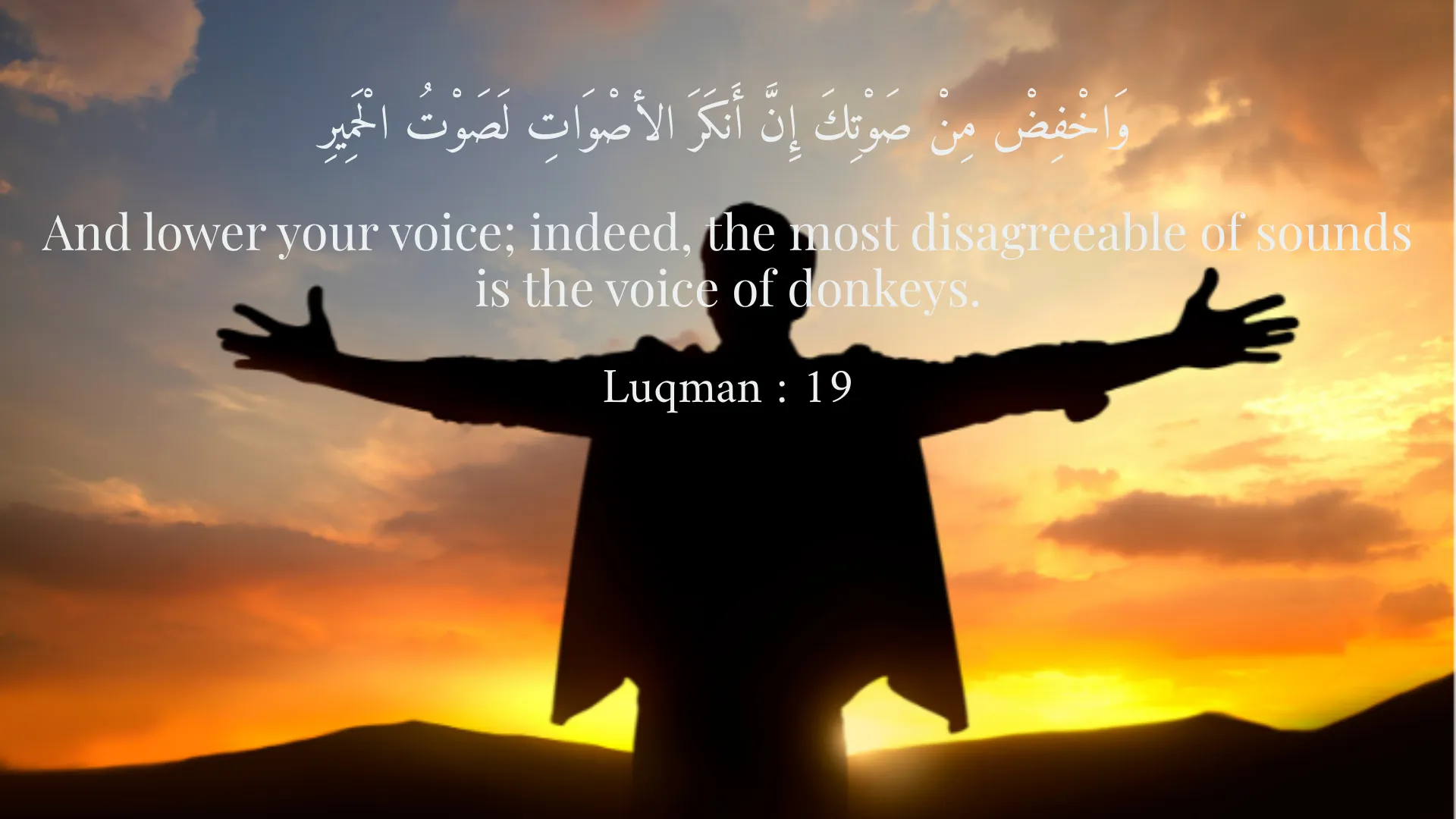
وَاخْفِضْ مِنْ صَوْتِكَ إِنَّ أَنكَرَ الأصْوَاتِ لَصَوْتُ الْحَمِيرِ
And lower your voice; indeed, the most disagreeable of sounds is the voice of donkeys.
Luqman : 19
فَلَعَلَّكَ تارِكٌ بَعْضَ مَا يُوحَى إِلَيْكَ وَضَائِقٌ بِهِ صَدْرُكَ أَنْ يَقُولُوا لَوْلَا أُنزِلَ عَلَيْهِ كَنْزٌ أَوْ جَاءَ مَعَهُ مَلَائِكَةٌ ۗ إِنَّمَا أَنتَ نَذِيرٌ ۖ وَاللَّهُ عَلَى كُلِّ شَيْءٍ وَكِيلٌ
Then perhaps you would leave out some of what is revealed to you, and your breast would be oppressed by it because they say, 'Why has a treasure not been sent down to him or an Angel not come with him?' You are not but a warner, and Allah is Disposer of all things.
Hud : 12
Short Story
Once, a man lived in a city by the sea. He was a person who was always talking and never kept silent. One day, he recalled the verses of the Quran and decided to reflect on the topic of silence. He realized that silence could help a person focus more on themselves and delve into deeper issues. After that, when he was in a group, he practiced being silent for a while and listened to others. This change in him made his friends feel more at peace around him.