Quranic Answer
The Concept of Sin and Its Consequences in the Holy Quran The Holy Quran, as the divine scripture of Islam, presents a multitude of teachings aimed at guiding believers towards a life of righteousness, piety, and gratitude. Among the fundamental tenets emphasized within its verses is the notion that sin can have detrimental consequences for human life and, specifically, one's circumstances in the material world. Numerous verses articulate this principle, setting the stage for believers to reflect on their actions and their impact not only on their spiritual wellbeing but also on their earthly existence. One of the poignant passages that address this subject is found in Surah Al-Anfal, verse 53, where Allah states: "This is because Allah would not change a blessing which He had bestowed upon a people until they change what is within themselves." This verse conveys a profound message about the nature of divine blessings and their conditionality. It highlights the intrinsic relationship between human behavior—particularly gratitude and the performance of good deeds—and the blessings one experiences in life. If a community or individual becomes ungrateful or negligent in doing good, they may find that the blessings they once enjoyed start to diminish. In the context of this verse, it becomes evident that the state of one’s life can directly reflect their internal disposition and ethical conduct. For instance, communities that turn away from gratitude towards Allah and neglect acts of charity, justice, and kindness may experience hardship, adversity, and a decline in their fortunes. In this sense, the relationship between faith and material circumstances is reciprocally connected: as individuals strive to embody the values of gratitude and virtue, they cultivate an environment where blessings can thrive. Further illustrating the impact of sinful actions, Surah Ash-Shura, verse 30 states: "And whatever strikes you of disaster is for what your own hands have earned." This verse emphasizes personal accountability, underscoring that challenges—such as poverty, calamity, and misfortune—often arise from one's own actions. In Islamic theology, this concept is pivotal. It reinforces the idea that not only do our good deeds attract divine mercy and provision; our wrongful actions can lead to hardship and suffering. In this way, individuals are encouraged to examine their lives critically and to acknowledge that the adversities they face may stem from their own shortcomings. For example, rampant dishonesty in business practices, neglect of social justice, or failure to fulfill one's ethical obligations can culminate in a breakdown of societal trust and prosperity. As a result, both the individual and their community may suffer from the repercussions of such sinful behavior. The message of accountability in the Quran serves as a wake-up call to those who may find themselves in dire situations—encouraging reflection and the recognition of the link between sin and its worldly results. The Quranic perspective on sin and its consequences extends beyond immediate material struggles. In Surah An-Nur, verse 37, Allah advises: "Men whom neither trade nor sale distracts from the remembrance of Allah." This verse emphasizes the importance of maintaining a consciousness of God amidst life's pursuits, including trade and commerce. Moreover, it serves as a reminder that pursuing financial gain should not come at the expense of one's spiritual obligations. By staying mindful of God, individuals can align their pursuits with righteousness, which in turn can foster both material and spiritual blessings. Here, the overarching theme of balance is crucial. While striving for worldly success is a moral obligation, one must do so without becoming preoccupied to the point of neglecting their remembrance of Allah. By integrating their faith into their economic activities and avoiding unlawful acts, believers can attract greater blessings into their lives, both materially and spiritually. Ultimately, the Quran calls for repentance and turning back to Allah as a remedy for both spiritual and worldly difficulties. The act of sincerely repenting allows individuals to cleanse their hearts from the burdens of sin and opens the door to Allah’s pardon and mercy. Surah Al-Furqan, verse 70 states: "Except for those who repent, believe and do righteousness. For them Allah will replace their evil deeds with good. And ever is Allah Forgiving and Merciful." This highlights the potential for transformation; through repentance, individuals not only erase past sins but also replace those detriments with acts of goodness that can enhance their current standing in life. Moreover, the act of repentance is not meant solely as an escape from punishment but as a pathway to spiritual serenity. People who find themselves engrossed in the struggles of life often seek solace in turning back to God. Spiritual peace, as promised in the scriptures, manifests as a deeper understanding of life’s trials, along with a stronger resolve to pursue righteousness and live by ethical values. In summary, the Holy Quran underscores the significant impact of sin on both individual lives and society at large. The tenets presented in the Quran demonstrate a direct correlation between one's moral choices, their conduct, and the blessings they attain or lose in this world. Through verses such as those highlighting the importance of gratitude, accountability, and remembrance of Allah, believers are implored to adopt a conscious lifestyle that intertwines their spiritual obligations with their everyday pursuits. Such an integrated approach fosters not only better material circumstances but nurtures spiritual growth and fulfillment, leading to a holistic and meaningful life. As followers of these teachings, individuals are continually reminded of their ability to shape their destinies through repentance, ethical conduct, and gratitude, creating a positive ripple effect that may propagate throughout society.
Related Verses
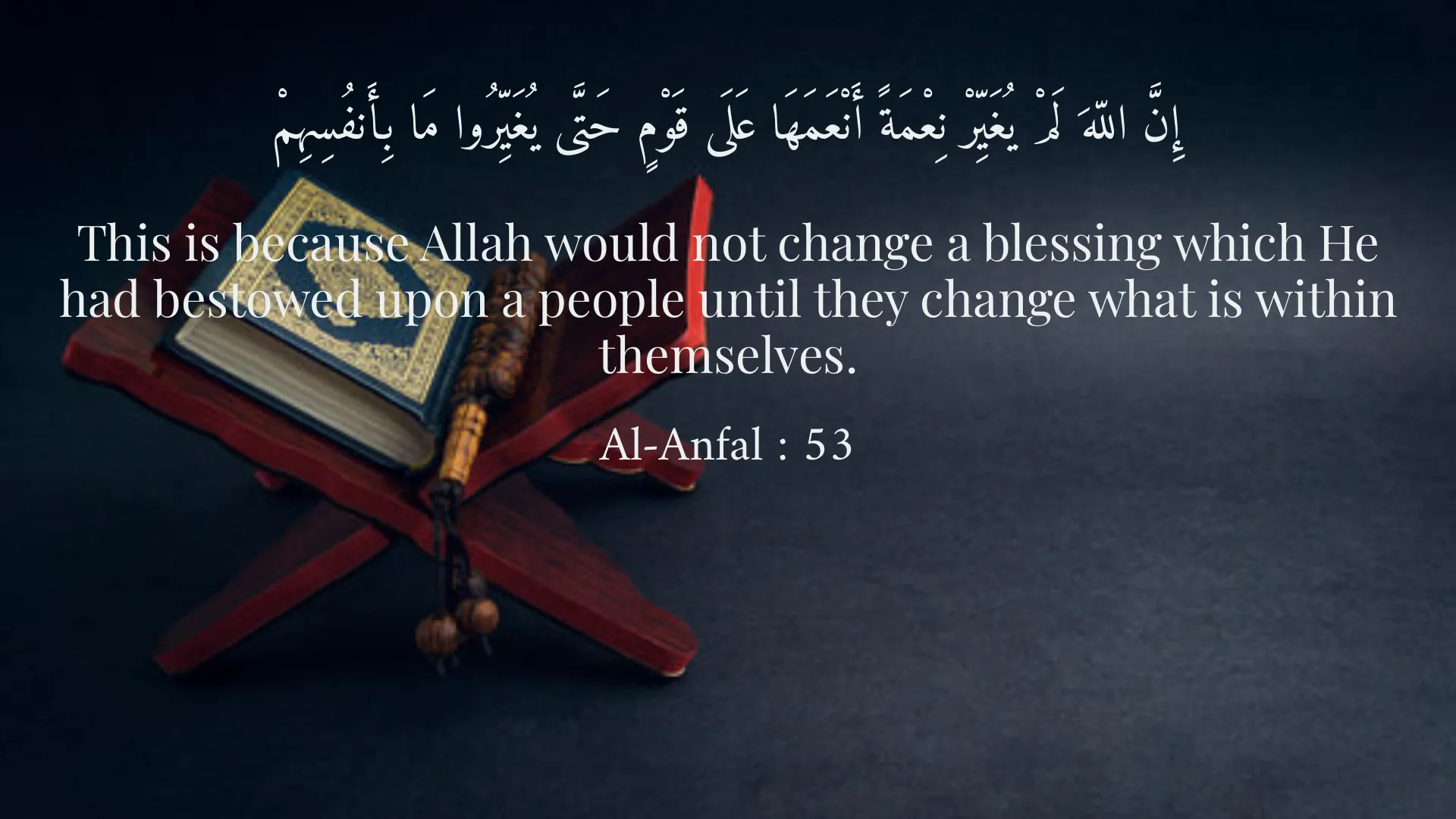
إِنَّ اللّهَ لَمْ يُغَيِّرْ نِعْمَةً أَنْعَمَهَا عَلَى قَوْمٍ حَتَّى يُغَيِّرُوا مَا بِأَنفُسِهِمْ
This is because Allah would not change a blessing which He had bestowed upon a people until they change what is within themselves.
Al-Anfal : 53
وَمَا أَصَابَكُم مِّن مُّصِيبَةٍ فَبِمَا كَسَبَتْ أَيْدِيكُمْ
And whatever strikes you of disaster is for what your own hands have earned.
Ash-Shura : 30
رِجَالٌ لَّا تُلْهِيهِمْ تِجَارَةٌ وَلَا بَيْعٌ عَنْ ذِكْرِ اللَّهِ
Men whom neither trade nor sale distracts from the remembrance of Allah.
An-Nur : 37
Short Story
Once upon a time, there was a man who faced financial struggles due to his sins. He realized that he had not expressed gratitude for God's blessings in his life and was constantly anxious. One day, he decided to return to Allah and repent. Through his repentance and good deeds, his financial situation gradually improved, and peace returned to his life.