Quranic Answer
The Holy Quran, regarded as the divine scripture of Islam, intricately addresses the concept of sin and the myriad consequences that follow. Sin, in its essence, signifies a deviation from the path of righteousness designated by God. The repercussions of sin are manifold, causing not only spiritual decay but manifesting in emotional distress and societal discord. This article aims to explore the nature of sin, its repercussions as illustrated in the Quran, and the profound theme of God's mercy and forgiveness, forming a balanced narrative of consequence and redemption. To begin with, it is imperative to understand that sin serves as a barrier between individuals and their Creator. In Surah Al-Baqarah, verse 81, it is stated: "Indeed, those who disbelieve in the signs of Allah are the losers." This verse underscores the ultimate consequence of sin -- the loss of faith and the discord that emerges from turning away from divine guidance. Sin can bring with it a range of repercussions that can lead individuals into a quagmire of despair and regret. It is not merely about disobedience; it embodies a fundamental misalignment with the truth and the moral compass provided by God. The detrimental effects of sin extend beyond the individual's own relationship with God. They can corrode connections with family, friends, and the community at large. As individuals engage in sinful behavior, a sense of guilt and internal conflict arises. This inner turmoil becomes the breeding ground for discomfort, anxiety, and misery, enveloping the sinner in a cycle of despair. Surah Al-Imran, verse 135 recognizes this phenomenon by stating: "And turn away from major sins; these sins lead to wretchedness." Thus, it highlights that the gravity of sin is not isolated but reverberates throughout the life of the sinner and those around them. Moreover, the impacts of sin can conflate with broader societal issues; when individuals falter in their moral obligations, the ripple effects can lead to the erosion of trust, division, and a breakdown of community values. Society thrives when every individual holds themselves accountable to a higher moral standard. The Holy Quran profoundly asserts that, while sin carries grave consequences, it is essential to view these in the context of communal and personal responsibility. However, life is not solely a narrative of misery and consequence. The Quran emphasizes the boundless mercy and forgiveness that the Almighty extends to His servants. In Surah Az-Zumar, verse 53, Allah invites believers with an open heart: "O My servants who have believed, do not despair of the mercy of Allah!" This verse acts as a beacon of hope, reassuring humanity that despite their transgressions, the path to repentance is always accessible. It encourages individuals to reflect, repent, and return to the fold of divine love and mercy. Such themes of redemption are not just reminders of God's compassion but serve as powerful motivators for change. The notion of God's mercy is not to be viewed as a license for sin but rather as a profound encouragement for individuals to rectify their ways. It is a call to action, urging believers to foster a mindset of continual self-improvement and moral rectitude. The act of seeking forgiveness not only purifies the heart but also rekindles one's relationship with God. The dual narrative of sin and forgiveness within the Quran is not only a theological perspective but also a foundation for personal growth and societal harmony. Understanding the consequences of one's actions serves as an impetus for individuals to engage in moral self-examination. In Islamic tradition, this reflective practice is critical; it fosters a community where individuals aspire to better themselves and collectively uplift the moral fabric of society. As we delve deeper into the relationship between sin, consequence, and divine mercy, one begins to realize the holistic nature of these teachings. Each individual bears the responsibility not only for their own transgressions but also for how those choices affect others. The pursuit of righteousness is therefore not an isolated endeavor but a collaborative journey towards a healthy community enriching each other's lives. In conclusion, the Quran serves as a guide for navigating the complexities of human nature, emphasizing the importance of acknowledging sin and its consequences, while always holding onto the hope of God's mercy and forgiveness. The intricate relationship between sin, internal guilt, and eventual redemption forms the backbone of spiritual growth in an individual's life. While sins can lead to misery and difficulties, the divine promise of mercy provides a path for repentance and restoration. Thus, the narrative of sin in the Quran is not merely a cautionary tale; it is an invitation to journey towards a better self and a more cohesive and compassionate community, rooted in love, understanding, and faith in God's unwavering mercy.
Related Verses
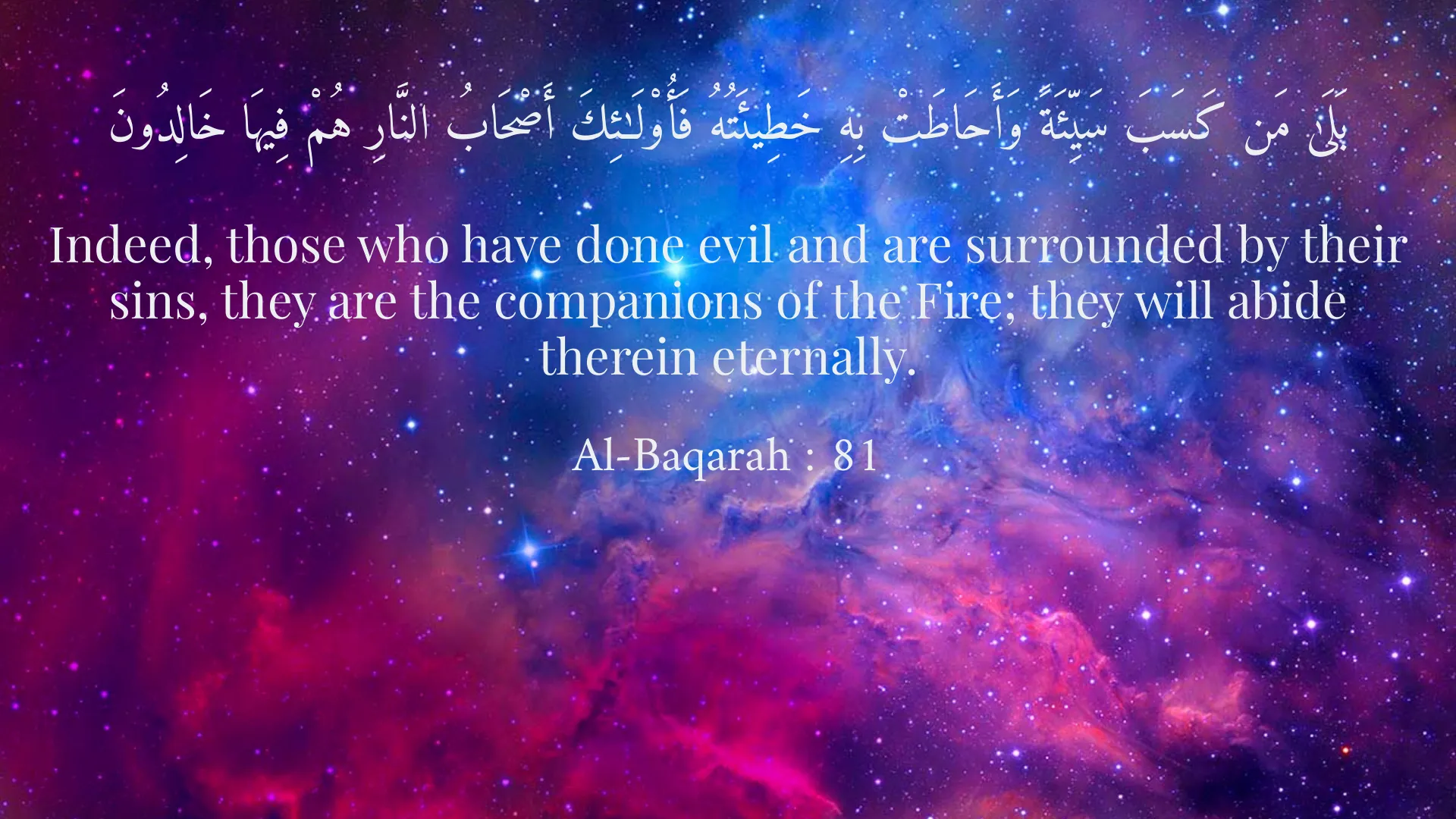
بَلَىٰ مَن كَسَبَ سَيِّئَةً وَأَحَاطَتْ بِهِ خَطِيئَتُهُ فَأُوْلَـٰئِكَ أَصْحَابُ النَّارِ هُمْ فِيهَا خَالِدُونَ
Indeed, those who have done evil and are surrounded by their sins, they are the companions of the Fire; they will abide therein eternally.
Al-Baqarah : 81
وَالَّذِينَ إِذَا فَعَلُوا فَاحِشَةً أَوْ ظَلَمُوا أَنْفُسَهُمْ ذَكَرُوا اللَّهَ فَاسْتَغْفَرُوا لِذُنُوبِهِمْ ۖ وَمَن يَغْفِرُ الذُّنُوبَ إِلَّا اللَّهُ ۖ وَلَمْ يُصِرُّوا عَلَى مَا فَعَلُوا وَهُمْ يَعْلَمُونَ
And those who, when they commit an evil deed or wrong themselves, remember Allah and seek forgiveness for their sins - and who can forgive sins except Allah? - and do not persist in what they have done while they know.
Al-Imran : 135
قُلْ يَا عِبَادِيَ الَّذِينَ آمَنُوا اتَّقُوا رَبَّكُمْ ۖ لِلَّذِينَ أَحْسَنُوا فِي هَذِهِ الدُّنْيَا حَسَنةٌ ۖ وَأَرْضُ اللَّهِ وَاسِعَةٌ ۖ إِنَّمَا يُوَفَّى الصَّابِرُونَ أَجْرَهُمْ بِغَيْرِ حِسَابٍ
Say, 'O My servants who have believed, fear your Lord. For those who do good in this world is good, and the earth of Allah is vast. Indeed, the patient will be given their reward without account.'
Az-Zumar : 53
Short Story
One day, a man in the market spoke to his sage: "O wise one, sin sometimes seems to ease our burdens. The sage replied warmly, 'Sin is like a heavy baggage. When you distance yourself from it, you gain more freedom and find comfort and honor.' The man looked up at the clear sky and came to realize that returning to God was the only way to free himself from the shackles of sin.