Quranic Answer
The Holy Quran, as a comprehensive guide for humanity's life, while not explicitly using the modern sociological term “crisis of trust,” profoundly and extensively addresses the foundational principles for building trust in human relationships. It also strongly condemns behaviors that erode and destroy trust. In essence, Quranic teachings, by delineating the foundations of a healthy and stable society, implicitly offer solutions to prevent such crises from arising and, if they do, provide pathways for rebuilding trust. A crisis of trust in human relationships often stems from moral weaknesses and the diminishing of divine values, and the Quran precisely emphasizes strengthening these values. Foundations of Trust in the Quran: The Quran establishes several key principles for the robust structure of human relationships, each forming a pillar of trust: 1. Truthfulness (Al-Sidq): Perhaps the most crucial and fundamental pillar of trust is truthfulness. In the Holy Quran, honesty is considered one of the prominent characteristics of believers and the righteous. Allah Almighty says in Surah At-Tawbah, verse 119: “O you who have believed, fear Allah and be with the truthful.” This verse clearly indicates that piety (Taqwa) and truthfulness are inseparable, and a believer should always associate with those known for their honesty. Lying, hypocrisy, and deception shatter the very foundation of trust. When people cannot rely on each other's words and promises, all relational frameworks become weak. Truthfulness must manifest not only in speech but also in actions and intentions. A truthful person is always reliable and dependable in the eyes of others, and this quality enables others to interact with them peacefully and confidently. The absence of truthfulness leads to mistrust and the breakdown of social systems, not only in individual relationships but also at the societal level. 2. Fulfilling Covenants and Promises (Al-Wafa' bil-Uhood): After truthfulness, fulfilling covenants holds a special place in the Quran. Allah has repeatedly called upon believers to fulfill their covenants. In Surah Al-Isra, verse 34, it states: “And fulfill [every] commitment. Indeed, [every] commitment will be questioned about.” This verse indicates that breaking a promise is not merely a moral transgression but also a sin for which one will be held accountable before Allah. Fulfilling covenants includes all types of agreements, vows, and obligations, from major social and political treaties to small promises in daily life. When individuals keep their promises, this behavior creates a sense of security and assurance in the other party, fostering a ground for stable cooperation and partnerships. Conversely, breaking promises and defaulting on commitments inflict one of the greatest blows to trust, pushing relationships toward coldness and isolation. A society where fulfilling promises is not prevalent will fall into chaos and disorder, and relationships within it will be built on suspicion and caution. 3. Trustworthiness (Al-Amanah): The concept of Amanah (trustworthiness or trust) is very broad in the Quran and is not limited to merely safeguarding others' property. Amanah encompasses protecting secrets, being responsible in assigned duties, upholding the rights of others, and even preserving the divine trust (faith and piety). In Surah An-Nisa, verse 58, we read: “Indeed, Allah commands you to render trusts to whom they are due.” This command applies to every kind of trust. A trustworthy person is regarded by others as reliable, responsible, and committed. Betrayal of trust (Khianah) is severely condemned in the Quran and is listed as one of the characteristics of hypocrites. Betraying trust destroys the backbone of relationships and replaces it with doubt and suspicion. Factors Destroying Trust and Causing Crises in the Quran: Just as the Quran emphasizes the principles that build trust, it strongly forbids behaviors that lead to its destruction and the emergence of crises in relationships: 1. Suspicion and Spying (Al-Zann and Al-Tajassus): In Surah Al-Hujurat, verse 12, Allah warns believers: “O you who have believed, avoid much [negative] suspicion, for indeed some suspicion is sin. And do not spy or backbite each other.” Negative suspicion, meaning baseless and negative judgments about others, is the first step towards mistrust. When people are constantly suspicious and pessimistic instead of trusting each other, human relationships quickly deteriorate. Spying also involves intruding into others' privacy and seeking out their flaws and secrets, which directly destroys trust and establishes an atmosphere of mistrust. 2. Backbiting and Slander (Al-Gheebah and Al-Buhtan): Backbiting, which is speaking about others' hidden faults in their absence, and slander (Buhtan), which is falsely accusing someone, are other major factors that destroy trust. These actions not only harm the individual concerned but also poison societies and build relationships on fear and uncertainty. How can someone trust others if they know they are being talked about behind their back or falsely accused? 3. Betrayal and Breaking Covenants (Al-Khiyana and Naqd al-Ahad): These represent the ultimate breach of trust. The Quran states that Allah does not love traitors and considers breaking covenants as a characteristic of the defiantly disobedient (Fasiqeen). The consequences of betrayal are not merely individual; they can lead to the collapse of families, communities, and even nations. Quranic Solutions for Rebuilding Trust: Alongside warnings, the Quran also offers solutions for rebuilding and strengthening trust: 1. Taqwa (Piety and God-consciousness): The foundation of all good and righteousness in the Quran is Taqwa. A pious person avoids any sin or wrongdoing that could lead to mistrust. 2. Forgiveness and Pardon (Afw and Safh): In relationships where trust has been damaged, forgiveness and pardon can provide a basis for repair. This does not mean overlooking betrayal but offering an opportunity to rebuild the relationship based on learning from mistakes. 3. Reconciliation and Mending Relations (Islah Dhat al-Bayn): The Quran emphasizes mending relations and resolving disputes between people. This includes efforts to resolve misunderstandings and re-establish healthy communication. 4. Enjoining Good and Forbidding Evil (Amr bil Ma'ruf wa Nahy anil Munkar): Encouraging good and preventing evil means creating an environment where honesty and trustworthiness are valued, and individuals are encouraged towards trust-building behaviors. Conclusion: Based on the discussions, it can be concluded that the Holy Quran, with a profound and comprehensive perspective, not only addresses the “crisis of trust” in terms of damaged human relationships due to a lack of truthfulness, promise-keeping, and trustworthiness, but also provides an ethical and behavioral framework for its prevention and remedy. Quranic teachings guide individuals and society towards building strong relationships based on faith, honesty, justice, and integrity. In reality, any mistrust and breakdown of relationships are natural consequences of deviating from these fundamental divine principles. Therefore, to confront any “crisis of trust” in human relationships, returning to these vital teachings of the Holy Quran will be the only sustainable and effective solution.
Related Verses
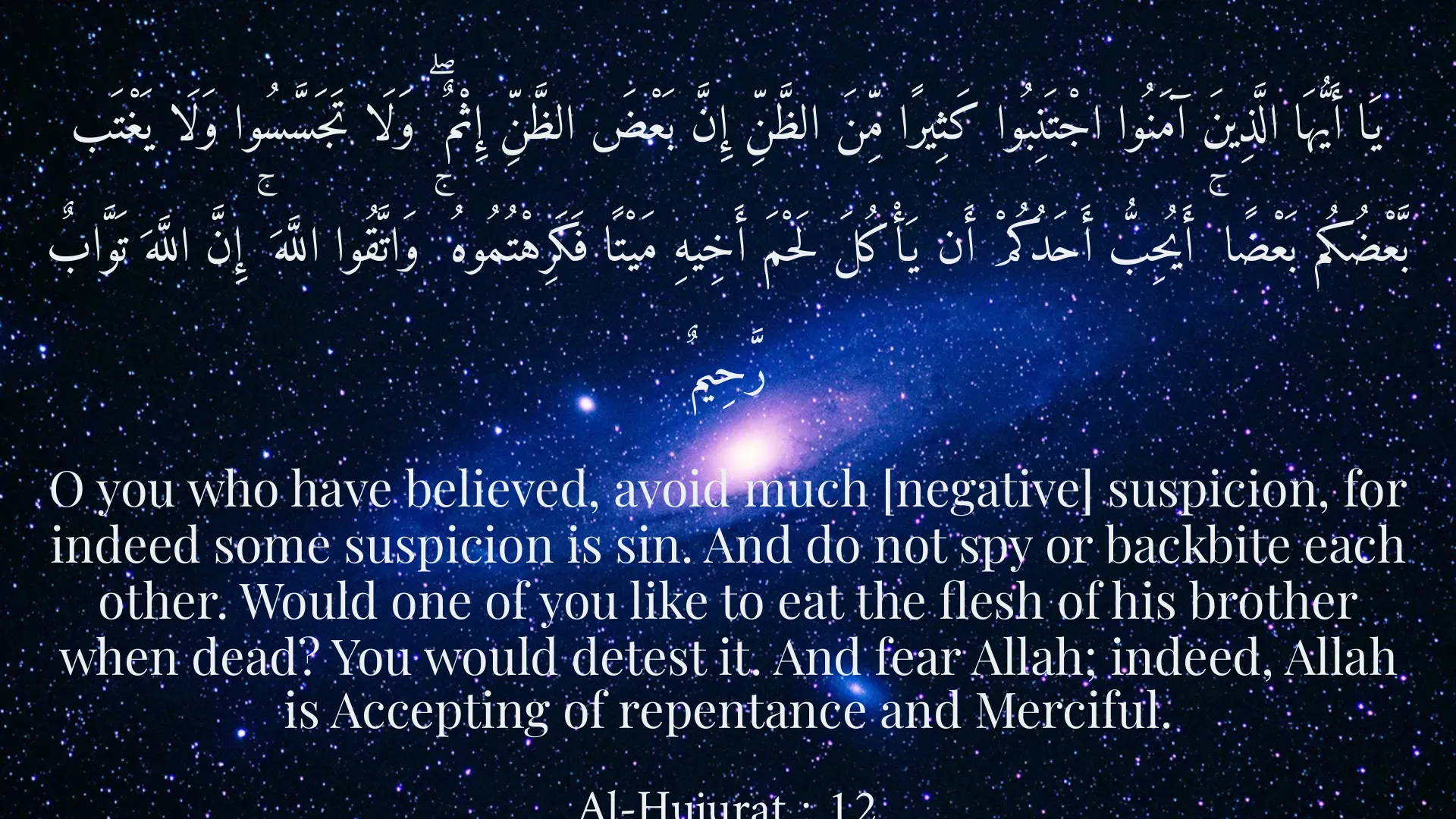
يَا أَيُّهَا الَّذِينَ آمَنُوا اجْتَنِبُوا كَثِيرًا مِّنَ الظَّنِّ إِنَّ بَعْضَ الظَّنِّ إِثْمٌ ۖ وَلَا تَجَسَّسُوا وَلَا يَغْتَب بَّعْضُكُم بَعْضًا ۚ أَيُحِبُّ أَحَدُكُمْ أَن يَأْكُلَ لَحْمَ أَخِيهِ مَيْتًا فَكَرِهْتُمُوهُ ۚ وَاتَّقُوا اللَّهَ ۚ إِنَّ اللَّهَ تَوَّابٌ رَّحِيمٌ
O you who have believed, avoid much [negative] suspicion, for indeed some suspicion is sin. And do not spy or backbite each other. Would one of you like to eat the flesh of his brother when dead? You would detest it. And fear Allah; indeed, Allah is Accepting of repentance and Merciful.
Al-Hujurat : 12
إِنَّ اللَّهَ يَأْمُرُكُمْ أَن تُؤَدُّوا الْأَمَانَاتِ إِلَىٰ أَهْلِهَا وَإِذَا حَكَمْتُم بَيْنَ النَّاسِ أَن تَحْكُمُوا بِالْعَدْلِ ۚ إِنَّ اللَّهَ نِعِمَّا يَعِظُكُم بِهِ ۗ إِنَّ اللَّهَ كَانَ سَمِيعًا بَصِيرًا
Indeed, Allah commands you to render trusts to whom they are due and when you judge between people to judge with justice. Excellent is that which Allah instructs you. Indeed, Allah is ever Hearing and Seeing.
An-Nisa : 58
وَأَوْفُوا بِعَهْدِ اللَّهِ إِذَا عَاهَدتُّمْ وَلَا تَنقُضُوا الْأَيْمَانَ بَعْدَ تَوْكِيدِهَا وَقَدْ جَعَلْتُمُ اللَّهَ عَلَيْكُمْ كَفِيلًا ۚ إِنَّ اللَّهَ يَعْلَمُ مَا تَفْعَلُونَ
And fulfill the covenant of Allah when you have made it, and do not break oaths after their confirmation while you have made Allah, over you, a guarantor. Indeed, Allah knows what you do.
An-Nahl : 91
Short Story
In the city of Shiraz, there lived a merchant known as "Saheb-Nafs" (The Master of the Soul), renowned for his integrity and trustworthiness. One day, a customer bought an item from him that had a hidden flaw, unbeknownst to the buyer. Saheb-Nafs, aware of the defect, could not sleep soundly that night. Early in the morning, despite the long distance, he set out to find the buyer and inform him of the item's flaw or return his money. When the surprised buyer asked why he had gone to such trouble, the merchant replied, "It is better for me to bear a small loss in wealth than a great shame on the Day of Judgment and the erosion of trust in this world." This story spread throughout the city, and people trusted him more than ever, leading his business to flourish. For they knew that honesty and trustworthiness were a far more precious capital than any profit, building lasting relationships on the foundation of trust.