Quranic Answer
Yes, absolutely! The Holy Quran, as a divine guide for all aspects of human life, includes comprehensive and fundamental principles and instructions that encompass work and economic relationships. These directives not only address legal and contractual aspects but also cover the ethical, spiritual, and social dimensions of work and livelihood, providing a framework for healthy and constructive interactions in the workplace. The Quran strongly emphasizes the importance of justice, honesty, trustworthiness, fulfilling covenants, and abstaining from oppression and deception in all transactions and relationships, whether between employer and employee, partners, or buyer and seller. These principles form the bedrock of a healthy and advanced society where the rights of all individuals are respected, and mutual trust prevails. One of the most crucial principles emphasized by the Quran is "justice and righteousness" (Adl wa Ihsan). In work relationships, this principle means upholding mutual rights. The employer must pay the worker's wages promptly and fully and must not oppress them, just as the worker must perform their duties diligently and faithfully without negligence. The Quran, in numerous verses, stresses the necessity of observing justice and equity in dealings. For instance, the verses concerning short-changing in Surah Al-Mutaffifin clearly show that even the slightest injustice in measure and weight is severely condemned by Allah. This concept extends to work relationships; meaning any form of fraud, deception, or exploitation of labor is rejected and censured from the Quranic perspective. Work must be based on mutual consent and conducted with respect for human rights and dignity. Another principle highlighted in the Quran is "fulfilling covenants and agreements." Every work contract, whether verbal or written, is considered a covenant, and the Quran commands believers to fully adhere to their commitments. This includes abiding by contract terms, timelines, payment amounts, and work quality. Breaching covenants and agreements is not only ethically reprehensible but can also erode trust and disintegrate the fabric of society. In work relationships, this means that if an employer enters into a contract with a worker, they must adhere to all its clauses, and the worker, in turn, must fulfill their obligations to the best of their ability. This adherence to covenants provides a secure environment for transactions and economic activities, preventing disputes and conflicts. Furthermore, the Quran places great emphasis on "honesty and trustworthiness" in business and economic relations. Earning a lawful livelihood is considered a great act of worship, and its primary condition is honesty in speech and conduct, and trustworthiness in safeguarding others' rights. Any lie, deceit, concealment, or breach of trust is not only religiously forbidden but also removes blessings from life and business. This principle is particularly important for those who hold financial or managerial responsibilities; they must act with utmost honesty and transparency and avoid any misuse of their position. Also, in commercial exchanges, disclosing defects in goods and providing accurate information are essentials so that the customer can make decisions based on full awareness. "Avoiding oppression and exploitation" is another Quranic directive directly related to work relationships. The Quran opposes all forms of oppression and injustice and warns believers against them. In work relationships, this means not paying adequate wages, imposing excessive work, or exploiting individuals' weakness and need. Conversely, the Quran advises kindness and benevolence, which includes paying fair remuneration, providing a suitable working environment, and attending to workers' needs. Islam attaches great importance to human dignity and cannot tolerate people being humiliated or exploited in the workplace. Prophet Muhammad (PBUH) also emphasized in numerous narrations the prompt payment of a worker's wage before their sweat dries, indicating the paramount importance of this issue in Islam. Overall, by presenting these ethical and legal principles, the Holy Quran not only provides guidance for earning a lawful and blessed livelihood but also seeks to establish a just and ethical economic system where all individuals enjoy their rights, and society is built on trust, cooperation, and fairness. These instructions transcend time and place, being applicable and guiding in every era and environment, including the most complex work relationships of today, contributing to individual and collective growth. Whenever these principles are properly observed in work and economic relations, they will bring not only material and spiritual blessings but also psychological peace, job satisfaction, and stronger social bonds. This ethical system ultimately leads to sustainable development and public welfare, as its foundations are based on upholding the rights of people and divine piety.
Related Verses
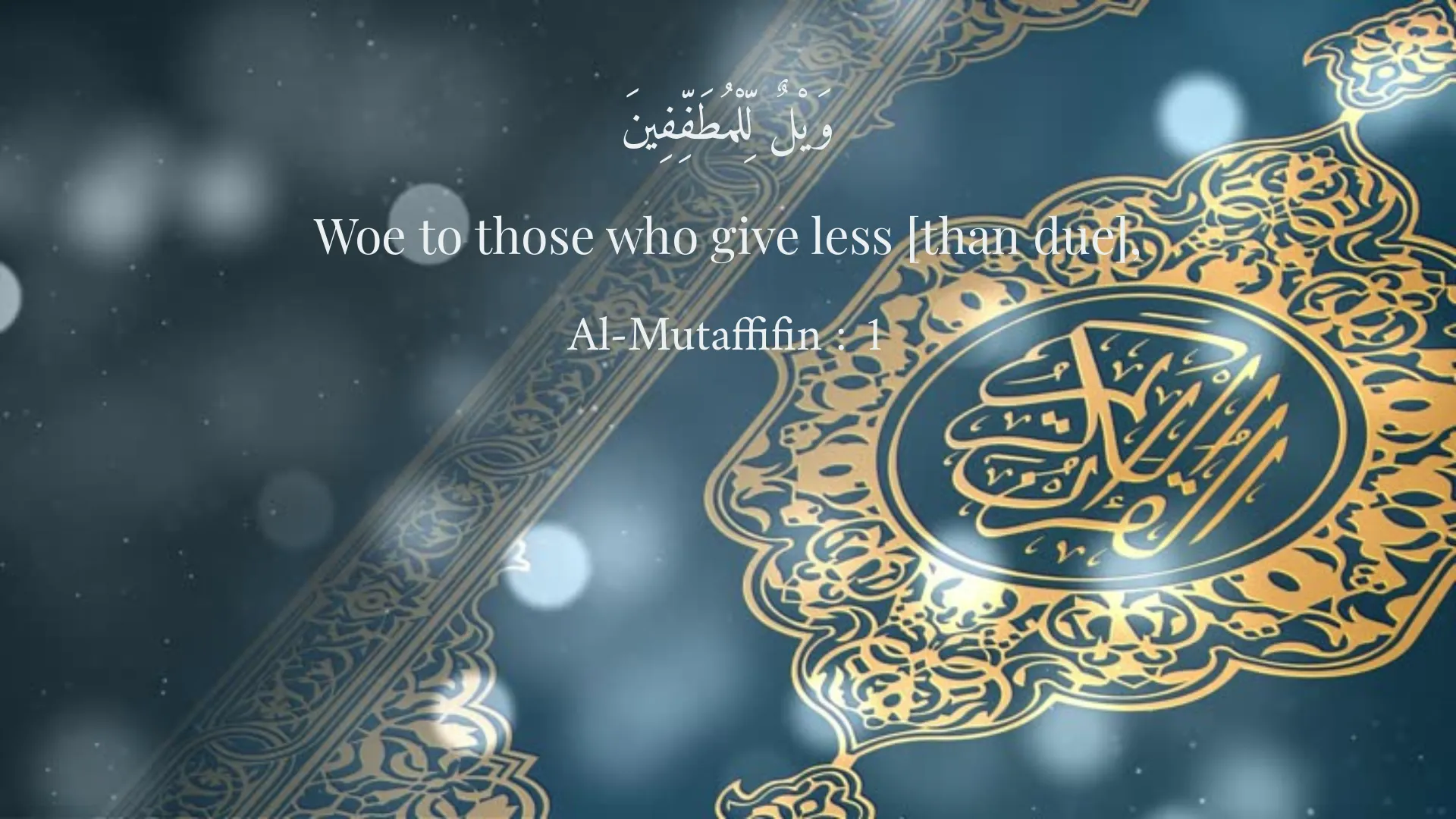
وَيْلٌ لِّلْمُطَفِّفِينَ
Woe to those who give less [than due],
Al-Mutaffifin : 1
الَّذِينَ إِذَا اكْتَالُوا عَلَى النَّاسِ يَسْتَوْفُونَ
Who, when they receive measure from the people, take in full
Al-Mutaffifin : 2
وَإِذَا كَالُوهُمْ أَو وَّزَنُوهُمْ يُخْسِرُونَ
But when they give them measure or weigh for them, they cause loss.
Al-Mutaffifin : 3
يَا أَيُّهَا الَّذِينَ آمَنُوا لَا تَأْكُلُوا أَمْوَالَكُم بَيْنَكُم بِالْبَاطِلِ إِلَّا أَن تَكُونَ تِجَارَةً عَن تَرَاضٍ مِّنكُمْ ۚ وَلَا تَقْتُلُوا أَنفُسَكُمْ ۚ إِنَّ اللَّهَ كَانَ بِكُمْ رَحِيمًا
O you who have believed, do not consume one another's wealth unjustly but only [in lawful] business by mutual consent. And do not kill yourselves. Indeed, Allah is ever Merciful to you.
An-Nisa : 29
إِنَّ اللَّهَ يَأْمُرُ بِالْعَدْلِ وَالْإِحْسَانِ وَإِيتَاءِ ذِي الْقُرْبَىٰ وَيَنْهَىٰ عَنِ الْفَحْشَاءِ وَالْمُنكَرِ وَالْبَغْيِ ۚ يَعِظُكُمْ لَعَلَّكُمْ تَذَكَّرُونَ
Indeed, Allah orders justice and good conduct and giving to relatives and forbids immorality and bad conduct and oppression. He admonishes you that perhaps you will be reminded.
An-Nahl : 90
Short Story
Once upon a time in Shiraz, there lived a merchant named Fereydoun, who was among the most devout and trustworthy people of his era. Whenever he conducted a transaction, he observed such justice and fairness that he became famous amongst all. He neither short-changed in weight nor misrepresented the quality of goods. One day, he sold an item to a customer and said, 'O noble sir, this merchandise has its price, and its flaw is also apparent. If you like it, take it; otherwise, I will compensate you.' The customer, astonished by his honesty, purchased the item with satisfaction. After some time, Fereydoun witnessed blessings in his business, and his reputation grew day by day, for people knew that in the market, he was the only one who earned lawful wealth and shunned all forms of deceit and injustice. Saadi said: 'When a matter is well-founded, prosperity increases, and Paradise becomes the lot of the virtuous.'