Quranic Answer
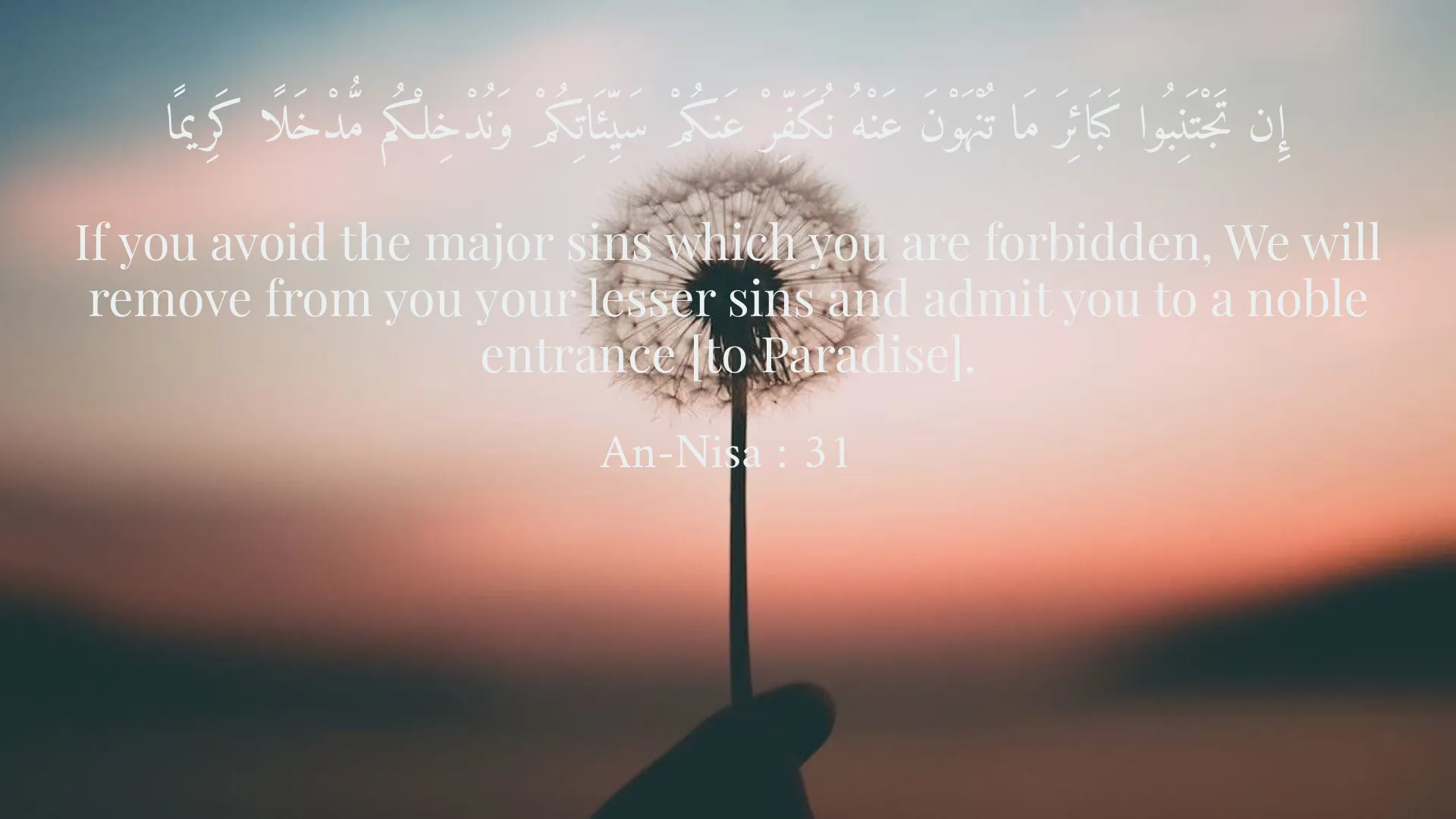
Does the Quran differentiate between major and minor sins? This is a profound and fundamental question that helps us understand the concept of sin, divine mercy, and the path to salvation in the glorious religion of Islam. The unequivocal answer is yes, the Holy Quran clearly distinguishes between major sins (Kaba'ir) and minor offenses (Lamam or Sagha'ir). This distinction not only reveals an aspect of divine justice and wisdom but also provides a path for hope and return for humanity. The Quran refers to this matter in several verses. One of the most explicit verses in this regard is Surah An-Nisa (4:31), which states: "If you avoid the major sins which you are forbidden, We will remove from you your lesser sins and admit you to a noble entrance [to Paradise]." (إِن تَجْتَنِبُوا كَبَائِرَ مَا تُنْهَوْنَ عَنْهُ نُكَفِّرْ عَنكُمْ سَيِّئَاتِكُمْ وَنُدْخِلْكُم مُّدْخَلًا كَرِيمًا). This verse clearly indicates that refraining from major sins is a condition for the forgiveness of minor ones. This itself is a manifestation of divine mercy, encouraging individuals to focus on avoiding destructive and grave sins, and in return, Allah will be forgiving of smaller errors. Another verse that confirms this distinction is Surah An-Najm (53:32), which says: "...those who avoid the major sins and immoralities, except for minor offenses. Indeed, your Lord is vast in forgiveness..." (الَّذِينَ يَجْتَنِبُونَ كَبَائِرَ الْإِثْمِ وَالْفَوَاحِشَ إِلَّا اللَّمَمَ ۚ إِنَّ رَبَّكَ وَاسِعُ الْمَغْفِرَةِ). The term "Lamam" here refers to minor, unintentional errors that one might commit without persistence or repetition, or sins that occur momentarily and fleetingly, and for which one immediately feels remorse. This verse also confirms the existence of two types of sins with varying degrees of severity and emphasizes the vastness of divine mercy. Furthermore, in Surah Ash-Shura (42:37), we read: "And those who avoid the major sins and immoralities, and when they are angry, they forgive." (وَالَّذِينَ يَجْتَنِبُونَ كَبَائِرَ الْإِثْمِ وَالْفَوَاحِشَ وَإِذَا مَا غَضِبُوا هُمْ يَغْفِرُونَ). This verse also emphasizes avoiding "Kaba'ir al-Ithm" (major sins) and "Fawahish" (extremely abominable acts), which implies a higher degree of sinfulness and vileness. Criteria for Identifying Major Sins: Although the Quran does not explicitly provide an exhaustive list of major sins, Islamic commentators and jurists have identified criteria for them based on verses and narrations. These include: Sins for which a promise of hellfire or divine punishment has been made, such as associating partners with Allah (Shirk), murder, consuming orphan's property, usury (riba), false accusation of chaste women, concealing testimony, etc. Sins for which specific legal punishments (Hudud) have been prescribed, such as theft, alcohol consumption, adultery, etc. Sins strongly condemned in the Quran and described as "Fawahish" (abominable acts) or "Ithm Adheem" (great sin), such as severing ties of kinship, oppression of orphans, fleeing from battle, etc. Sins whose perpetrator is considered to have exited the fold of faith or for whom a promise of not being guided has been given. Sins against which Allah or His Messenger have given severe warnings. The Wisdom Behind Differentiating Sins: This distinction carries profound wisdom, including: Encouragement of Repentance and Hope: If all sins were considered equal, individuals might, after committing a minor sin, despair of divine mercy and find themselves sinking into greater sins. This distinction keeps the door of repentance open and gives hope that by avoiding major sins, smaller errors will be forgiven. Prioritizing Moral and Social Aspects: Major sins often directly violate the rights of Allah or the rights of people and have devastating consequences for the individual and society (e.g., murder, oppression, Shirk). Differentiating between sins helps individuals prioritize what to avoid among transgressions. Self-Refinement and Purification: This classification helps individuals walk on the path of piety, and by focusing on avoiding what is highly disliked by Allah, they can gradually purify themselves from other errors as well. Finally, the Role of Repentance and Seeking Forgiveness: Even for major sins, the door of repentance is open, but repentance for major sins requires deeper remorse, rectification (if infringing on others' rights), and a firm resolve not to return to the sin. Minor sins, on the other hand, might be expiated by avoiding major sins, performing good deeds, seeking forgiveness, and even minor calamities. Important Notes: This distinction does not mean that minor sins are insignificant. No sin should be considered small, as persistence in a minor sin can transform it into a major one. On the other hand, neglecting minor sins might gradually lead one towards greater sins. The Prophet Muhammad (peace be upon him) said: "Beware of minor sins, for they accumulate until they destroy their owner." Ultimately, the purpose of this distinction is to guide humanity towards perfection and purity. Allah Almighty, with His infinite wisdom, has paved the path to salvation for His servants. By recognizing these sins and striving to avoid major ones, and by seeking forgiveness and repenting for minor ones, one can hope for Allah's vast mercy and attain success in this world and the hereafter. This classification system not only demonstrates Allah's infinite justice but also illustrates the pinnacle of His mercy and forgiveness, always keeping the door of return and rectification open for His servants. This approach prevents despair and guides individuals towards striving for purity of soul and action.
Related Verses
إِن تَجْتَنِبُوا كَبَائِرَ مَا تُنْهَوْنَ عَنْهُ نُكَفِّرْ عَنكُمْ سَيِّئَاتِكُمْ وَنُدْخِلْكُم مُّدْخَلًا كَرِيمًا
If you avoid the major sins which you are forbidden, We will remove from you your lesser sins and admit you to a noble entrance [to Paradise].
An-Nisa : 31
الَّذِينَ يَجْتَنِبُونَ كَبَائِرَ الْإِثْمِ وَالْفَوَاحِشَ إِلَّا اللَّمَمَ ۚ إِنَّ رَبَّكَ وَاسِعُ الْمَغْفِرَةِ ۚ هُوَ أَعْلَمُ بِكُمْ إِذْ أَنشَأَكُم مِّنَ الْأَرْضِ وَإِذْ أَنتُمْ أَجِنَّةٌ فِي بُطُونِ أُمَّهَاتِكُمْ ۖ فَلَا تُزَكُّوا أَنفُسَكُمْ ۖ هُوَ أَعْلَمُ بِمَنِ اتَّقَىٰ
...those who avoid the major sins and immoralities, except for minor offenses. Indeed, your Lord is vast in forgiveness. He was most knowing of you when He produced you from the earth and when you were fetuses in the wombs of your mothers. So do not purify yourselves; He is most knowing of who fears Him.
An-Najm : 32
وَالَّذِينَ يَجْتَنِبُونَ كَبَائِرَ الْإِثْمِ وَالْفَوَاحِشَ وَإِذَا مَا غَضِبُوا هُمْ يَغْفِرُونَ
And those who avoid the major sins and immoralities, and when they are angry, they forgive.
Ash-Shura : 37
Short Story
It is narrated that in the verdant garden of time, there lived a devout and insightful dervish who was engaged in cultivating beautiful flowers. One day, a king passed by and was delighted by the beauty of the garden and the serenity of the dervish. He asked, "O wise elder, in this garden, which weeds do you prioritize removing more? Those that are large and obvious, or those that are small and hidden?" The dervish smiled and said, "O King, the large and obvious weeds, although they are visible and may have deep roots, are seen by everyone, and efforts are quickly made to uproot them. The real danger lies in the small and hidden weeds, which people consider insignificant. They grow slowly, their roots spread in the soil, and if not attended to in time, they multiply so much that they cover the entire garden and choke the beautiful flowers. Their harm begins imperceptibly, but their end is devastating." The king pondered and said, "You have given a great lesson! It seems our sins are similar. Major sins, which are apparent and ugly, often lead to remorse and repentance. But minor offenses, which appear small, if insisted upon, will take root and blacken the heart, and can transform into major sins." The dervish nodded and added, "Yes, and God has given us the insight to avoid both types, yet has kept the door of forgiveness and repentance open for all, provided we earnestly abstain from what is great." The king took this advice to heart and deeply reflected on his way of life.