Quranic Answer
The Holy Quran emphasizes the importance of kindness and benevolence in human behavior repeatedly, underlining that these virtues hold a significant place in the moral and ethical framework of a believer's life. Across various verses, Allah invites us to engage with one another through love, compassion, and goodness, fostering a community spirit rooted in mutual respect and understanding. In exploring this core principle, we will delve deeper into selected verses from the Quran that illuminate the significance of kindness, the recommendations for positive social interaction, and the profound impact these teachings can have on individuals and society as a whole. One of the essential verses that encapsulates this message is found in Surah Al-Baqarah, verse 177. It states that righteousness is not merely characterized by the observance of rituals such as prayer and fasting, but it encompasses a broader spectrum that includes good behavior towards others. This verse encourages individuals to start with themselves, promoting self-reflection and personal accountability while extending kindness to those around them. It highlights that genuine piety is not solely about individual devotion but is intertwined with how one treats fellow human beings. This is a powerful reminder that our relationship with God is reflected through our interactions with other people, and that kindness should be a cornerstone of our character. Additionally, Surah Al-Imran, verse 104 further emphasizes the role of believers in cultivating an environment of goodness within their communities. This verse instructs believers to invite one another to goodness and to engage actively in good deeds. The directive to encourage one another signifies a collective responsibility to promote positive behaviors and support one another in fulfilling acts of charity, compassion, and generosity. This call to action fosters a sense of community, where individuals not only seek to better themselves but also uplift others, creating a ripple effect of positivity and benevolence. In today’s world, where acts of kindness are sometimes overshadowed by negativity, this encouragement is particularly relevant; it serves as a reminder of the significant difference that communal good can spark within society. Moreover, in Surah Maryam, verse 55, we find a direct instruction to the Prophet Muhammad, urging him to practice goodness towards others and to maintain benevolent behavior. This admonition extends beyond individual acts of kindness; it indicates a lifestyle imbued with compassion that should be emulated by all believers. The instruction emphasizes the necessity of embodying kindness in every aspect of one's life, establishing a standard for moral conduct that is rooted in empathy and goodwill. By directing the prophetic mission towards acts of kindness, the Quran underscores that the essence of leadership is not wielding authority but rather serving humanity through benevolence. These verses collectively illustrate the Quranic perspective that acknowledges not only the individuality of people but also the social dimensions of life. It emphasizes that the well-being of individuals is intimately connected to the welfare of the community. In Islam, the concept of Ummah transcends merely being a group of individuals; it embodies a unified community where every member actively contributes to the common good. Consequently, fostering acts of kindness is not an isolated action but rather a communal effort that enriches the social fabric and enhances human relationships. As we reflect on the Quranic exhortation to kindness, it becomes essential to consider its practical implications in our daily lives. If each person were to pay attention to performing acts of kindness in various forms, we could transform our surroundings into a nurturing community based on love, respect, and empathy. Engaging in simple acts, such as smiling at strangers, offering a helping hand to someone in need, or even just being a good listener, can significantly impact the individuals we encounter. In today’s fast-paced world, where stress and discord can often lead to disconnection, the teachings of the Quran about kindness provide a much-needed remedy. Implementing kindness doesn’t require monumental effort; it requires awareness and a willingness to be present for one another. These behaviors, when adopted on a larger scale, can instigate positive change within the community. Institutions, schools, families, and workplaces can foster environments that prioritize kindness, respect, and emotional intelligence, leading to healthier, happier, and more productive settings for everyone involved. Furthermore, from a psychological perspective, the practice of kindness has been linked with numerous benefits, including improved mental health, reduced stress, and increased feelings of happiness among both the giver and the receiver. Engaging in acts of kindness has the potential to create a positive feedback loop; as we do good for others, we simultaneously enrich our own lives, fostering psychological resilience and emotional well-being. Moreover, the continual emphasis on kindness found in the Quran serves as a compelling argument for leaders and policymakers to consider in their plans for social development. Building societal programs around the principles of empathy and kindness can lead to transformative initiatives that address social issues such as poverty, inequality, and conflict. By prioritizing kindness in public policy, we create a framework for a compassionate society that uplifts every individual, ensuring that no one is left behind. In conclusion, the Holy Quran’s consistent emphasis on kindness and benevolence underscores its critical role in shaping human behavior and fostering positive relationships within society. The verses discussed illuminate the profound implications of kindness not only for individual believers but also for communities at large. Whether it’s through personal acts of kindness, communal encouragement to promote good deeds, or institutional frameworks leaning towards compassion, the call to kindness is a timeless directive that holds immense potential to transform lives and societal structures. By embodying these teachings in our daily lives and encouraging others to do the same, we can build a world enriched with love, respect, and empathy, creating a legacy that pays homage to the foundational principles of our faith.
Related Verses
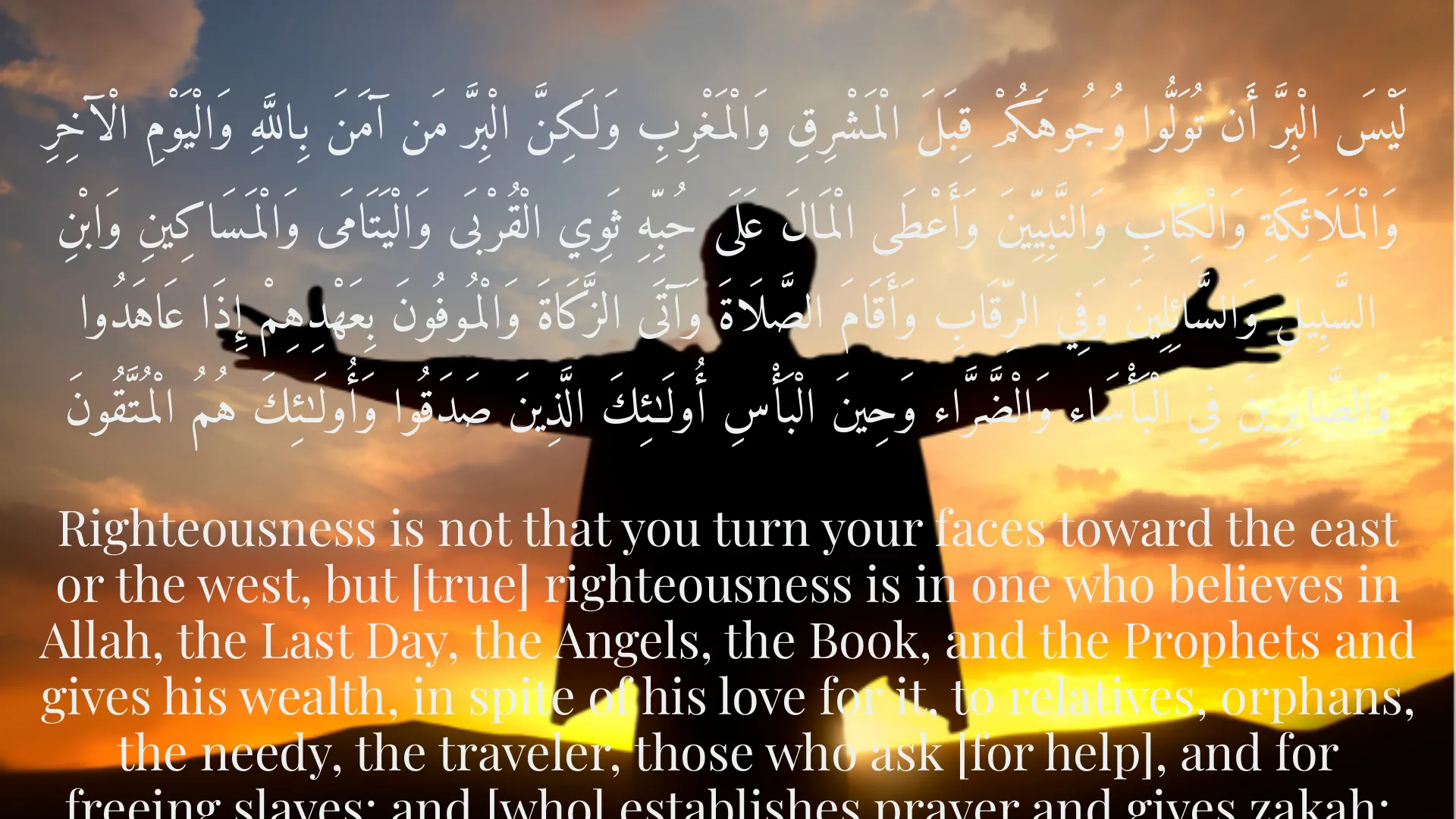
لَيْسَ الْبِرَّ أَن تُوَلُّوا وُجُوهَكُمْ قِبَلَ الْمَشْرِقِ وَالْمَغْرِبِ وَلَكِنَّ الْبِرَّ مَن آمَنَ بِاللَّهِ وَالْيَوْمِ الْآخِرِ وَالْمَلَائِكَةِ وَالْكِتَابِ وَالنَّبِيِّينَ وَأَعْطَى الْمَالَ عَلَى حُبِّهِ ثَوِي الْقُرْبَى وَالْيَتَامَى وَالْمَسَاكِينِ وَابْنِ السَّبِيلِ وَالسَّائِلِينَ وَفِي الرِّقَابِ وَأَقَامَ الصَّلَاةَ وَآتَى الزَّكَاةَ وَالْمُوفُونَ بِعَهْدِهِمْ إِذَا عَاهَدُوا وَالصَّابِرِينَ فِي الْبَأْسَاء وَالْضَّرَّاء وَحِينَ الْبَأْسِ أُولَـٰئِكَ الَّذِينَ صَدَقُوا وَأُولَـٰئِكَ هُمُ الْمُتَّقُونَ
Righteousness is not that you turn your faces toward the east or the west, but [true] righteousness is in one who believes in Allah, the Last Day, the Angels, the Book, and the Prophets and gives his wealth, in spite of his love for it, to relatives, orphans, the needy, the traveler, those who ask [for help], and for freeing slaves; and [who] establishes prayer and gives zakah; [those who fulfill their promise when they promise] and [those who are patient in poverty and hardship and during battle.]. Those are the ones who have been true, and it is those who are the righteous.
Al-Baqarah : 177
وَتَكُونُوا مِنكُمْ أُمَّةٌ يَدْعُونَ إِلَى الْخَيْرِ وَيَأْمُرُونَ بِالْمَعْرُوفِ وَيَنْهَوْنَ عَنِ الْمُنْكَرِ ۚ وَأُولَـٰئِكَ هُمُ الْمُفْلِحُونَ
And let there be [arising] from you a nation inviting to [all that is] good and enjoining what is right and forbidding what is wrong; and those will be the successful.
Al-Imran : 104
وَكَانَ يُقْصَدُ رَبَّهُ مِنْ صَالِحِ اللَّيْلِ فَلَمْ يَكُنُوا غَيْرَ مُلاقٍ يُؤْمِنُونَ
And [he] was devout to his Lord; indeed, he was of the righteous.
Maryam : 55
Short Story
One day, Ali was walking down the street, greeting everyone who passed by him. He knew that this was a good deed that fostered friendship. When one of his neighbors noticed Ali's behavior, he too decided to express more kindness towards his neighbors in response. Thus, Ali's benevolent behavior inspired others, creating a warm and friendly environment in the neighborhood.