Quranic Answer
The Holy Quran, regarded as the divine book of Islam, is considered a comprehensive guide that addresses various aspects of human existence. It not only delves into human spirituality and social ethics but also places significant emphasis on the natural world and the environment. This interconnection between spirituality, ethics, and environmental stewardship is a fundamental aspect of Quranic teachings, which urges mankind to maintain harmony with the environment and care for the creations of Allah. One of the profound insights that the Quran provides regarding the relationship between humans and the environment is articulated in Surah Al-An'am, verse 38: 'And there is no creature on earth nor a bird that flies with its wings but that they are communities like you.' This verse serves as a poignant reminder that all living beings are part of a broader ecosystem, and humanity shares a deep connection with other creatures. It underscores the responsibility that comes with human existence — the duty to utilize the land and its resources wisely and compassionately. In this context, the Quran calls for the preservation of the environment and the ethical treatment of all living beings. This verse alone opens up discussions on biodiversity, ecosystem conservation, and the moral obligations of humans towards the environment. The emphasis on treating all creatures with respect highlights the interconnectedness of life and the implications of human actions on the world around us. Further emphasizing this notion of responsibility, Surah Al-A'raf, verse 31 states: 'And eat and drink, but do not be excessive.' This clear exhortation against wastefulness reflects an essential principle of sustainability that modern environmentalists advocate today. The Quran encourages mindful consumption and reminds us that overindulgence not only threatens our own health but also leads to environmental degradation. Through this teaching, the Quran aligns with contemporary calls for sustainable practices and the careful management of the Earth's resources. In a world grappling with the repercussions of climate change, pollution, and resource depletion, these Quranic teachings resonate more than ever, urging individuals and societies to rethink their relationship with nature. The Quran does not merely confine itself to reminding believers of their responsibilities; it also inspires a profound appreciation for the natural world. In Surah Al-Baqarah, verse 164, Allah presents an invitation to reflect upon the signs of His creation: 'Indeed, in the creation of the heavens and the earth and the alternation of the night and the day are signs for those of understanding.' This verse underscores the beauty, complexity, and balance inherent in nature, which should inspire gratitude and reverence among humanity. By drawing attention to these signs, the Quran encourages believers to consider the implications of their actions on the environment. The destruction of nature not only affects environmental stability but also signifies a disconnection from the divine and a failure to acknowledge the signs that Allah has placed around us. In contemporary society, with rising environmental concerns and discussions around climate change, the teachings of the Quran could serve as guiding principles for environmental stewardship. Several global initiatives aim to promote ecological responsibility, align with the ethical guidelines laid out in sacred texts like the Quran. The idea of being stewards of the Earth relates closely to the Islamic concept of 'Khilafah,' which explains that humans are vicegerents of Allah on Earth. This concept emphasizes a moral obligation towards maintaining the balance of nature where every action taken should reflect a commitment to sustainability. Furthermore, the Quran prompts us to act as protectors of not just our environment but also the well-being of all living beings. This expands our responsibility from one of simply avoiding harm to actively engaging in the protection and conservation of nature. As such, believers are encouraged to advocate for health and environmental protection, promoting practices that benefit the Earth, plants, and animals alike. The ethical principles laid out in the Quran bear relevance in the face of the global environmental crisis. In an era characterized by rapid urbanization, industrialization, and the consequent exploitation of natural resources, the call for responsible stewardship is more pressing than ever. The Quran reminds us that all living beings — from the tiniest insect to the tallest tree — carry significance in the ecological balance of our planet. To conclude, the Holy Quran serves as a timeless guide in addressing the relationship between humanity and the environment. Through its teachings, believers are motivated to act ethically and responsibly, promoting the well-being of all creation. In doing so, individuals not only fulfill their moral and spiritual obligations but also contribute to the sustainable future of our planet. Recognizing the signs of Allah in nature can lead to a greater understanding of our place in the world and inspire action that protects and conserves the environment for generations to come.
Related Verses
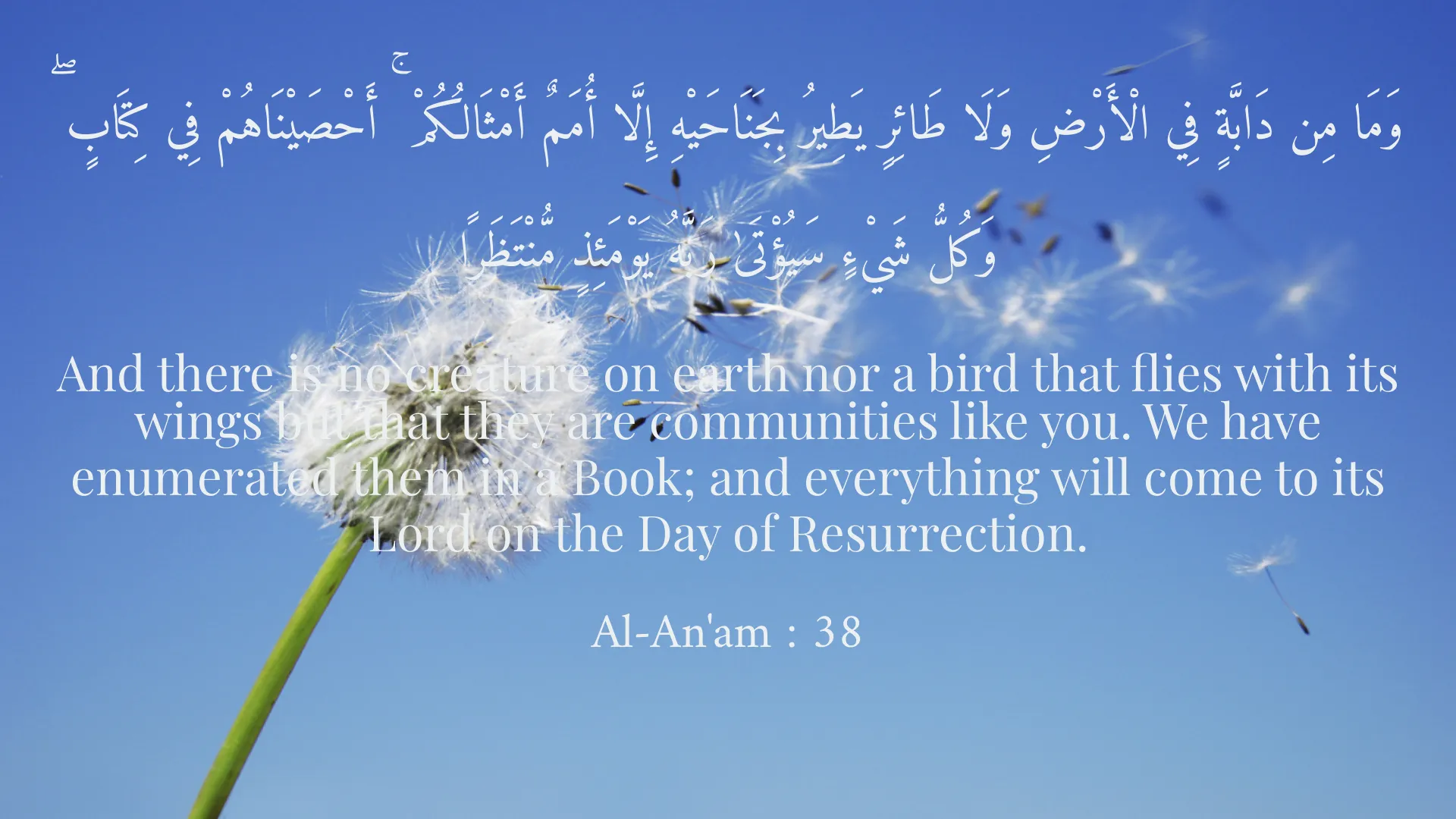
وَمَا مِن دَابَّةٍ فِي الْأَرْضِ وَلَا طَائِرٍ يَطِيرُ بِجَنَاحَيْهِ إِلَّا أُمَمٌ أَمْثَالُكُمْ ۚ أَحْصَيْنَاهُمْ فِي كِتَابٍ ۖ وَكُلُّ شَيْءٍ سَيُؤْتَىٰ رَبَّهُ يَوْمَئِذٍ مُّنْتَظَرًا
And there is no creature on earth nor a bird that flies with its wings but that they are communities like you. We have enumerated them in a Book; and everything will come to its Lord on the Day of Resurrection.
Al-An'am : 38
وَكُلُوا وَاشْرَبُوا وَلَا تُسْرِفُوا ۖ إِنَّهُ لَا يُحِبُّ الْمُسْرِفِينَ
And eat and drink, but be not excessive. Indeed, He does not like the excessive.
Al-A'raf : 31
إِنَّ فِي خَلْقِ السَّمَاوَاتِ وَالْأَرْضِ وَاخْتِلَافِ اللَّيْلِ وَالنَّهَارِ لَآيَاتٍ لِّأُلِي الأَلْبَابِ
Indeed, in the creation of the heavens and the earth and the alternation of the night and the day are signs for those of understanding.
Al-Baqarah : 164
Short Story
One day, a young man named Amir was contemplating the nature and beauty of the earth. He always recalled the verses of the Quran and realized the importance of preserving the earth and nature. One day, he went to the forest with his friends and started picking up litter, saying, 'We owe it to nature, and we must serve it.' Others were inspired and decided to protect the environment for a better future.